For heavy equipment, wire mills, marine assets, and oil & gas infrastructure, a single coat of paint rarely holds up. Harsh environments call for something tougher: metallic thermal spray coatings that bond directly to steel and protect it in ways paint alone cannot.
This guide breaks down TSZ (Thermal Sprayed Zinc) coating: what it is, how it compares to TSA and TSZA, and how the application process works from surface prep to sealing. We'll also help you match the right coating to your environment, drawing on more than 70 years of thermal spray experience at Parkway-Kew.
Key Takeaways
- TSZ uses sacrificial zinc to cathodically protect steel, even after the coating is scratched
- TSA and TSZA outperform pure zinc in high-chloride, coastal, and marine-splash environments
- Blast profile and prep timing determine coating adhesion and lifespan
- Duplex systems (TSZ plus paint) can deliver 25+ years to first major maintenance
- Correct corrosivity categorization avoids under- or over-specifying protection
What Is TSZ Coating?
TSZ, or Thermal Sprayed Zinc, is a metallizing process. A heated spray gun melts zinc wire or powder and propels it onto prepared steel using compressed air or combustion gas. The result is a metallic zinc layer that's mechanically bonded to the steel, delivering both a physical barrier and ongoing galvanic protection.
Two application methods dominate the industry:
- Twin wire arc spray: An electric arc melts two zinc wires, and compressed air atomizes and propels the molten metal onto the surface. High deposition rate, most common for large-scale jobs.
- Combustion wire-fed (flame) spray: A fuel-gas flame melts the wire instead of an arc. More portable equipment, with slightly higher deposit efficiency, though generally slower on large areas.
How TSZ Protects Steel
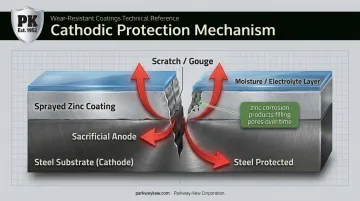
Zinc sits higher than iron on the galvanic series, so it corrodes preferentially. Moisture in the air acts as the electrolyte, and the zinc becomes a sacrificial anode while the steel stays protected as the cathode. Even scratched or gouged coating keeps sacrificing zinc to protect the exposed steel underneath, instead of letting rust spread outward.
The sprayed layer isn't solid, either. It's mechanically bonded and roughly 10% porous, with density around 80% of hot-dip galvanized coating. That sounds like a downside, but over time, atmospheric zinc corrosion products fill those pores, which actually improves the coating's long-term barrier performance.
TSZ vs. Hot-Dip Galvanizing
Both processes use zinc for sacrificial protection and work identically once applied. The difference is where and how each gets applied.
Hot-dip galvanizing requires dunking steel into a kettle of molten zinc, meaning the part has to physically fit inside the kettle. TSZ has no such size limit.
It can be sprayed in-shop or in the field on structures far too large for any galvanizing tank, including bridges, storage tanks, and offshore platforms. TSZ is also the standard method for extending the life of existing galvanized structures once their original coating has thinned.
A few working specifications worth checking against your project's manufacturer data sheets:
- Recommended pH range: roughly 5 to 12, though this varies by wire supplier
- Dry heat tolerance: up to 250°C, dropping significantly in wet or aqueous exposure
- Wire consumption: approximately 1.2 kg of zinc wire per m² per 100 microns of coating
TSZ vs. TSA vs. TSZA: Comparing Thermal Spray Corrosion Coatings
Three metallic thermal spray systems dominate corrosion protection work: TSZ (pure zinc), TSA (thermal sprayed aluminum), and TSZA (an 85/15 zinc-aluminum alloy). Choosing the right one comes down to matching material properties to your actual operating environment, not defaulting to whatever's already on the shelf.
| Coating | Best For | Key Limitation |
|---|---|---|
| TSZ (pure zinc) | General atmospheric exposure; strong, long-distance cathodic protection | Degrades faster in high-chloride, coastal, or heavy salt-spray settings |
| TSA (aluminum) | High-temperature service up to roughly 500°C, marine immersion, splash zones | Sealing or painting isn't recommended once used in submerged/splash-zone service |
| TSZA (85/15 Zn-Al) | Aggressive marine environments; better chloride and SO2 resistance than pure zinc | Still needs an organic topcoat for full saltwater immersion |
An 18-year exposure study on thermal-sprayed zinc, aluminum, and zinc-aluminum coatings found that immersed zinc coatings began degrading after about 7 years, while most aluminum and zinc-aluminum specimens held up strong through the full 18-year window. Damaged aluminum in splash zones, however, did develop red rust over time.
A Simple Decision Framework
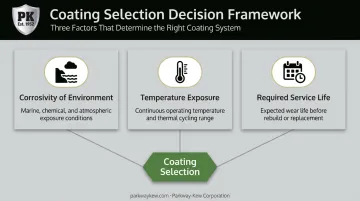
Rather than defaulting to one coating type, weigh three factors:
- Corrosivity of the environment – dry interior, coastal, or full marine immersion
- Temperature exposure – continuous heat, cyclical swings, or ambient only
- Required service life – a short-term patch job versus decades of protection
These three factors point directly to Parkway-Kew's metallizing capabilities, which include HVOF, sub-arc welding, plasma spray, and PK-400 alloy application. Specifiers use this toolkit to match the right coating system to their operating environment instead of relying on a single default choice.
The TSZ Application Process: From Prep to Sealing
Surface Preparation & Abrasive Blasting
Abrasive blasting is the only acceptable way to prep steel for metal spraying. It strips away rust, mill scale, and surface contamination while creating the angular profile the sprayed metal needs to key into the surface mechanically. Edges should be radiused to at least 2mm, though some project specs call for 3mm; sharp edges won't hold a coating.
Surface profile requirements typically call for a Class 2.5 blast to a minimum of roughly 50 microns for TSZ. Stricter specs, such as SSPC-SP 5/NACE No. 1 white-metal cleaning, may call for 65 to 125 microns depending on coating thickness. Always confirm profile depth against the governing standard for your project, such as SSPC-SP 5 or the applicable NACE guide. Our technicians verify profile depth against these standards on every job at our North Brunswick, NJ facility.
Spray Application
Timing matters just as much as technique. Once steel is blasted, oxidation starts working against you immediately.
- Begin spraying within about 4 hours of final blast cleaning
- Hold the spray gun near-perpendicular to the substrate, roughly 100 to 200mm stand-off
- Apply in alternating vertical and horizontal passes for even coverage
- Avoid gun angles that drift too far off vertical, which weakens bond quality
Sealing & Duplex Systems
TSZ coatings are porous by nature, so most specifications call for a sealer, typically a low-viscosity vinyl, acrylic, or thinned epoxy, that penetrates the pores, slows oxidation, and improves surface finish.
Pairing TSZ with a paint topcoat creates a duplex system. This combination outperforms paint alone because the zinc keeps cathodically protecting steel even where the coating gets scratched. That ongoing protection limits "scribe creep," the corrosion that normally spreads outward from a damaged spot in paint-only systems.
A peer-reviewed study of 61 Norwegian bridges using TSZ duplex coatings since 1965 found that zinc corrosion products take up less volume than iron rust. That's precisely why underfilm creep stays contained rather than lifting the paint film around damaged areas.
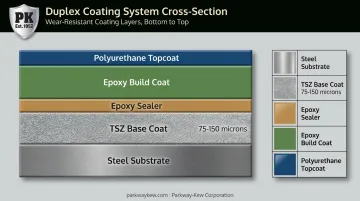
A typical duplex spec might look like:
- TSZ base coat (75-150 microns)
- Epoxy sealer
- Epoxy build coat
- Polyurethane topcoat
Selecting the Right Coating for Your Environment
Coating specifiers use "lifetime to first major maintenance" as their planning benchmark, not a warranty period. Categories generally run:
- Short term: 2-5 years
- Medium/long term: 5-15 years
- Long term: 15-25 years
- Extra long term: 25+ years, with 100 years possible in favorable environments paired with proper maintenance
Coating thickness scales directly with expected service life and the corrosivity of the environment where the asset sits. Atmospheric corrosivity categories run from C1 (very low, dry interior spaces) up to CX (extreme, offshore platforms or aggressive chemical sites). The more corrosive the category, the thicker the coating and the more specialized the alloy typically need to be.
| Category | Corrosivity | Typical Setting |
|---|---|---|
| C1-C2 | Very low to low | Dry interiors, rural areas |
| C3-C4 | Medium to high | Urban/industrial zones, coastal proximity |
| C5-CX | Very high to extreme | Heavy industrial, offshore, marine splash zones |
Beyond the headline corrosivity category, microclimate details change the math:
- Humidity levels and condensation frequency
- Shaded or perpetually wet areas that never fully dry
- Direct contact with concrete, which holds moisture against steel
- Prevailing wind exposure that drives salt or pollutants onto the surface
Two structures in the same city can need very different coating specs if one sits in a shaded, humid corner and the other catches open wind.
Benefits and Limitations of TSZ Coatings
Benefits:
- Cost-effective long-term protection compared to repeated repainting cycles
- High production rates suited to large-scale industrial jobs
- Usable on structures too large for a hot-dip galvanizing kettle
- Extends the service life of existing galvanized assets as their original coating thins
- Keeps protecting steel cathodically even after surface damage
Limitations:
- Requires skilled operators; inconsistent technique produces inconsistent coating quality
- Equipment and labor costs run higher than a basic paint job
- Recesses, interior cavities, and tight geometry are difficult to coat evenly
- Pure zinc underperforms TSA and TSZA in high-chloride coastal environments
These trade-offs matter when weighing long-term performance. Industry test data shows metal spray duplex systems reaching 20 years or more to first maintenance in aggressive environments—roughly double what paint-only systems achieve under the same conditions.
Why Partner with Parkway-Kew for Thermal Spray Corrosion Protection
Parkway-Kew has spent more than 70 years refining metal coating technology. That history includes:
- Pioneering submerged arc welding for hardsurfacing in the 1950s
- Adding metallizing capability in the early 1980s
- Introducing the industry's first HVOF coating in 1989
This hands-on experience with thermal spray processes predates corrosion protection becoming a boardroom priority.
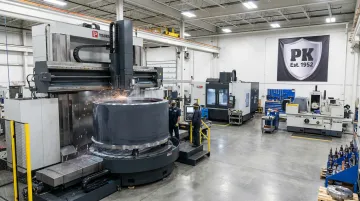
That experience comes paired with serious in-house finishing capacity, including CNC turning, CNC milling, and large-diameter grinding up to 65 inches in diameter and 12 feet in length. Thermal sprayed coatings get finished at Parkway-Kew to the tight tolerances that heavy equipment, wire mill, and oil & gas components actually need.
For companies weighing TSZ, TSA, TSZA, or a wear-resistant alternative like HVOF carbide, Parkway-Kew's engineering team starts with the specifics of your operating environment. They factor in temperature, chloride exposure, and required service life before recommending a coating system. That's a more useful conversation than picking one off a spec sheet and hoping it holds up.
If you're rebuilding wire drawing blocks, restoring shipping terminal equipment, or protecting oil & gas components in a harsh operating environment, contact Parkway-Kew's team to talk through what your specific components need.
Frequently Asked Questions
What is TSZ coating?
TSZ stands for Thermal Sprayed Zinc, a metallizing process that deposits molten zinc onto prepared steel to form a sacrificial coating. It protects steel cathodically, meaning the zinc corrodes first, even where the coating gets scratched.
What is the most durable coating for metal?
Durability depends on the environment: TSZA and TSA outperform pure zinc in marine or high-heat conditions, while HVOF carbide handles wear resistance rather than corrosion. Match coating thickness to the environment, not a single "best" option.
How long does TSZ coating last?
Using the industry's lifetime-to-first-maintenance framework, 150 to 200 microns of TSZ typically delivers 25 or more years before major maintenance in most atmospheric environments. Thinner coatings or harsher exposure shorten that window.
Is TSZ the same as hot-dip galvanizing?
Both use zinc for sacrificial protection, so the corrosion mechanism is identical. TSZ differs in application: it sprays in-shop on oversized structures too large for a galvanizing tank, while hot-dip requires kettle immersion.
Can TSZ coatings be painted?
Yes. Pairing TSZ with a paint topcoat creates a duplex system that outperforms paint alone. The zinc keeps protecting steel cathodically at scratches, limiting the scribe creep that spreads corrosion under damaged paint film.
What surface preparation is required before applying TSZ?
Steel needs abrasive blasting to a Class 2.5 finish with a minimum roughly 50-micron angular profile, and coating must begin within about 4 hours of blasting to prevent recontamination or oxidation.