Picking the wrong one costs more than a bad first article. It affects tolerances, lead time, tooling budgets, and how long the finished part actually lasts in service. The stakes are real: the global CNC machine market is valued at $101.22 billion in 2025 and is projected to reach $251.61 billion by 2034, growing at an 11.10% CAGR, according to Fortune Business Insights. That growth reflects how much manufacturing still depends on getting turning and milling decisions right.
Key Takeaways
- Turning spins the workpiece against a fixed tool, best for round or cylindrical parts
- Milling spins the cutting tool against the workpiece, built for flats, slots, and 3D shapes
- Both are CNC-driven, but setup, tooling, and achievable geometry vary widely
- Your choice depends on part shape, volume, material, and any coating or hardsurfacing needs
Turning vs. Milling: Quick Comparison
| Factor | Turning | Milling |
|---|---|---|
| Cost | Faster and cheaper for round, simple parts due to continuous cutting and fewer setups | Costs more for complex geometry, but multitasking centers reduce refixturing expense |
| Best-suited geometry | Cylindrical, conical, and rounded forms | Flats, pockets, slots, and complex 3D contours |
| Tooling | Mostly single-point tools with one cutting edge in contact | Multi-point cutters with two or more chip-producing edges |
| Material removal method | Workpiece rotates; tool stays largely stationary | Cutter rotates; workpiece is fixed or moves beneath it |
| Typical parts | Shafts, rollers, capstans, wire drawing blocks, hydraulic cylinder rods | Housings, brackets, wear plates, mold cavities |
The takeaway: geometry dictates the tool, not the other way around. Neither process wins in isolation; the part's shape makes the decision for you.
What is Turning?
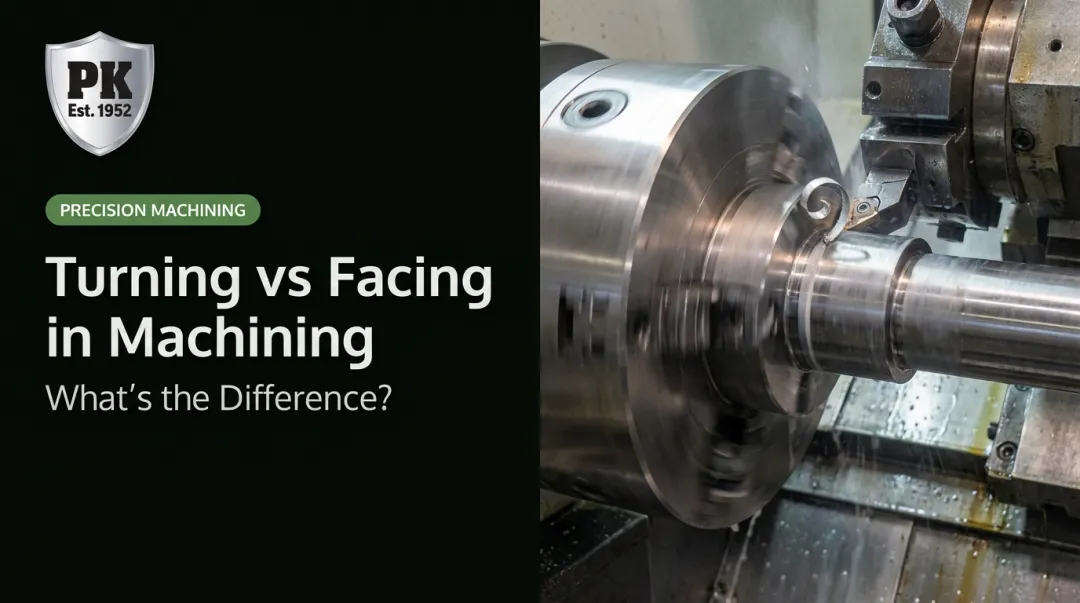
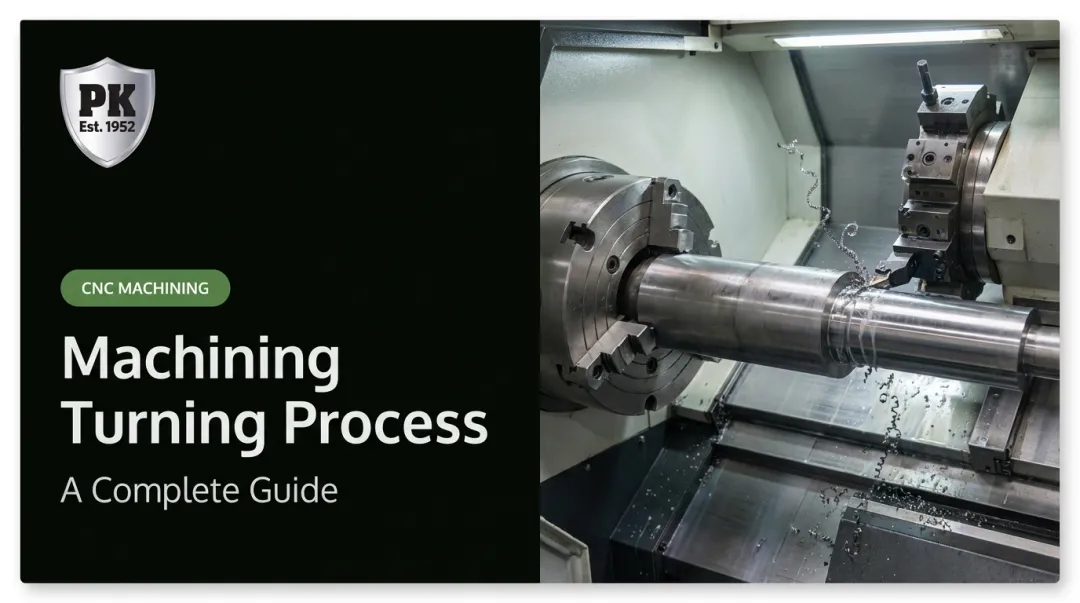
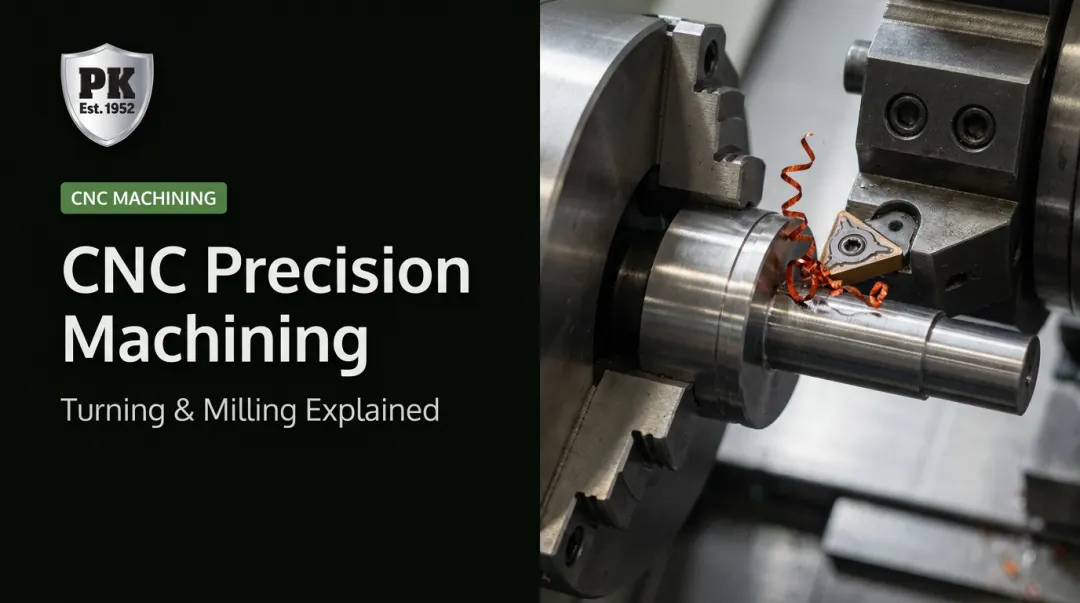
Turning removes material from a rotating workpiece using a stationary single-point cutting tool, according to Modern Machine Shop's machining fundamentals. The workpiece spins on a lathe spindle while the tool shears away material to create the final diameter.
This makes turning the default choice for any part built around a central axis. Faster cycle times on round stock translate directly into less machine downtime and more consistent fit for rotating components like bearings, shafts, and rollers.
Common turning variations include:
- CNC turning centers with single or dual spindles for high-volume, repeatable work
- Manual turning for prototype runs, one-off repairs, or oversized parts that don't justify CNC programming
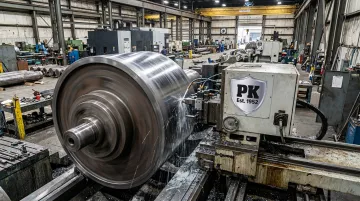
- Large-diameter turning for oversized parts: Parkway-Kew runs CNC and manual turning up to 72 inches in diameter in-house, covering everything from rollers to large wire-industry capstans
Use Cases of Turning
Turning dominates production of shafts, rollers, capstans, and wire drawing blocks (the backbone components of wire mills and heavy equipment manufacturing). It also shows up heavily in:
- Oil & gas equipment: pump plungers, valve bodies, drill collars
- Automotive: steering components, transmission shafts, axles
- Hydraulic cylinders: piston rods and cylinder bores requiring tight roundness
Precision matters here. Hard-turning processes have demonstrated diameter tolerances as tight as ±0.0002 inches, with roundness held to 0.000009 inches, per Modern Machine Shop's hard-turning analysis.
The same process can cut cycle time by up to 70% versus conventional grinding in the right application. Those numbers are process-specific, not universal, but they show why turning stays the go-to method wherever roundness and cycle time both matter.
What is Milling?
Milling flips the mechanics: a rotating multi-point cutter removes material while the workpiece stays stationary or moves beneath it. Milling serves as the foundation of nearly every flat, slot, pocket, or complex profile produced in modern manufacturing.
Because each cutting edge enters and exits the material during rotation, milling is inherently an interrupted cut, distinct from the continuous engagement typical of turning. That interruption is exactly what gives milling its versatility.
Core milling benefits include:
- Cutting keyways, mounting holes, and flat wear surfaces that turning simply can't produce
- Handling irregular, non-symmetrical shapes in a single setup
- Reducing the need for secondary operations on complex parts
Milling equipment variations:
- Vertical machining centers (VMCs) for general-purpose work
- Horizontal machining centers (HMCs) for long-reach or multi-sided parts
- Multi-axis milling (4-axis, 5-axis) for complex contoured surfaces
- Face milling (leveling flat surfaces) vs. peripheral milling (cutting with the circumference of the tool)
Use Cases of Milling
Milling fits naturally into producing mounting brackets, wear plates, housings, and flat features added to otherwise turned components. Industries where it dominates:
- Aerospace: structural brackets, ribs, complex airframe components
- Die and mold making: cavities, cores, and detailed contour work
- Heavy equipment: housings, gearboxes, and mounting plates
Parkway-Kew's in-house CNC milling supports this same work, machining flat mounting surfaces and wear-plate features for oil & gas, wire drawing, and shipping terminal customers.
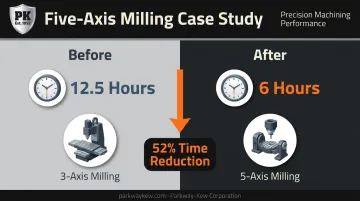
This versatility scales further with multi-axis milling, which has produced dramatic gains on complex parts. One five-axis case study using circle-segment tools cut machining time on a mobile-robot component from 12.5 hours down to 6 hours, according to Modern Machine Shop's five-axis CAM analysis.
Results like that depend heavily on geometry and tooling, but they illustrate why milling remains the process of choice once a part moves beyond simple round shapes.
Turning vs. Milling: Which Is Better for Your Machining Project?
There's no universal winner. The right process depends on five factors:
- Part geometry: round and symmetrical, or flat and irregular?
- Production volume: one-off restoration or high-volume run?
- Tolerance requirements: how tight does roundness or flatness need to be?
- Material hardness: machined before or after heat treatment?
- Downstream processes: will the part be coated or hardsurfaced afterward?
Choose turning for round, symmetrical parts needing fast cycle times and tight concentricity, such as wire drawing blocks, rollers, and shafts. Choose milling for anything with flats, slots, or complex 3D features, or for parts that aren't cylindrical at all.
In practice, plenty of real-world components need both. A large industrial part might have a cylindrical body but also require flat mounting features, keyways, or bolt patterns. No single process can produce all of these features alone.
How Parkway-Kew Applies Both Processes
Parkway-Kew Corporation has operated out of North Brunswick, New Jersey since 1952, restoring and remanufacturing wire drawing blocks, capstans, and other large-format industrial components. The company's in-house machining lineup includes:
- CNC turning: up to 72 inches in diameter
- Manual turning: up to 72 inches in diameter
- CNC milling: up to 72 inches in diameter
- Large-diameter grinding: up to 65 inches in diameter and 12 feet in length
That combination matters because most large capstans and wire drawing blocks are built around a cylindrical body but often need flats, keyways, or mounting features machined into them before hardsurfacing goes on.
Having turning, milling, and grinding under one roof means a part doesn't need to travel between vendors to get finished. It moves through machining and straight into coating processes like HVOF, plasma spray, or sub-arc welding, all applied in the same facility.
If you're restoring worn wire drawing blocks, capstans, or other large industrial components, reach out to Parkway-Kew to discuss machining, restoration, or hardsurfacing options tailored to your part.
Conclusion
Turning and milling serve different roles on the shop floor. Turning wins on round, symmetrical parts where cycle time and concentricity matter most. Milling wins the moment a part needs flats, slots, or complex contours. Most large industrial components need both, applied in the right sequence.
The right choice depends on your part's geometry, volume, and what happens to it after machining — whether that's a protective coating, a hardsurfacing layer, or straight into service.
Partnering with a shop like Parkway-Kew that handles both in-house, rather than juggling multiple vendors, typically means less downtime, longer part life, and fewer surprises on the invoice.
Frequently Asked Questions
What is the difference between milling and turning?
Turning rotates the workpiece against a fixed tool to create cylindrical shapes. Milling rotates the cutting tool against a stationary or moving workpiece to cut flats, slots, and complex geometries.
What is the difference between cutting and milling?
Cutting is the broad term for any material removal process, including turning, milling, sawing, and grinding. Milling is one specific type of cutting that uses a rotating multi-point tool.
Which is more cost-effective, turning or milling?
Turning is generally faster and cheaper for simple cylindrical parts because of continuous cuts and fewer setups. Milling costs more due to added complexity but is necessary for non-round geometries.
Can turning and milling be combined in one process?
Yes. Mill-turn (or turn-mill) machines combine both operations in a single setup, reducing handling time and refixturing errors on complex parts that need both round and flat features.
What materials work best for turning vs. milling?
Both processes handle steel, aluminum, brass, and titanium effectively. Material choice depends more on the part's function and hardness than on whether it's turned or milled.
Is milling or turning better for cylindrical parts?
Turning is the standard choice for cylindrical, symmetrical parts due to faster cycle times and superior roundness control. Milling can still add secondary flat features, like keyways or mounting holes, to an otherwise turned part.