Tungsten's reputation for near-indestructibility is largely earned, but "largely" is the operative word. This guide breaks down the actual science behind tungsten's tarnish resistance, its core physical properties, how it stacks up against silver, titanium, and gold, and how to care for it whether it's on your finger or bolted into a fracking pump.
The same hardness and chemical stability that keep a tungsten ring scratch-free for decades are why tungsten carbide coatings show up in some of the harshest industrial environments in North America.
Key Takeaways
- Tungsten carbide resists rust, tarnish, and oxidation under normal use in jewelry and industrial parts
- Discoloration usually comes from the cobalt binder, not the tungsten carbide itself
- Mohs 8-9 hardness gives tungsten carbide strong scratch resistance but leaves it brittle under impact
- Soap and water handle cleaning for most tungsten items—no special products required
- Industrial coatings extend wear life on equipment facing extreme friction and corrosion
Does Tungsten Tarnish or Rust?
Short answer: no. High-quality, jewelry- or industrial-grade tungsten carbide does not rust, tarnish, or oxidize under everyday conditions. It won't develop the dull gray film you see on silver or the reddish corrosion you see on iron.
That said, "doesn't tarnish" isn't the same as "chemically indestructible." The nuance matters if you want realistic expectations.
The Science Behind Tungsten's Tarnish Resistance
Tungsten is stable at room temperature and doesn't react with air or oxygen under normal conditions, according to A.L.M.T. Corp's technical data on tungsten, a major refractory metals manufacturer. A very thin native oxide layer forms on the surface, but this is nothing like iron rust, which flakes and spreads.
Temperature is where things change:
- Oxidation in air begins around 400°C
- It accelerates sharply above 600-700°C, producing visible tungsten oxide
- Both thresholds sit far above anything a ring, watch case, or industrial part encounters in normal service
Humidity can dull tungsten's surface gloss over time, but this is cosmetic, not corrosive.
When Tungsten Alloys Can Tarnish
Pure tungsten is rarely what you're actually wearing or installing. It's typically bonded with a metal binder, usually nickel or cobalt, to form tungsten carbide, a composite hard enough for rings, drill bits, and wear coatings.
This is where tarnish complaints actually originate:
Nickel-bonded tungsten carbide, common in jewelry, resists discoloration indefinitely under normal wear. Cobalt-bonded tungsten carbide, common in cheaper or industrial-grade products, is more prone to surface discoloration and corrosion because cobalt is less chemically stable than nickel in acidic or salty environments.
Before you buy a tungsten ring or industrial component, ask what binder it uses. That single detail predicts most of the tarnish complaints you'll find in online reviews.
Key Properties of Tungsten That Drive Its Durability
Tungsten's resistance to wear and tarnish comes directly from its atomic structure. Three properties do most of the work.
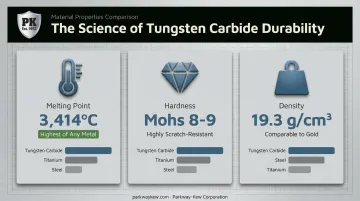
Melting point. Pure tungsten melts at 3,414°C, the highest of any metal, according to the Royal Society of Chemistry's periodic table data. That thermal stability translates into resistance to heat-driven wear and deformation, which is exactly why tungsten carbide shows up in cutting tools and high-friction industrial coatings.
Hardness. Tungsten carbide typically measures around 8-9 on the Mohs scale, putting it well above stainless steel and titanium. In practice, this means:
- Daily abrasion from handling, machining, and surface contact leaves no visible mark
- Diamonds are one of the few materials that can scratch it
- The finish stays polished without routine buffing
Density. Tungsten's density of roughly 19.3 g/cm³ is nearly identical to gold and significantly higher than lead (11.35 g/cm³) or steel (about 7.8-7.9 g/cm³). That added mass is why tungsten carbide inserts and coated wear parts feel noticeably heavier than steel components of the same size.
One trade-off matters here: tungsten is hard, not tough. Hardness resists scratching; toughness resists cracking. Tungsten carbide can chip or fracture under a sharp, concentrated impact, like a hammer strike or sudden shock loading during handling, rather than bending the way gold or titanium would. It's the same reason engineers choose tungsten carbide coatings for sliding and abrasive wear, but pair them with tougher substrate materials in impact-heavy applications.
Tungsten vs. Other Metals: How Does It Compare?
Buyers usually compare tungsten against three metals: sterling silver, titanium, and gold. Each comparison highlights a different trade-off.
| Metal | Tarnish behavior | Density | Scratch resistance |
|---|---|---|---|
| Tungsten carbide | Doesn't tarnish (quality binder) | ~19.3 g/cm³ | Mohs 8-9 |
| Sterling silver | Tarnishes steadily | ~10.5 g/cm³ | Mohs 2.5-3 |
| Titanium | Doesn't tarnish | ~4.5 g/cm³ | Mohs 6 |
| Gold (24k) | Doesn't tarnish, scratches easily | ~19.3 g/cm³ | Mohs 2.5-3 |
Tungsten vs. silver: Silver tarnish is a real chemical reaction: silver reacts with sulfur-containing gases in the air to form silver sulfide (Ag₂S), according to the Canadian Conservation Institute.
Sterling silver tarnishes even faster than pure silver because its copper content reacts readily. Quality tungsten carbide skips this problem entirely, making it the lower-maintenance option.
Tungsten vs. titanium: Both share a similar gray tone, but tungsten carbide is roughly four times denser and considerably harder. Titanium won't tarnish either, but it scratches more easily and feels noticeably lighter on the hand.
Tungsten vs. gold: Gold is soft. That softness is exactly what makes it easy to engrave and resize, and it's also why gold jewelry picks up surface scratches within weeks. Tungsten won't scratch, but it also won't resize, and it doesn't carry gold's investment value.
Caring for Tungsten: Maintenance Guide
Tungsten's low-maintenance reputation is well earned, but "low-maintenance" doesn't mean "no maintenance." A few simple habits keep it looking new for decades.
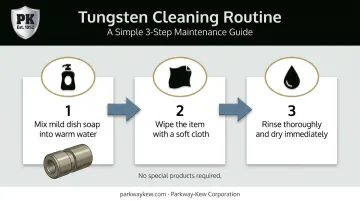
Cleaning routine:
- Mix a few drops of mild dish soap into warm water
- Wipe the item with a soft cloth
- Rinse thoroughly and dry immediately
That's it. Because tungsten resists scratching and tarnish so effectively, it rarely needs re-polishing the way silver or gold does.
Chemicals to avoid:
- Chlorine (pools, hot tubs)
- Bleach
- Ammonia-based household cleaners
These can attack the metal binder or any surface plating, even though they won't touch the tungsten carbide itself. Take rings off before swimming or heavy cleaning.
Can you shower with it? Yes. Ordinary tap water poses no risk. The concern is concentrated chlorine exposure in pools and hot tubs, not the brief contact from a daily shower.
Realistic lifespan: A quality tungsten carbide ring, cleaned occasionally and kept away from harsh chemicals, can last a lifetime. Just remember it can't be resized like softer metals, and a hard impact (dropped on concrete, caught in a car door) can crack it.
Storage tip: Keep tungsten items in a soft-lined box, separate from harder gemstones or metal tools. This protects against the real risk: impact cracking, not tarnish, which shouldn't happen in the first place.
Beyond Jewelry: Tungsten Carbide in Industrial Applications
The hardness and corrosion resistance that make tungsten carbide appealing in a wedding band are the same properties engineers rely on when a component faces years of friction, pressure, and chemical exposure.
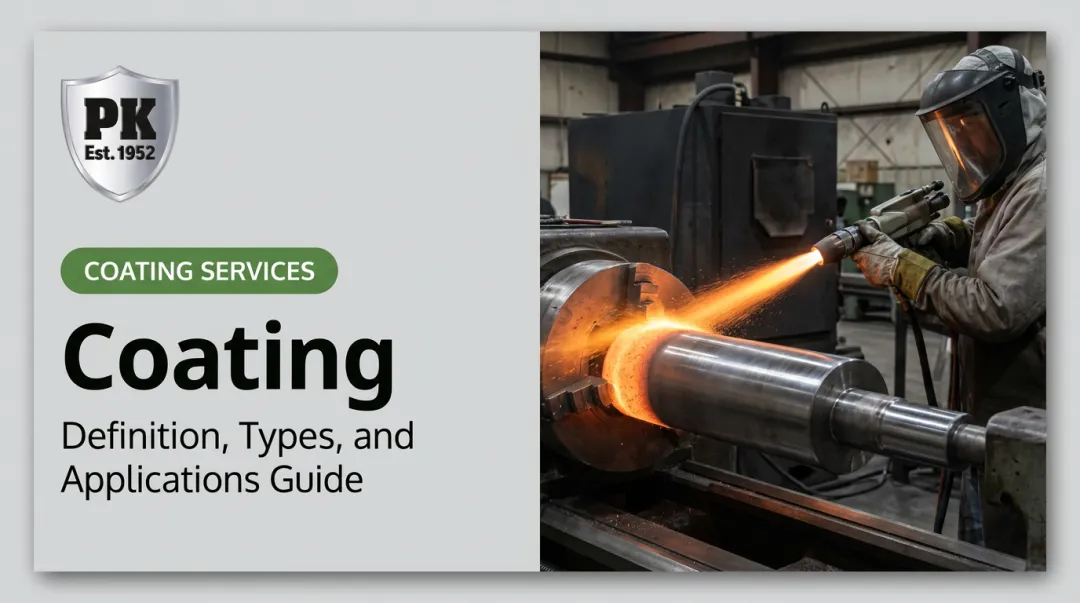
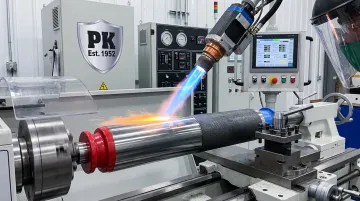
Parkway-Kew Corporation has applied this principle since 1952, coating industrial parts for the oil and gas, wire drawing, and shipping terminal industries. One example is PK-730, the company's proprietary fused tungsten carbide coating, applied to fracking plungers operating in some of the harshest downhole environments in oil and gas extraction.
Fracking plungers face a specific problem: centerless grinding can leave the wear surface up to 0.015 inches out of concentricity with the clamping end. This causes vibration and uneven wear during high-pressure pumping cycles.
Parkway-Kew addresses this with a finishing process that holds the plunger the same way it sits inside the actual pump. That precision, paired with PK-730's wear and corrosion resistance, handles the mechanical stress that follows.
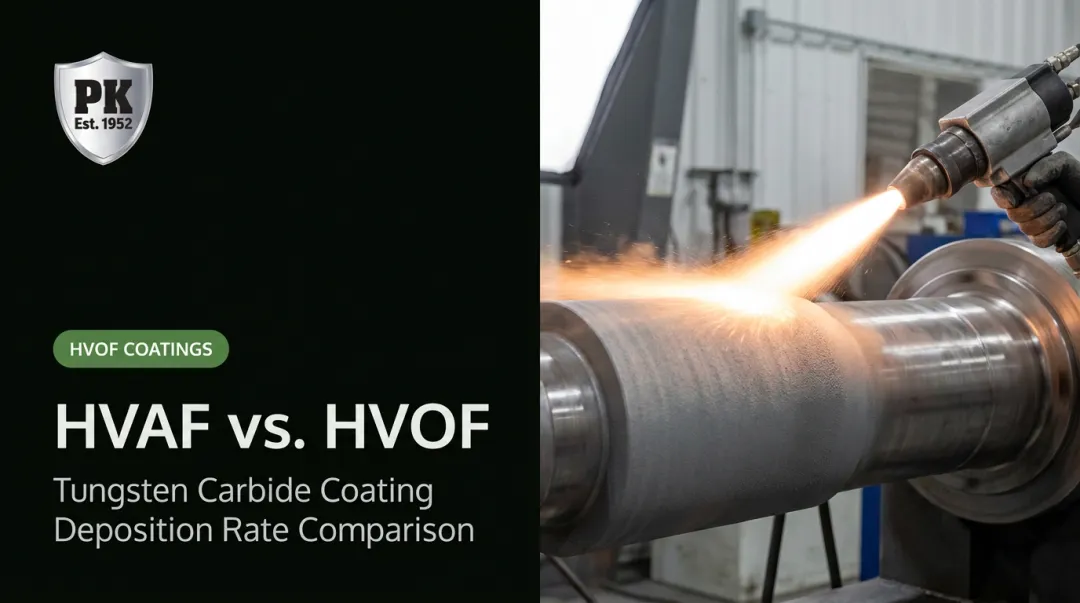
The company also applies HVOF (High Velocity Oxygen Fuel) tungsten carbide coatings, first introduced for wire drawing blocks in 1989. Powder is propelled at speeds exceeding Mach 2, building a dense, virtually defect-free surface. This process supports several formulations: PK-675 and PK-700 for copper and aluminum wire drawing rings, and PK-750 for maximum wear resistance on wire drawing blocks and capstans.
These industrial applications share the same underlying chemistry as a wedding band, just at a larger scale. Tungsten's tarnish and wear resistance holds up well beyond a ring box.
Frequently Asked Questions
Is tungsten better than 925 silver?
For durability, yes. Tungsten is far more scratch- and tarnish-resistant than sterling silver, which naturally oxidizes over time. Silver still holds an edge in sentimental and heirloom value.
How long do tungsten rings last?
Quality tungsten carbide rings can last a lifetime with basic care. Keep in mind they can't be resized and may crack under a sharp, high-force impact.
Can I wear my tungsten ring in the shower?
Yes, daily showering is safe. Just remove it before swimming pools or hot tubs, since concentrated chlorine there can damage the surface over time.
Does tungsten turn your finger green?
High-quality, nickel-bonded tungsten won't discolor skin. Lower-quality, cobalt-bonded alloys occasionally cause minor discoloration, which is another reason to confirm the binder before buying.
Can tungsten carbide rust like other metals?
No. Tungsten carbide doesn't rust or corrode under normal conditions, unlike iron-based metals that oxidize readily when exposed to moisture.
What's the best way to clean a tungsten ring or item?
Warm water, a few drops of mild soap, and a soft cloth handle it. Skip harsh chemical cleaners, bleach, and ammonia altogether.