This analysis is written for industrial operators, engineers, and procurement teams who need a clear picture of where the ceramic thermal spray coating market stands right now — what's driving growth, which processes and materials dominate, and how to evaluate coating partners for specific applications. Companies like Parkway-Kew Corporation, which has specialized in plasma spray and HVOF coatings for industrial wear applications since 1952, represent the application-specific expertise that distinguishes this market from generalist surface treatment.
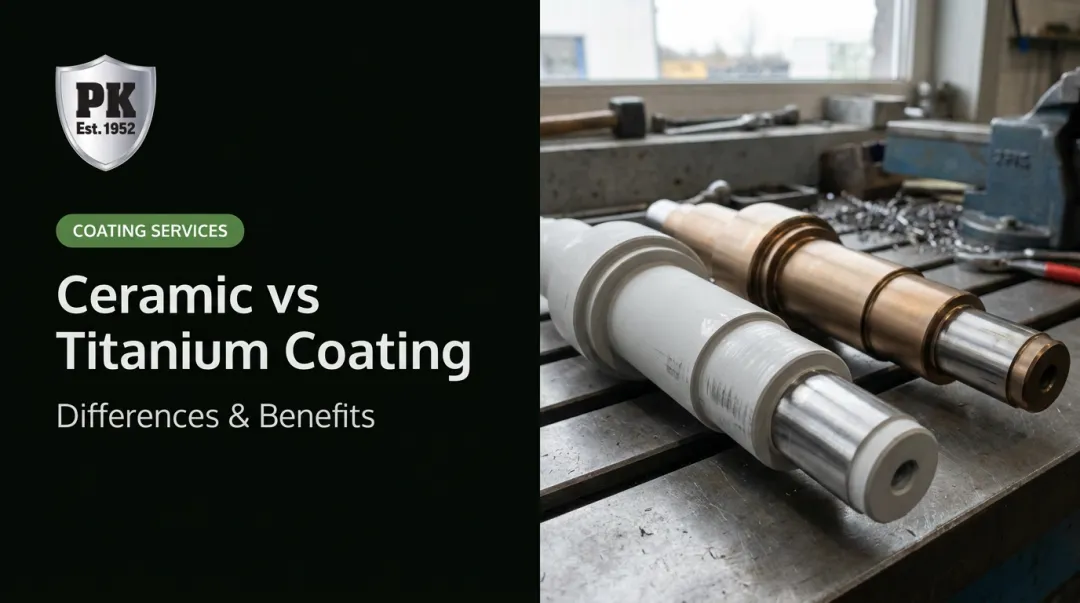
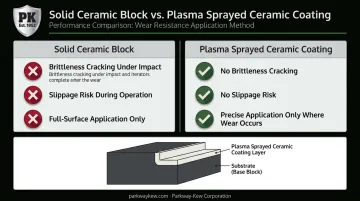
One clarification upfront: ceramic thermal spray coatings are not solid ceramic components. They are oxide, carbide, or nitride formulations deposited onto metal substrates via plasma spray, HVOF, or related processes. The result is a bonded coating — not a monolithic ceramic part — which eliminates the brittleness and slippage risks that make solid ceramics problematic in many industrial settings.
Key Takeaways
- The global thermal spray coatings market hit $11.3B in 2025 (ceramics: 32%+ of revenue) and is projected to reach $16.22B by 2033 at a 4.7% CAGR
- Plasma spray (APS) and HVOF are the dominant deposition processes, each suited to different performance requirements
- North America holds ~28.5% of global revenue; Asia Pacific is the fastest-growing region at a projected 5.5% CAGR through 2033
- Application-specific coating expertise — not just process availability — determines real-world performance outcomes
2026 Market Size and Growth Outlook
What the Numbers Actually Say
Multiple market research firms track this space, though their scope definitions differ. Here's the most defensible current picture:
- Grand View Research pegs the global thermal spray coatings market at $11.3B in 2025, growing to $16.22B by 2033 at a 4.7% CAGR. Ceramics account for over 32.1% of 2025 revenue, making them the largest material segment.
- Spherical Insights projects the market from $11.30B in 2022 to $18.70B by 2032, at an 8.1% CAGR — a more aggressive growth assumption reflecting broader material and technology coverage.
- BCC Research tracks high-performance ceramic coatings more broadly (not thermal spray only) at $10.5B in 2024, growing to $13.9B by 2029 at 5.8% — useful as a benchmark for the ceramic coatings market context rather than thermal spray specifically.
The difference in these figures reflects scope, not contradiction. What they agree on: sustained mid-to-high single-digit growth through the late 2020s, driven by aerospace, power generation, and industrial manufacturing demand.
What's Pushing Growth
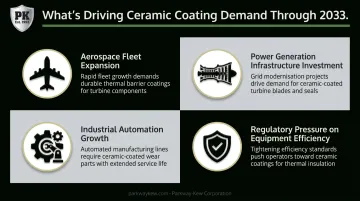
Four macro forces are sustaining this trajectory:
- Aerospace fleet expansion — new engine platforms require thermal barrier coatings at scale, and growing MRO activity creates repeat coating demand
- Power generation infrastructure investment — gas turbine buildout globally, including hydrogen-capable turbines, raises the performance bar for hot-section coatings
- Industrial automation growth — higher-throughput equipment runs harder and faster, accelerating wear on uncoated surfaces
- Regulatory pressure on equipment efficiency — longer maintenance intervals and reduced emissions targets push operators toward surface solutions that extend component life
Government Investment as a Demand Signal
The U.S. Department of Energy's ARPA-E ULTIMATE program offers the clearest signal of where public investment is aligned. Launched with $28M and supplemented with $16M for Phase 1 projects, ULTIMATE targets gas turbine materials capable of operating at 1,300°C standalone, or 1,800°C and higher with coatings — including thermal and environmental barrier coatings for both aviation and power generation.
Key program details:
- Total ARPA-E funding: $44M across program launch and Phase 1 awards
- Temperature targets: 1,300°C (standalone materials) / 1,800°C+ (with coatings)
- Coverage: Thermal and environmental barrier coatings for aviation and power generation
- Active Phase II project: University of Maryland coating research, funded at $5.6M through March 2026
Federal programs of this scale don't just validate the technology — they pull commercial investment downstream as aerospace and power OEMs align procurement with funded performance benchmarks.
Competitive Landscape
That R&D investment creates commercial pull across the supply chain. The market that captures it is served by a layered mix of participants:
- Large diversified materials companies: Oerlikon Metco, Saint-Gobain Surface Solutions
- Industrial coating service providers: Bodycote, A&A Coatings, APS Materials, Curtiss-Wright
- Specialty industrial coating shops: Parkway-Kew Corporation, focused on wire drawing and oil and gas components
This structure — large materials companies supplying powders and equipment, specialist service providers doing the application work — reflects a mature market where process knowledge is the real differentiator. Buyers evaluating providers can't separate coating performance from application expertise; the two are inseparable at the component level.
End Markets Driving Demand
Aerospace and Defense
Thermal barrier coatings (TBCs) — primarily yttria-stabilized zirconia (YSZ) applied via plasma spray — protect turbine blades, combustion chambers, and hot-section engine components from thermal degradation. Demand here is quantifiable and growing.
Safran reported 1,802 LEAP engine deliveries in 2025, up 28% from 1,407 in 2024, with a backlog exceeding 12,900 engines at year-end 2025. Safran is also investing €1B to reach 1,200 MRO shop visits per year by 2028 — each shop visit a direct demand event for hot-section coating repair or reapplication.
Pratt & Whitney's GTF platform has surpassed 11,000 orders and commitments program-to-date, adding further scale to this aftermarket.
NASA's advanced TBC research targets component temperature capability up to 1,650°C. The TBC coating function — insulating the metal substrate while withstanding thermal cycling — remains irreplaceable in current engine architecture.
Power Generation
Gas turbines in both fossil-fuel and hydrogen-capable configurations rely on ceramic coatings for oxidation resistance, thermal insulation, and extended maintenance intervals. Siemens Energy reported FY2025 order intake of €58.9B with a €138B backlog — a scale that directly translates into ceramic coating demand across boiler and hot-section components.
Hydrogen combustion adds a coating-specific challenge. ASME's 2025 analysis of TBC lifetimes in high-water-vapor environments identifies hydrogen combustion as a durability issue for coating systems, pushing development of more robust ceramic formulations. Siemens Energy has demonstrated turbine operation at up to 75% hydrogen blends, with 100% renewable hydrogen demonstrated in pilot facilities.
Oil, Gas, and Wire Drawing
Pumps, valves, compressor components, and process equipment exposed to abrasive slurries and corrosive chemicals benefit from wear-resistant oxide ceramic coatings — alumina, chromium oxide, and titania blends applied via plasma spray. Oerlikon Metco documents Metco 6155 chromium oxide as one of the most chemically inert and wear-resistant oxide coatings commercially available.
Wire drawing is a specific and demanding case. Blocks and capstans undergo continuous abrasive contact at high speeds — conditions where coating failure translates directly into wire surface defects and production downtime.
Parkway-Kew introduced plasma sprayed ceramic coated wire drawing blocks in the late 1990s using their PK-1500 chrome oxide formulation. Parkway-Kew rates PK-1500 as the most wear-resistant ceramic in their portfolio for this application, with particular effectiveness in high-speed, high-slip ferrous wire drawing and plated wire. Compared to solid ceramic alternatives, the coating offers three practical advantages:
- No brittleness cracking under impact loads
- No slippage risk during operation
- Precise application only where wear actually occurs
Automotive and Other Segments
Brake disc coatings represent the clearest current opportunity in automotive. Oerlikon Metco documents coatings that reduce fine dust emissions to under 3 mg/km, with over 10x wear resistance versus uncoated gray cast iron — a direct response to Euro 7 emissions requirements.
Medical devices (hydroxyapatite for implants) and electronics (dielectric coatings) are smaller but higher-value segments. These applications are less cost-sensitive and contribute meaningfully to market value at lower volumes.
Thermal Spray Processes for Ceramic Coatings
Atmospheric Plasma Spray (APS)
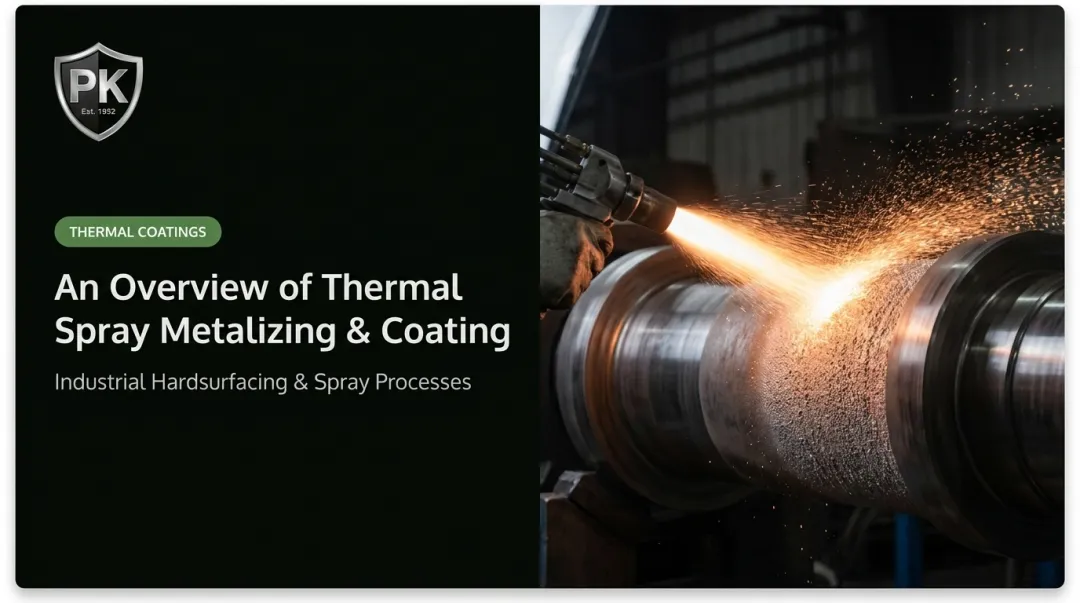
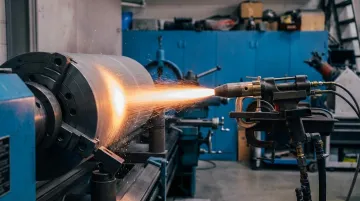
APS remains the industry's primary route for ceramic coating deposition. A plasma jet exceeding 10,000 K melts ceramic powder feedstock and propels it onto the substrate, creating a layered microstructure with moderate, tunable porosity.
Why APS is preferred for ceramic coatings:
- Handles oxide ceramics (alumina, zirconia, chromium oxide, titania) effectively
- Porosity can be tuned — critical for TBC applications where controlled insulation is the goal
- Accommodates complex geometries that line-of-sight constraints allow
- Proven at scale for aerospace TBCs and industrial wear coatings
Parameters that most affect coating quality:
- Gas composition (argon/hydrogen ratios influence plasma temperature and particle melting)
- Standoff distance (affects particle velocity and temperature at impact)
- Powder particle size (typically 10–100 µm range to ensure flowability and proper melting)
Parkway-Kew has applied APS ceramic coatings since the late 1990s. Their PK-1500 chrome oxide is plasma sprayed onto wire drawing blocks specifically because the process delivers the surface characteristics needed for high-speed wire drawing — particularly for plated and high-quality wire applications where surface finish precision is non-negotiable.
High Velocity Oxy-Fuel (HVOF)
HVOF's core advantage is density. Particle velocities of 400–800 m/s produce coatings that are harder, less porous, and more tightly bonded than APS equivalents — critical for wear and corrosion protection where microstructural defects are failure points.
HVOF is the preferred process for:
- WC-Co and chromium carbide cermet coatings (oil and gas, hydraulics, heavy manufacturing)
- Alumina-based coatings where maximum hardness is the requirement
- Applications where coating porosity must be minimized to prevent fluid infiltration
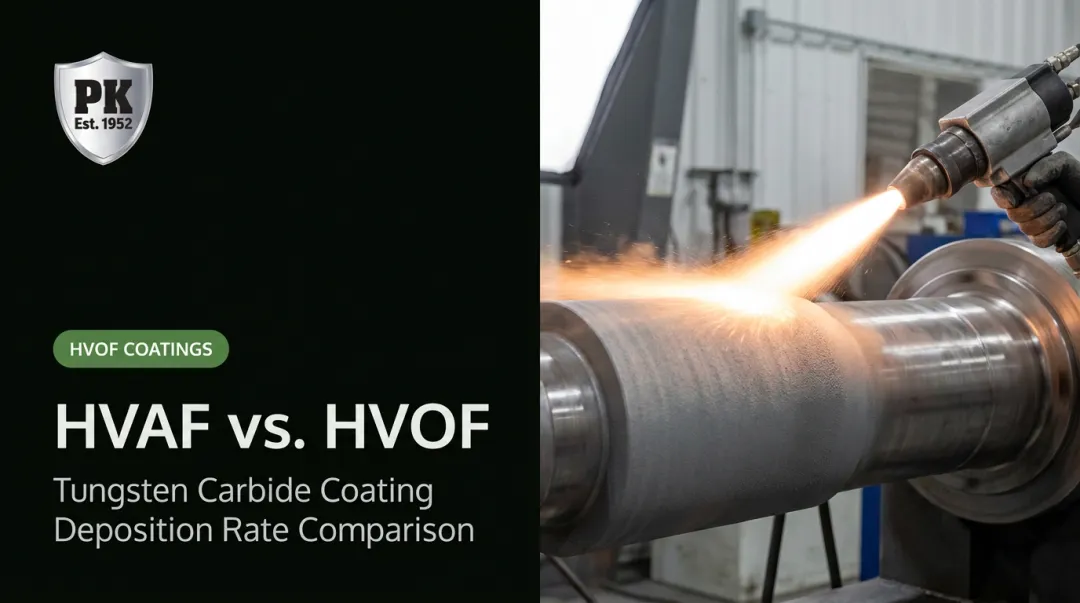
Parkway-Kew introduced HVOF for wire drawing blocks in 1989 — the first application of this process to that component type. Their HVOF coatings (PK-920 through PK-750) use nickel chrome boron alloy matrices with increasing tungsten carbide content, producing coatings with porosity levels typically below 1% and hardness values that rival or exceed hard chrome alternatives.
Cold Spray
Cold spray deposits material kinetically without melting — useful for select ceramic-metal composites where thermal oxidation of the feedstock is a concern. Compared to APS or HVOF, it currently carries a narrower material range and higher equipment cost. Its role in ceramic coating applications remains limited — development is ongoing for composite systems, but it is not yet a viable replacement for either process in high-volume industrial use.
Regional Dynamics and Key Players
North America and Asia Pacific
Grand View Research's regional breakdown is clear:
| Region | 2025 Market Share | Growth Rate |
|---|---|---|
| North America | ~28.5% | Stable, value-intensive |
| Asia Pacific | Largest volume growth | 5.5% CAGR, 2026–2033 |
North America leads in value-intensive applications — aerospace, defense, advanced energy — where coating performance specifications drive purchasing decisions. Asia Pacific leads in volume growth, driven by manufacturing expansion in China, India, South Korea, and Southeast Asia.
These are distinct customer profiles. North American buyers prioritize coating performance documentation; Asian markets are currently more price-sensitive, reflecting earlier-stage industrial development in many segments.
Key Global Players
The companies gaining ground in this market combine broad process capabilities with deep application expertise. Key players active across ceramic thermal spray include:
- Oerlikon Metco — APS and HVOF equipment and materials; alumina, zirconia, and titania feedstocks
- Saint-Gobain Surface Solutions — thermal spray powders spanning alumina, chromia, and zirconia
- Bodycote provides plasma spray and combustion spray coating services across multiple industrial sectors
- APS Materials — plasma spray ceramics including alumina, yttria, titania, and zirconia
- A&A Coatings — ceramic and cermet coatings, including wire drawing applications
- Curtiss-Wright Surface Technologies offers ceramic and carbide thermal spray services, with GPX TBCs for high-temperature environments
- Sulzer — surface engineering and thermal spray focused on component restoration
Selecting the Right Ceramic Coating Partner
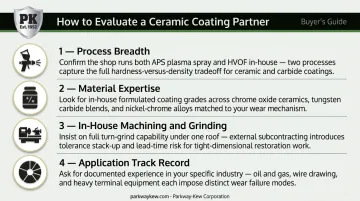
Choosing a coating provider involves more than confirming they operate a plasma spray gun. The evaluation should cover:
- Process breadth — does the provider offer both APS and HVOF, or only one? Single-process shops limit your options as application requirements change
- Material expertise — familiarity with specific ceramic formulations for your application, not just general coating experience
- In-house machining and grinding — post-coating dimensional finishing is critical; outsourcing it adds lead time and introduces tolerance risk
- Application track record — a provider who has coated hundreds of wire drawing blocks understands drawline wear patterns differently from one who primarily coats turbine components
Coating material selection, thickness specification, and finishing process all differ significantly across applications. A provider's background in your specific industry shapes every decision, from how thick to apply a chrome oxide layer to how tightly to hold post-grind tolerances.
Parkway-Kew's 74 years of specialization in industrial wear applications — wire drawing, oil and gas, and shipping terminal equipment — means those decisions are informed by direct experience, not extrapolation from unrelated work. Their Restore & Grind process, for example, was developed specifically around the wear geometry of wire drawing blocks: filling only the drawline wear zone and blending seamlessly with the original coating, enabling 5–7 lower-cost repair cycles before full recoating is needed.
Practical due diligence steps when evaluating a coating provider:
- Request performance data specific to your application (hardness, porosity, bond strength)
- Ask about quality documentation practices — what comes with the coated component
- Confirm in-house grinding capability and the tolerances achievable post-coating
- Understand whether they can support component rebuild and regrinding, reducing turnaround time and total cost
Frequently Asked Questions
What is a ceramic coating in thermal spray, and how does it differ from a solid ceramic component?
Thermal spray deposits ceramic material — in powder form — onto a metal substrate using heat and velocity, creating a bonded coating rather than a monolithic ceramic part. This eliminates brittleness cracking under impact loads, removes slippage risk, and allows precise application on complex metal geometries.
Which thermal spray process is better for ceramic coatings — plasma spray or HVOF?
Neither is universally better. Plasma spray is preferred for thermal barrier coatings and complex geometries where controlled porosity is a design requirement. HVOF produces denser, harder coatings better suited for wear and corrosion protection where microstructural integrity is the priority. Process selection follows directly from what the coating needs to do.
What industries use ceramic thermal spray coatings the most?
Aerospace (turbine TBCs via YSZ), oil and gas (pump and valve wear protection), power generation (boiler and turbine components), and industrial machinery including wire drawing. Each uses different ceramic materials — YSZ for aerospace, chromium oxide or alumina blends for wire drawing and oil and gas — and different spray parameters.
What is yttria-stabilized zirconia (YSZ) and why is it dominant in thermal barrier coatings?
YSZ combines low thermal conductivity (approximately 2.3 W/(m·K) at 1,000°C in bulk form), high-temperature stability, and resistance to thermal shock — properties that make it uniquely effective as a thermal barrier. Current research focuses on rare-earth-stabilized alternatives (gadolinium-zirconate, multi-element stabilizers) to extend performance at temperatures exceeding YSZ's practical limits.
Are ceramic thermal spray coatings cost-effective compared to replacing worn components?
Rebuilding and coating a worn component costs a fraction of buying new, and reduced downtime compounds those savings. The difference is greatest for large, precision-machined components where replacement lead times are long — wire drawing blocks, pump plungers, and heavy industrial machinery components are prime examples.
How long do thermal spray ceramic coatings typically last?
In abrasive or high-temperature service, plasma spray and HVOF ceramic coatings routinely extend component life several times over compared to uncoated substrates — exact duration varies with environment, coating thickness, and surface prep. For wire drawing blocks, Parkway-Kew's Restore & Grind process pushes the maintenance cycle further by enabling multiple lower-cost repairs before full recoating is needed.