Powder coating is a dry, electrostatically-applied finishing process that has become a go-to choice across automotive, architectural, and industrial sectors. It's popular for good reason, but it isn't universal. This article breaks down five real pros and five real cons of powder coating, including where it starts to fall short for industrial-grade demands.
Key Takeaways
- Powder coating outperforms liquid paint on durability, cost, and VOC compliance
- Curing oven size and heat sensitivity limit which parts qualify for the process
- Extreme wear, oversized parts, or high heat call for HVOF, thermal spray, or hardfacing
- The right coating choice depends on budget, part size, environment, and wear intensity
What Is Powder Coating and How Does It Work?
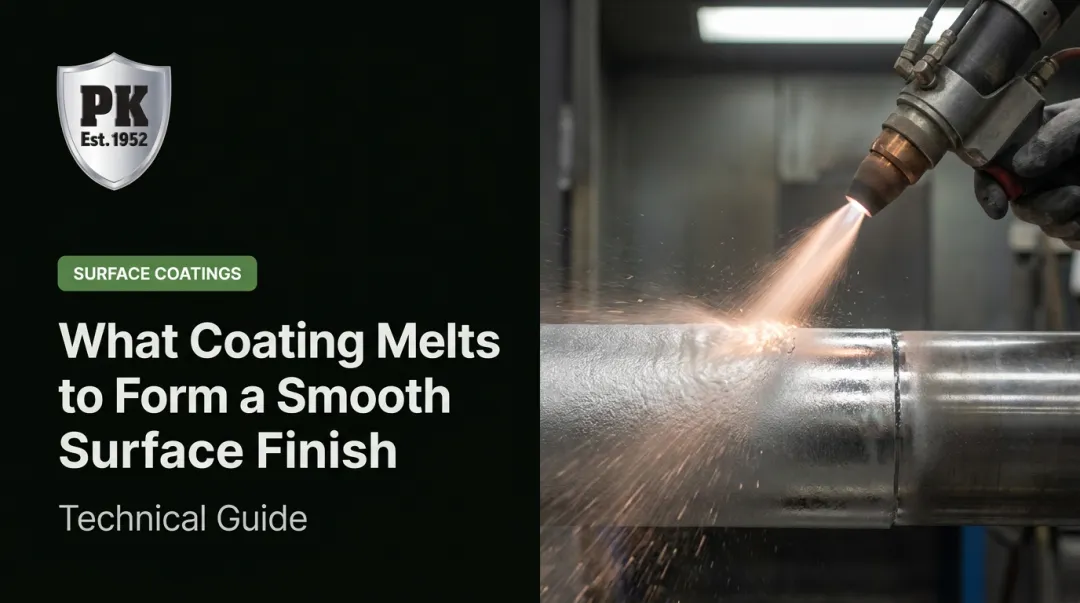
Powder coating starts with a dry polymer resin powder. It gets electrostatically charged, sprayed onto a grounded metal substrate, and then baked in a curing oven where it melts and chemically cross-links into a hard protective shell.
Cure schedules vary by part mass. A standard polyester powder needs the metal itself, not just the surrounding air, to hit 400°F for 10 minutes.
Thin sheet metal cures in about 20 minutes. Heavy steel castings can take 45-60 minutes or longer, depending on the manufacturer's cure specifications.
Traditional liquid or solvent-based paint works differently. It relies on solvent evaporation to dry and typically needs multiple coats to build film thickness. Powder skips the solvent step entirely, which changes both the application economics and the environmental profile.
Industries that lean on powder coating today:
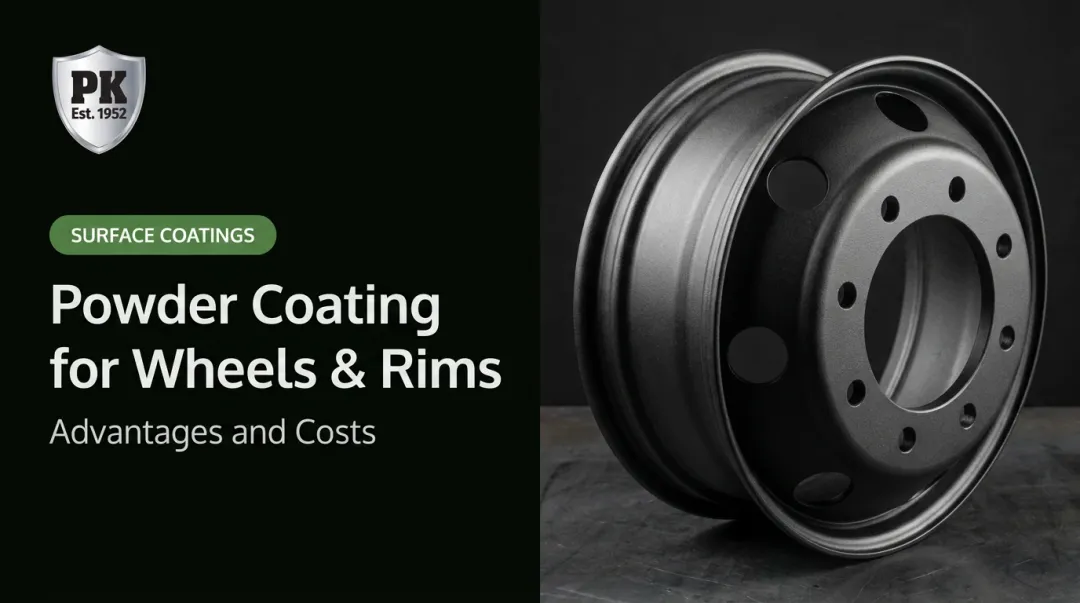
- Automotive parts and wheels
- Appliance manufacturing
- Outdoor and indoor furniture
- Architectural aluminum extrusions and panels (qualified under AAMA 2604/2605 standards)
With the basics covered, let's look at where powder coating earns its reputation, and where it doesn't.
The Pros: 5 Key Benefits of Powder Coating
Superior Durability and Wear Resistance
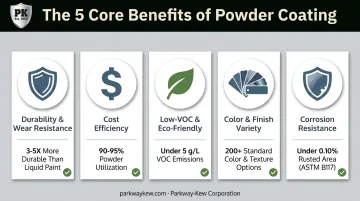
The electrostatic application process builds a thick, uniform, cross-linked finish that resists chipping and scratching far better than typical liquid paint. In one EPA-documented plant conversion, powder-coated panels showed less than 0.10% rusted area after 175 hours of salt spray testing, compared to 50-100% rusted area on the solvent-based incumbent.
Direct impact resistance told a similar story: over 160 in-lb for powder versus 44 in-lb for the solvent system, according to EPA testing data. That's one converted facility's results, not a universal ratio, but it illustrates the gap.
Long-Term Cost Efficiency
Powder coating's biggest financial edge is material utilization. Because overspray gets captured and recirculated, most metal-furniture facilities achieve 90-95% powder utilization, according to EPA process data.
Compare that to standard liquid spray, where at least half the coating volume can end up as overspray waste. Electrostatic spray transfer efficiency alone runs 50-95%, versus 25-50% for conventional spray guns.
Environmentally Friendly, Low-VOC Process
Powder coating contains no solvents and emits, in the EPA's words, "virtually no VOCs." That matters more each year as air quality regulations tighten around manufacturing facilities.
There's a safety tradeoff worth knowing: powder dust is combustible, so OSHA requires proper ventilation, grounding, and interlocks under 29 CFR 1910.107. It's a different hazard profile than solvent fumes, not a free pass on safety planning.
Wide Range of Colors, Textures, and Finishes
Matte, gloss, metallic, textured, hammertone. Powder formulations now cover nearly every aesthetic a brand or architect could want. This flexibility supports:
- Consumer product branding (appliances, furniture)
- Architectural color matching across large building projects
- Functional textures that hide handling marks on industrial parts
Excellent Corrosion Resistance
A protective, cross-linked barrier helps prevent rust and oxidation on parts exposed to moisture or outdoor elements. High-performance architectural powder systems, like those tested against AAMA 2604 and 2605 standards, must survive 3,000 to 4,000 hours of salt spray exposure.
Some super-durable products report under 1mm of creep from the scribe line after 1,000 hours of testing. Formulation matters enormously here, so results vary by product.
The Cons: 5 Drawbacks to Consider Before Choosing Powder Coating
High Initial Equipment and Setup Investment
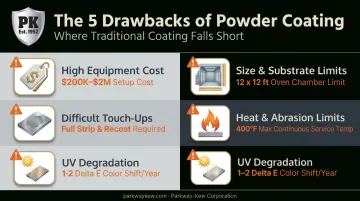
Spray guns, curing ovens, and booths aren't cheap. A production-scale in-house system can run $200,000 to $2 million installed, and fully automated lines can cost three to ten times more than batch systems with similar output, according to industry cost estimates.
For smaller shops, that's a serious capital commitment before the first part ever gets coated.
Size and Substrate Limitations
Curing oven dimensions set a hard ceiling on what can be coated. Standard batch ovens typically range from 6x6 feet up to 12x12 feet, with lengths up to 50 feet. Anything bigger needs a custom oven or a different process entirely. This becomes a real problem for:
- Large machine housings
- Industrial rollers and drums
- Oversized shafts or capstans
Substrate matters too. Conventional electrostatic deposition needs a conductive, grounded surface, so non-metal parts require special workarounds.
Difficult Color Matching and Touch-Ups
Powder batches don't always match perfectly. Batch-to-batch color deviation can run 1-2 Delta E even for lighter shades, according to manufacturer troubleshooting guides.
Worse, minor damage often can't be spot-repaired with more powder. Standard repair procedures actually call for a liquid touch-up paint after sanding, and that patch will weather at a different rate than the surrounding powder finish, becoming more visible over time.
Limited Performance Under Extreme Heat or Heavy Abrasive Wear
Standard powder coatings hold up fine for everyday wear, but they weren't built for continuous sliding contact or high-friction industrial loads. Some TGIC-polyester formulations show 40-60mg of coating loss after 1,000 Taber abrasion cycles.
There's no reliable "maximum service temperature" for generic powder coating either. Specialty high-temperature formulations exist, rated for 200-550°C (392-1022°F), but they're purpose-built products, not the standard shelf offering.
UV Degradation and Thickness Control Challenges
Certain formulations, particularly epoxy-polyester hybrids meant for interior use, will chalk and fade under prolonged UV exposure. Even high-performance architectural powders qualified under AAMA 2605 only guarantee color change under 5 Delta E and 50% gloss retention after a 10-year South Florida weathering test, not indefinite protection.
Thickness control adds another wrinkle: typical film builds run 60-120 micrometers (2.4-4.7 mils), and geometry or electrostatic effects can create uneven coverage on complex shapes.
Powder Coating vs. Industrial Hardsurfacing: When You Need More Than Powder Coating Can Offer
Powder coating earns its keep in automotive, architectural, and consumer applications. But heavy industrial equipment facing extreme abrasion, oversized dimensions, or relentless high-friction contact usually needs something built for a different kind of punishment.
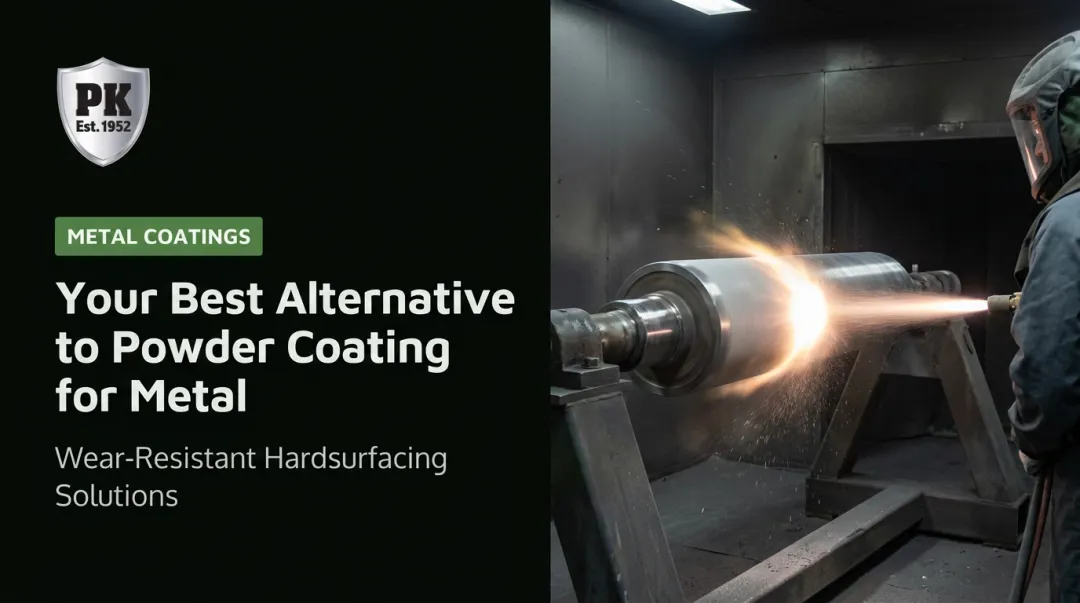
This is where Parkway-Kew Corporation operates. Since 1952, the company has specialized in HVOF, plasma spray, thermal spray (metallizing), and submerged arc hardfacing for parts that oven-cured powder coating simply can't handle:
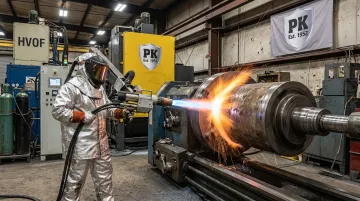
- HVOF coatings, introduced by Parkway-Kew in 1989, fire alloy powder at speeds exceeding Mach 2, producing a hard, defect-free surface for wire drawing blocks and capstans
- Plasma spray ceramic coatings, like PK-1500 chrome oxide, serve high-speed, high-slip wire drawing applications
- Thermal spray (metallizing) with PK-400 alloy remains the only practical hardsurfacing method for very large wire, where size constraints rule out other approaches
- Submerged arc hardfacing, pioneered by Parkway-Kew in the 1950s, is still the most cost-effective method for rebuilding wire drawing blocks
One standout example is PK-730, Parkway-Kew's proprietary fused tungsten carbide coating built for fracking plungers operating in some of the harshest conditions in oil and gas extraction.
Rather than a full strip-and-recoat every time a part wears down, Parkway-Kew's Restore & Grind process fills only the worn drawline area and blends it into the surrounding coating.
This allows 5 to 7 lower-cost repairs before a full recoat is ever needed, a meaningfully different economic model than powder coating's touch-up limitations.
Choosing the Right Coating for Your Application
Picking a finish comes down to four practical questions:
- Budget - Powder coating has lower upfront costs for small-to-mid volume runs; industrial hardsurfacing costs more per part but extends service life on high-wear components
- Part size and shape - Can it fit in a standard curing oven, or does it exceed 12x12 feet and 50 feet in length?
- Operating environment - Indoor decorative use versus outdoor chemical exposure versus continuous mechanical loading
- Expected wear intensity - Light handling versus constant abrasive contact
Powder coating tends to be the better fit for decorative, architectural, or moderate-wear applications. Thermal spray, HVOF, and hardfacing solutions make more sense for heavy industrial wear parts like wire drawing blocks, crane wheels, and fracking plungers - the same components Parkway-Kew rebuilds and recoats for wire mills, shipping terminals, and oil and gas operations across North America.
When in doubt, talk to a coating specialist before locking in a single method. The wrong choice on an oversized or high-wear part can mean premature failure and unplanned downtime.
Frequently Asked Questions
What are the advantages of coating?
Coatings like powder coating offer durability, cost savings through material efficiency, low environmental impact, and a wide range of aesthetic finishes. They protect parts from corrosion while supporting branding and design goals.
What are the disadvantages of powder coating?
Main drawbacks include high upfront equipment costs, curing oven size limits, and difficulty with color-matched touch-ups. Damaged areas often require full recoating rather than spot repair.
Is powder coating better than traditional painting?
Powder coating generally wins on durability and environmental impact, with lower VOC emissions and better impact resistance. Liquid paint still has an edge for large parts, heat-sensitive substrates, and easier touch-ups.
How long does powder coating typically last?
Lifespan depends heavily on formulation, substrate prep, and exposure conditions. Some architectural-grade products carry warranties up to 20-30 years, while standard interior powders may perform for a shorter window under UV or chemical stress.
Can powder coating be used on large industrial equipment?
Curing oven dimensions cap what can go through the process, typically up to 12x12 feet and 50 feet in length. Oversized components like large rollers or drums often need alternatives like HVOF or thermal spray instead.
What's the difference between powder coating and industrial hardsurfacing methods like HVOF?
Powder coating is a decorative, moderate-wear polymer finish, while HVOF and other hardsurfacing methods create dense, metal-based coatings for severe abrasion and high loads. Parkway-Kew specializes in these industrial-grade hardsurfacing solutions for equipment operating under extreme wear conditions.