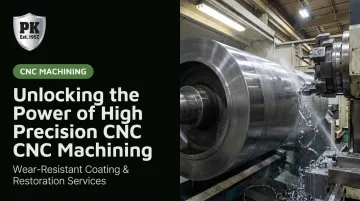
High precision CNC machining is what keeps that risk in check. It's the discipline of holding extremely tight tolerances consistently, whether you're producing one prototype or ten thousand identical parts. This guide covers what high precision CNC machining actually means, why it matters across industries, the processes and materials involved, and how to vet a manufacturing partner who can deliver on it.
Key Takeaways
- High precision CNC machining targets tolerances of ±0.001" to ±0.0005" or tighter
- Aerospace, medical, oil & gas, and heavy equipment industries rely on this precision to avoid failure
- Machine rigidity, material choice, and in-process inspection directly affect tolerances and cost
- Pairing precision machining with wear-resistant coatings extends life well beyond standard replacement cycles
What Is High Precision CNC Machining?
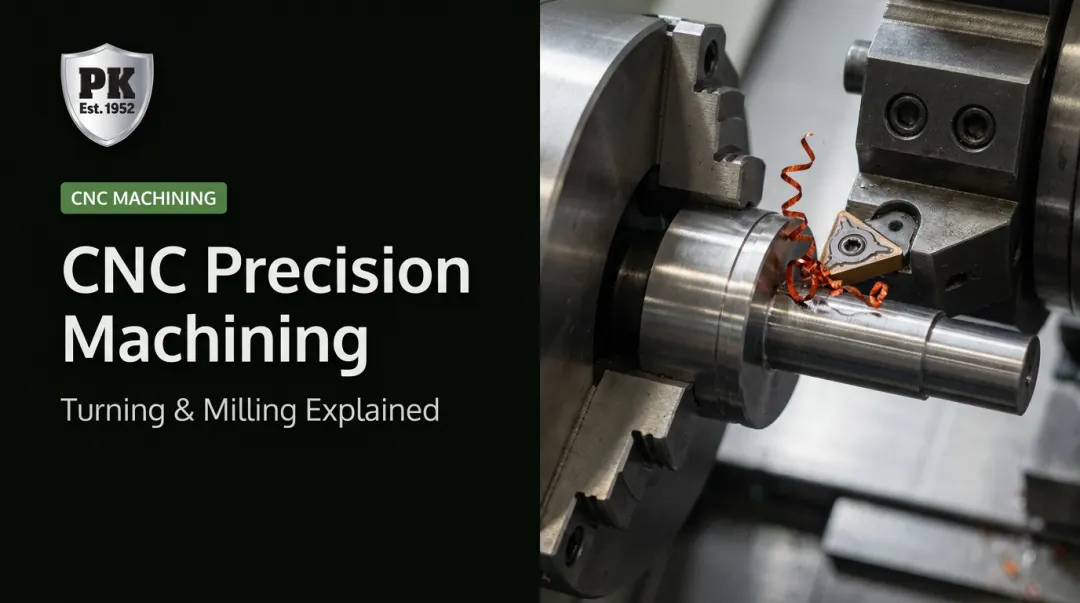
CNC (Computer Numerical Control) machining is a subtractive, automated process. A machine removes material from raw stock following digital CAD/CAM instructions, cutting, drilling, or grinding until the finished part matches the design file. Standard CNC machining and precision CNC machining use the same underlying technology, but they aim for different outcomes.
Standard CNC work often targets tolerances in the ±0.005" to ±0.010" range, perfectly fine for parts where a little variation won't affect function. Precision machining pushes further.
There's no single formal standard that defines the cutoff, but industry practice treats ±0.001" to ±0.0005" or tighter as the practical benchmark for "high precision" work. Some shops push tolerances as tight as ±0.0001" under specialized conditions, according to Modern Machine Shop's analysis of tight-tolerance machining.
Several factors push tolerances toward that tighter end:
- Machine rigidity — heavier, more rigid structures reduce vibration and tool deflection during cutting
- Thermal control — heat from spindles and ballscrews causes dimensional drift, so warm-up routines and compensation matter
- Tooling condition — tool wear, runout, and holder rigidity all affect how consistently a cutter holds size
- Metrology — measurement resolution has to be tighter than the tolerance being verified, or you're just guessing
These hardware factors only tell half the story. CAD/CAM software translates a digital design into G-code and M-code (the actual movement and machine-function instructions the CNC controller executes), and programming quality matters just as much as the machine itself. A poorly optimized toolpath can undo the benefits of even the best equipment.
Common Machine Types Used in High Precision CNC Machining
| Process | Best Suited For |
|---|---|
| CNC Milling | Complex, flat, or contoured parts using rotating multi-point cutters across multiple axes |
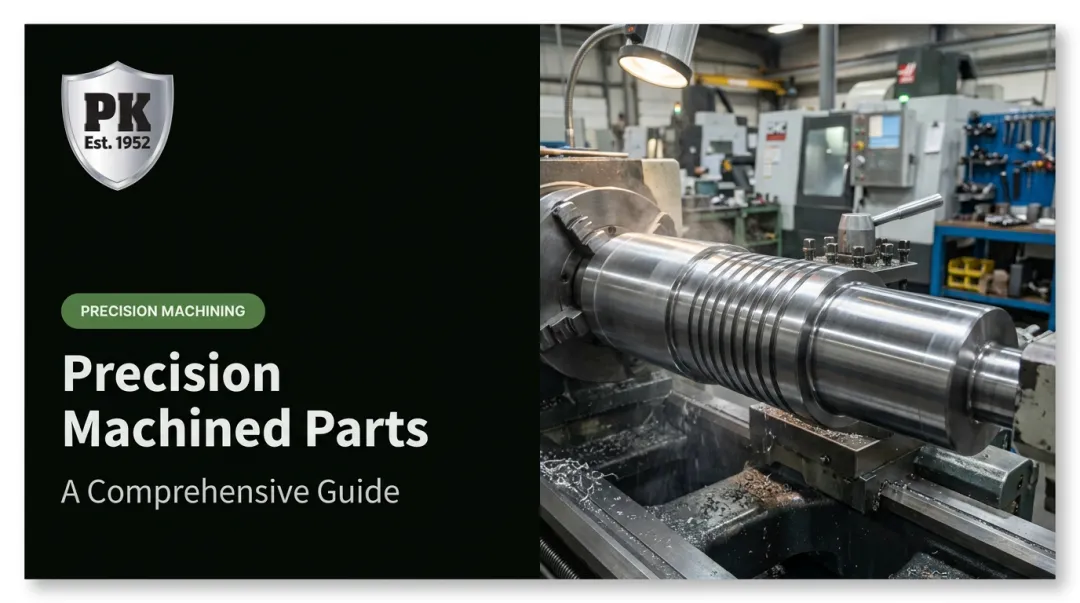
| CNC Turning/Lathes | Cylindrical, axially symmetric parts like shafts, bushings, and threaded components |
| Precision Grinding | Final sizing and surface finish control, especially on hardened metals |
| Wire & Sinker EDM | Hard metals and intricate geometries where mechanical cutting force isn't an option |
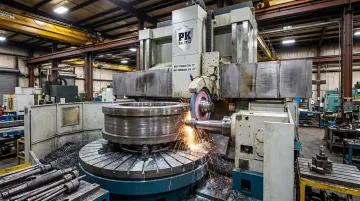
Large-diameter turning and grinding is a more specialized capability, and not every shop has it. Parkway-Kew's in-house equipment, for example, handles CNC milling and turning up to 72 inches in diameter and grinding up to 65 inches in diameter by 12 feet in length.
This capacity is built for heavy parts like wire drawing blocks and capstans that smaller job shops simply can't fit on their tables.
Why High Precision Machining Matters: Key Benefits
Precision machining isn't just about tighter numbers on a drawing. It changes what's possible in a production environment and what kind of failures you can rule out entirely.
Consistency across volume. Automated, repeatable programming means part 1 and part 10,000 come off the machine essentially identical. That matters enormously when components need to interchange in the field without custom fitting.
Less waste, lower cost per part. Optimized tooling and cutting parameters reduce scrap. One documented case from Impact CNC showed scrap rates falling from nearly 4% to below 0.5% after switching to digital boring heads and more rigid tool holders on a 105mm bore operation (Modern Machine Shop, 2022).
That's not a universal guarantee, but it illustrates what better tooling and repeatability can achieve.
Complex geometries become achievable. Turbine blades, custom medical implants, and wear-resistant industrial components all require geometries that would be impossible to hold to tolerance with manual methods.
Beyond capability, precision prevents downstream problems:
- Assembly misalignment from stacked dimensional errors
- Fluid or pressure leaks in sealed components
- Premature wear from improper fit or clearance
Material versatility is another advantage. The same precision processes that machine soft aluminum can be adapted, with different tooling and parameters, for hardened steels, titanium alloys, and engineering plastics.
Industries and Materials That Depend on High Precision CNC Machining
Key Industries Relying on Precision CNC Machining
Some sectors simply don't have room for error:
- Aerospace and automotive: Safety-critical tolerances aren't negotiable; a fraction-of-a-millimeter deviation in a structural or rotating part can compromise the entire assembly
- Medical device manufacturing: Micro-level deviations in an implant or surgical instrument can directly affect patient outcomes
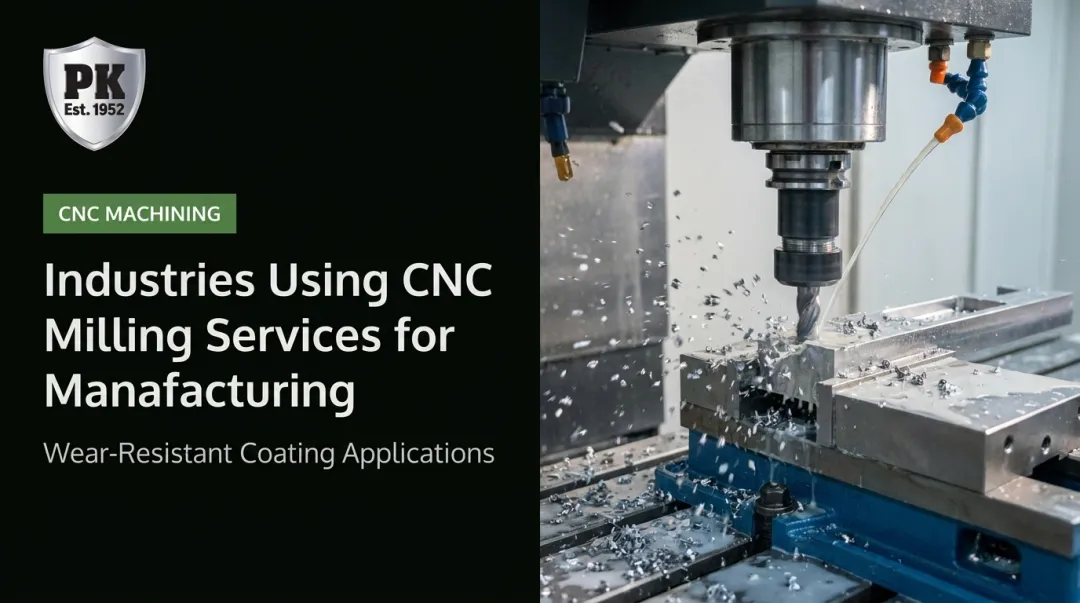
- Oil & gas and heavy equipment: Components like fracking plungers, wire drawing blocks, and capstans face extreme mechanical and abrasive stress, where precision-machined, wear-resistant surfaces determine service life
In wire mill operations specifically, a drawing block's groove profile has to stay dimensionally exact across its entire service life. Any wear or misalignment introduces surface defects into every foot of wire that passes over it.
Materials Commonly Machined to High Precision
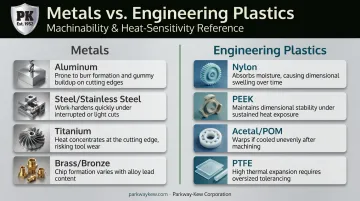
These same industries place different demands on materials, from metal hardness to plastic heat sensitivity.
Metals commonly held to tight tolerances include:
- Aluminum (highly machinable, though soft grades can form burrs)
- Steel and stainless steel (machinability varies by carbon content and hardness; stainless tends to work-harden)
- Titanium (low thermal conductivity concentrates heat at the cutting edge)
- Brass and bronze (machinability varies by alloy)
Engineering plastics present a different challenge — heat sensitivity rather than hardness:
- Nylon (moisture absorption changes dimensions over time)
- PEEK (better dimensional stability than most thermoplastics)
- Acetal/POM (stable, but overheating causes shrinkage or warping)
- PTFE (high thermal expansion makes clamping and sizing difficult)
Tolerances and Cost: What Buyers Should Know
Tighter tolerances cost more. That's not a controversial statement, but it's worth breaking down why.
Holding a tight tolerance generally demands more rigid machines, slower cutting speeds, additional setups, and in-process inspection. All of that adds time and labor. Xometry, for instance, publishes default tolerances of ±0.005" for metals and ±0.010" for plastics, and notes that going tighter typically adds scrap risk, fixturing complexity, and cycle time.
| Tolerance Level | Typical Impact |
|---|---|
| Loose (±0.005"–±0.010") | Faster cycles, simpler inspection, lower cost |
| Tight (±0.001"–±0.0005" or better) | More setups, secondary processing, dedicated measurement, higher cost |
Here's the part buyers sometimes miss: the true cost of insufficient precision usually exceeds the cost of doing it right the first time. A part that's out of tolerance doesn't just get scrapped; it can trigger a failed assembly, a warranty claim, or unplanned downtime on a customer's production line.
Quality frameworks split this into two cost buckets:
- Prevention and appraisal costs: inspection, calibration, and in-process checks
- Failure costs: scrap, rework, warranty claims, and unplanned downtime
The failure side is almost always more expensive.
Practical takeaway: apply tight tolerances only to the features that actually require them, such as fit surfaces, seals, and wear zones, rather than tightening every dimension on the print.
Choosing the Right High Precision CNC Machining Partner
Not every shop that advertises "precision machining" can back it up consistently. Before committing to a supplier, dig into three areas:
- Technical capability: Ask what machines they run and what tolerance ranges they routinely hold, not just what they claim they can hit once. Confirm their inspection process includes calibrated gauges, CMM access, and in-process checks, not just an on-machine probe.
- Certifications and experience: ISO 9001 signals a documented quality system, though certification alone doesn't prove they can hold your specific part's tolerance. Industry-specific experience matters more: a shop that's spent decades in your sector understands failure modes a generalist won't.
- Size and volume fit: Confirm the supplier can handle your part, from small prototypes to oversized industrial components. A shop with standard-size machines can't help if your part needs 65-inch diameter grinding capacity.
Why Precision Machining and Wear-Resistant Coatings Go Hand-in-Hand
For heavy-wear industrial parts, precision machining alone isn't the whole story. A wire drawing block, capstan, or fracking plunger can be machined to a perfect tolerance and still fail early if the surface itself can't stand up to abrasion, friction, or corrosion.
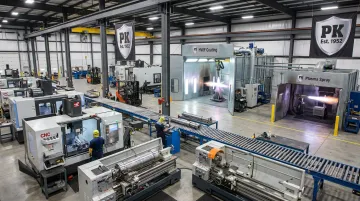
That's where surface durability enters the equation. Parkway-Kew Corporation pairs in-house CNC milling, turning, and large-diameter grinding (up to 65 inches in diameter and 12 feet long) with proprietary hardfacing, HVOF, and plasma spray coatings applied to the same components. The machining and coating happen under one roof, which means the finished surface is matched to precise dimensional requirements rather than coordinated across separate vendors.
Parkway-Kew has run this combined approach for more than 70 years, serving over 500 companies worldwide in oil & gas, wire mills, and heavy equipment. That's a direct result of housing machining and coating under one roof: no shipping parts between vendors, no mismatched tolerances, no added lead time.
Frequently Asked Questions
What is high precision CNC machining?
It's a CNC subtractive manufacturing process focused on holding extremely tight, consistent tolerances that go beyond what standard machining targets. It relies on rigid machines, careful thermal control, and dedicated inspection.
How precise can a high precision CNC machine be?
Most shops treat ±0.001" to ±0.0005" or tighter as the practical benchmark, though the achievable tolerance depends heavily on machine capability, material, and process control.
What is the difference between CNC machining and precision machining?
CNC machining describes the automated control method itself, while precision machining refers to the tight-tolerance outcome achieved using that method.
Is high precision machining only used for high-volume production?
No. It's used for both one-off prototypes and high-volume runs, with inspection and process controls scaling up to match the required consistency across the batch size.
What materials work best with high precision CNC machining?
Common metals include aluminum, steel, stainless steel, and titanium; common plastics include PEEK, acetal, and nylon. Material hardness and heat sensitivity both influence how tight a tolerance is realistically achievable.
What industries rely most on high precision CNC machining?
Aerospace, medical device manufacturing, and automotive top the list, alongside heavy industrial sectors like oil & gas and wire manufacturing, where component failure carries a high operational cost.