Exterior coating durability refers to how well a protective surface layer resists this combination of UV exposure, corrosion, abrasion, and weathering without cracking, wearing thin, or failing outright. For equipment operators, getting this wrong means unplanned downtime and expensive part replacements.
Coating technology has moved fast over the past two decades. Understanding these advancements helps industrial buyers make smarter procurement decisions, reduce maintenance costs, and stay ahead of competitors still using outdated protection methods. This article breaks down the trends, the forces driving them, and where the industry is headed next.
Key Takeaways
- HVOF, ceramic, and nanotech coatings deliver denser, longer-lasting protection than legacy thermal spray methods
- Predictive testing and accelerated weathering standards are shortening R&D cycles for new formulations
- Rising downtime costs and stricter VOC rules push manufacturers toward higher-performance, low-emission coatings
- Early adopters of advanced coatings see fewer replacements and lower lifecycle costs
Key Trends Shaping Exterior Coating Durability
Durability innovation isn't happening in one lane. It's spreading across materials science, application equipment, and testing methodology simultaneously.
HVOF and Advanced Thermal Spray Coatings
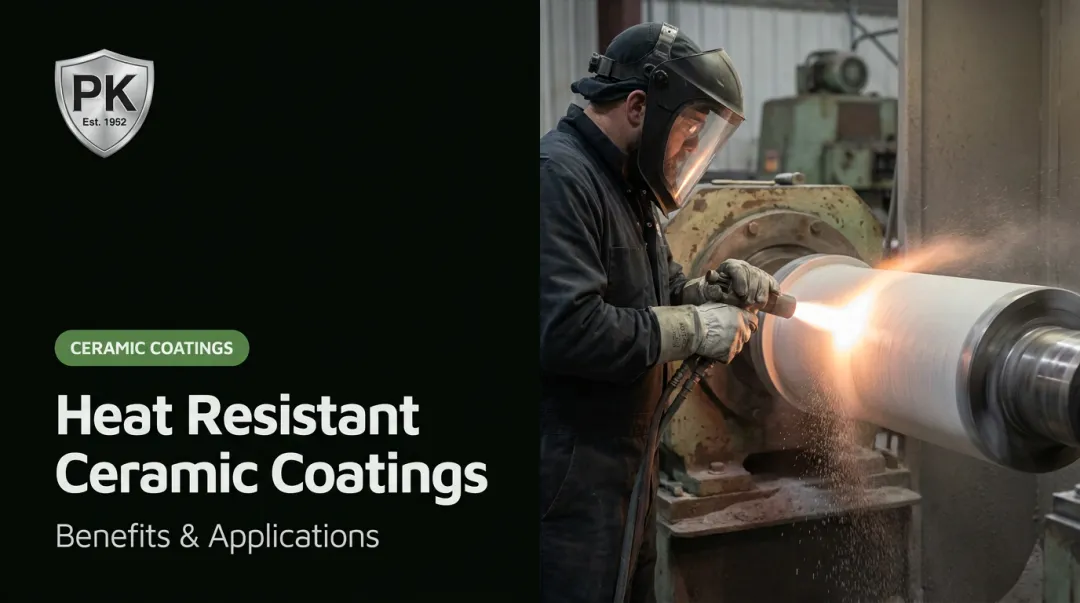
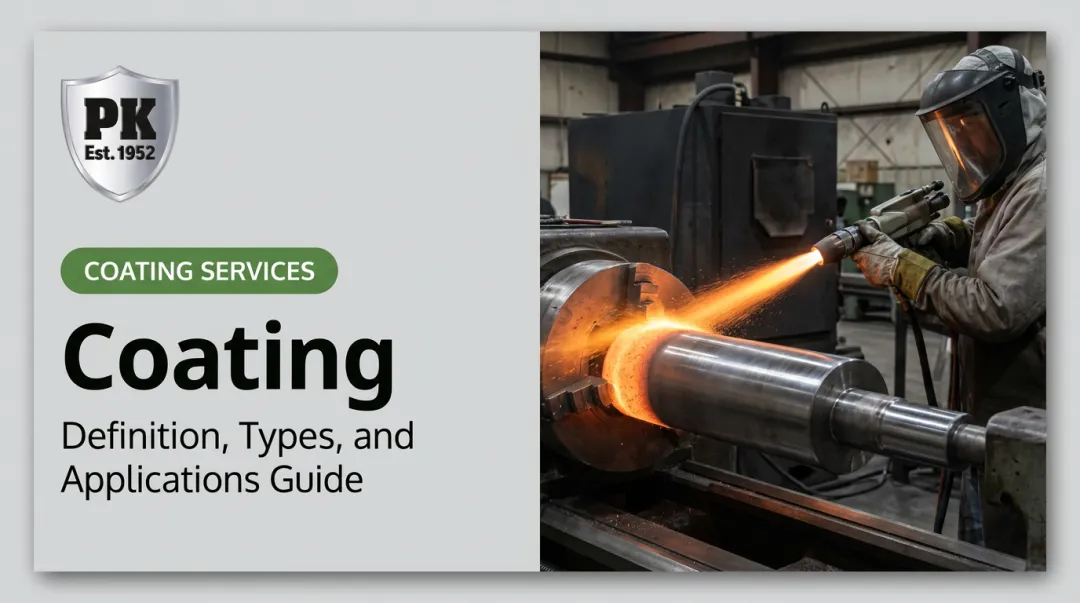
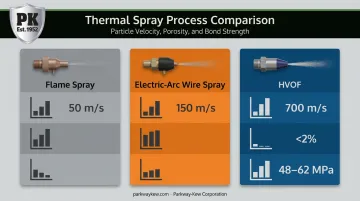
High Velocity Oxygen Fuel (HVOF) spray propels alloy powder at speeds up to 700 meters per second, dramatically faster than flame spray (roughly 50 m/s) or electric-arc wire spray (about 150 m/s). That extra velocity packs particles tighter on impact, producing coatings with less than 2% porosity and bond strengths reaching 48-62 MPa for ferrous alloys, according to Oerlikon's thermal spray technology overview.
The payoff shows up in wear numbers. A 2020 HVOF WC-12Co study on magnesium substrates recorded coating wear rates roughly 10,000 times lower than the bare substrate, with corrosion protection holding for at least 96 hours in salt spray testing.
Parkway-Kew introduced HVOF for wire drawing blocks back in 1989, well ahead of broader industry adoption. Its proprietary PK-730 fused tungsten carbide coating, used on fracking plungers, is built specifically for the harshest downhole conditions where abrasive slurry chews through standard nickel chrome coatings fast. This trend keeps growing because operators simply don't want to swap out high-friction components every few months.
Ceramic, Cermet & Composite Coatings
Solid ceramic components have a known weakness: they crack, break, or slip under mechanical stress. Ceramic-cermet coatings solve this by bonding a hard ceramic phase to a metallic substrate, trading a bit of pure ceramic hardness for real-world durability.
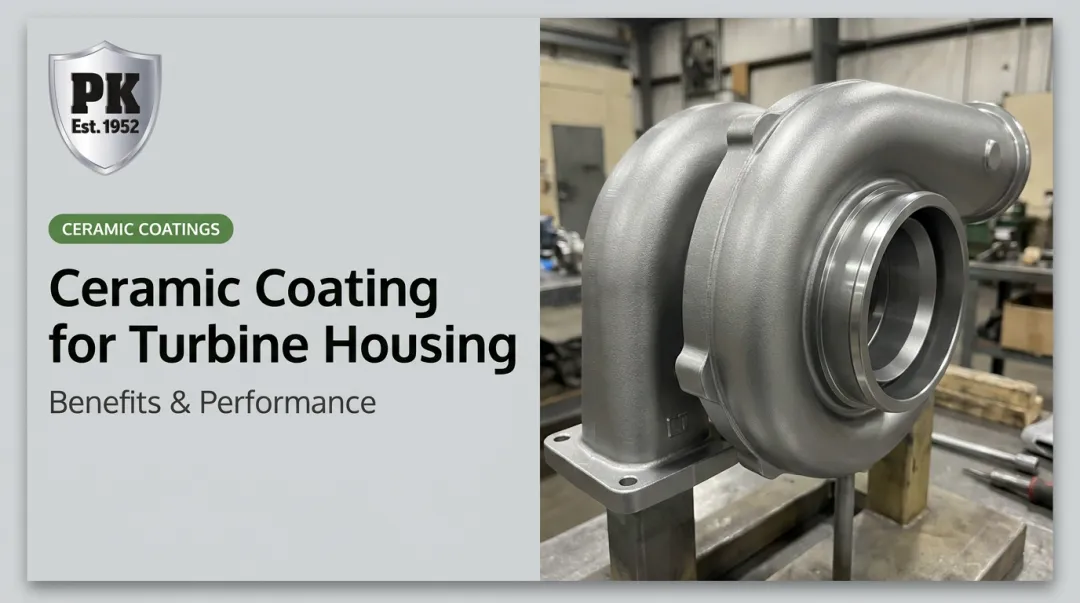
Industrial ceramic coatings typically last 2 to 5 years, depending on UV exposure, chemical contact, and maintenance quality. That range makes them attractive for cost-sensitive applications where solid ceramic parts would otherwise need frequent replacement.
Parkway-Kew's PK-1500 chrome oxide coating, applied via plasma spray, is a good example: it's proven cost-effective for high-speed, high-slip ferrous wire drawing, particularly on small or plated wires where surface precision matters.
Nanotechnology-Enhanced & Self-Healing Coatings
Nano-additives strengthen coatings at the molecular level, helping them resist micro-cracking before it spreads. Self-healing polymer chemistries take this further, actually repairing minor surface damage without human intervention.
Hyundai Motor Group demonstrated this in July 2023, unveiling a nanomaterial-enhanced polymer coating that bridges surface damage through polymer reactions. It restores itself in roughly two hours at room temperature, with no heat lamp or accelerant required.
It's still being refined for camera lenses and LiDAR sensors first, with vehicle paint as a longer-term goal. Industrial applications are watching closely.
Sustainable, Low-VOC High-Durability Formulations
Regulatory pressure has pushed the coatings industry toward waterborne and low-VOC formulations. The catch: historically, waterborne acrylics and alkyds haven't always matched two-component solvent systems for film build and weathering resistance.
Waterborne systems also require roughly six times more energy to evaporate water than traditional solvents, which creates real application challenges in humid or cold environments. New chemistries are closing the gap: urethane-alkyd-acrylic hybrids, second-generation polyaspartics, and hydroxyl-functional acrylic dispersions are approaching solventborne durability without the emissions penalty.
Advanced Weathering Simulation & Predictive Testing
Manufacturers can no longer afford years of real-world exposure testing before releasing a new formulation. Accelerated weathering methods like xenon-arc testing under ASTM D7869 simulate UV exposure, moisture, and thermal cycling to predict gloss loss, cracking, and adhesion failure far faster than field trials alone.
This matters because it shrinks the guesswork out of material selection. R&D teams can screen multiple formulations in months instead of years, then validate the strongest candidates with targeted field exposure.
What's Driving These Coating Durability Trends
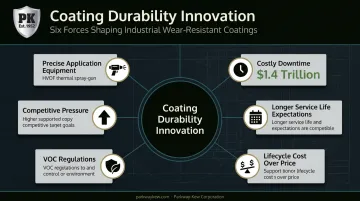
Several economic and operational forces are pushing this innovation forward at once.
- More precise application equipment: Modern HVOF guns, plasma spray systems, and CNC-integrated processes now allow tighter, more repeatable coating tolerances than older manual methods.
- Costly downtime: Siemens estimates unplanned downtime costs the world's 500 largest companies roughly $1.4 trillion annually — about 11% of revenue, representing millions in lost production for even a single heavy-industry plant.
- Longer service life expectations: Nobody wants to schedule replacement crews every quarter when a better coating can stretch that interval significantly.
- Lifecycle cost over sticker price: A coating that costs more upfront but lasts three times longer usually wins the procurement conversation once labor and downtime costs are factored in.
- Ongoing VOC regulations: Providers must reformulate without sacrificing corrosion or weathering resistance, keeping R&D budgets active.
- Fierce competition among providers: Companies that stop investing in proprietary formulations quickly lose ground to those that do.
How These Trends Are Impacting the Industrial Coatings Industry
These advancements are reshaping maintenance planning, capital budgets, and even hiring priorities across the sector.
Operational Impact
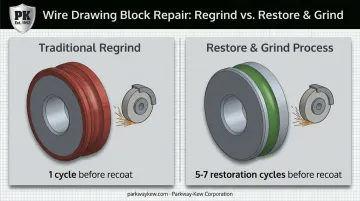
Longer-lasting coatings mean fewer replacement cycles and less unplanned downtime. Parkway-Kew's Restore & Grind process illustrates this well. Instead of grinding an entire wire drawing block down to its deepest worn groove, the process fills only the drawline wear area and blends it seamlessly with the original coating.
That targeted repair approach allows 5 to 7 restoration cycles before a full recoat is needed, compared to a traditional regrind that strips away plenty of still-functional coating along with the damaged section. Facilities are also shifting toward wear-monitoring and scheduled maintenance rather than waiting for reactive failure.
Business Impact
Procurement teams are increasingly willing to pay more upfront for coatings that reduce total cost of ownership. Parkway-Kew's tiered fracking plunger options show this shift clearly. Standard PK-62 nickel chrome works fine for general conditions, but operators facing the harshest environments choose PK-730 tungsten carbide for its extended service life, even at a higher initial cost.
Performance guarantees and field-tested claims are becoming competitive differentiators too. Parkway-Kew's urethane-coated festoon wheels, for instance, have demonstrated 2 to 3 years longer service life than OEM equivalents in repeated shipping crane field tests.
Workforce Impact
Advanced application methods demand specialized skills. HVOF operation, plasma spray, and CNC grinding aren't jobs you learn overnight, and that's pushing companies to invest more in technician training. Maintenance teams are also being cross-trained to recognize early wear signals specific to newer coating systems, so problems get caught before they become costly failures.
Future Signals for Exterior Coating Durability
Watch for these developments over the next one to three years:
- IIoT sensors monitoring real-time coating wear and corrosion directly on exterior equipment, catching degradation before visual inspection would.
- Bio-based resin systems and hybrid coatings that pair thermal spray layers with penetrating sealant top-coats to block porosity-driven corrosion.
- Application-specific predictive testing, where manufacturers customize coating formulations per use case rather than defaulting to generic industry-standard options.
None of these signals are fully mature yet, but each targets a specific gap: selection guesswork, delayed failure detection, and one-size-fits-all formulations that don't match real operating conditions.
Conclusion
HVOF, ceramic-cermet composites, nanotech self-healing chemistries, low-VOC formulations, and predictive testing are collectively extending the service life of exterior coatings across nearly every industrial application. Companies that adopt these innovations early tend to see fewer replacements, less downtime, and stronger long-term ROI.
Staying ahead of these shifts often comes down to partnering with a coating provider that's been solving these exact problems for decades. Parkway-Kew has been refining hardsurfacing and thermal spray technology since 1952. That depth of experience shows up in how quickly new innovations reach real-world applications, like wire drawing block coatings.
Frequently Asked Questions
What is the most durable coating?
HVOF and tungsten carbide-based thermal spray coatings are among the most durable options for industrial exterior wear and corrosion resistance. Ceramic and PVD coatings tend to lead in decorative-functional hybrid applications instead.
Can ceramic coating really last 10 years?
Most industrial ceramic coatings last 2 to 5 years, depending on environment and maintenance quality. A 10-year lifespan is uncommon and would require ideal conditions plus a premium formulation.
What factors most affect exterior coating durability?
Material selection, surface preparation quality, application precision, and environmental exposure severity are the biggest factors. Weak surface prep alone can undermine even a premium coating's performance.
How does HVOF coating compare to traditional thermal spray methods for durability?
HVOF produces denser, lower-porosity coatings with much stronger bond strength than older flame or arc spray methods. This translates directly into better wear resistance and longer service life.
How often should industrial coatings be reapplied or restored?
Reapplication frequency depends on exposure severity and coating type rather than a fixed schedule. Restoration processes like Parkway-Kew's Restore & Grind can extend usable life through multiple targeted repairs before a full recoat is needed.
Which industries benefit most from advancements in exterior coating durability?
Oil and gas, wire mills, heavy equipment manufacturing, and shipping terminal operations see the biggest gains. These sectors run equipment continuously in abrasive, corrosive, outdoor environments where coating failure directly costs production time.