In industrial settings like marine terminals, oil and gas fields, and wire mills, undiagnosed corrosion doesn't just look bad. It leads to unplanned downtime, expensive part replacement, and genuine safety risks when structural components fail without warning.
This guide breaks down why aluminum corrodes, the warning signs worth watching for, and prevention strategies that actually hold up in harsh operating environments, including the protective coatings that extend component life.
Key Takeaways
- Aluminum's oxide layer only protects within a pH range of 4-9
- Galvanic corrosion, pitting, filiform attack, and chemical exposure are the main failure modes
- Ignored corrosion concentrates stress, triggering fatigue cracking in load-bearing parts
- Alloy selection, coatings, sacrificial anodes, and smart design work together, not alone
- Routine inspection and maintenance records catch problems before they escalate
Common Causes of Aluminum Corrosion
Aluminum forms an oxide layer, Al2O3, almost instantly when exposed to oxygen. This film is typically self-healing and highly protective, which is exactly why aluminum earned its corrosion-resistant reputation in the first place.
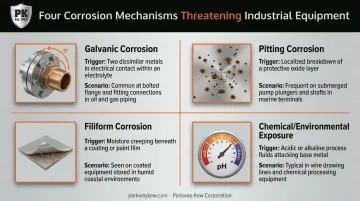
But that reputation has limits. Specific electrochemical and chemical conditions strip away this protection, and once it's gone, corrosion moves quickly. Here's how the four main mechanisms work.
Galvanic Corrosion
When aluminum contacts a more "noble" metal, such as copper, steel, or bronze, in the presence of an electrolyte like saltwater, it creates a galvanic cell. Aluminum sits lower on the galvanic scale than most common structural metals, so it becomes the anode and corrodes preferentially.
Military seawater testing consistently ranks aluminum alloys as more active than steels, brass, bronze, and copper.
Typical scenario: Aluminum fittings or fasteners in direct contact with stainless steel or brass hardware on marine equipment or in wet industrial settings.
Pitting Corrosion
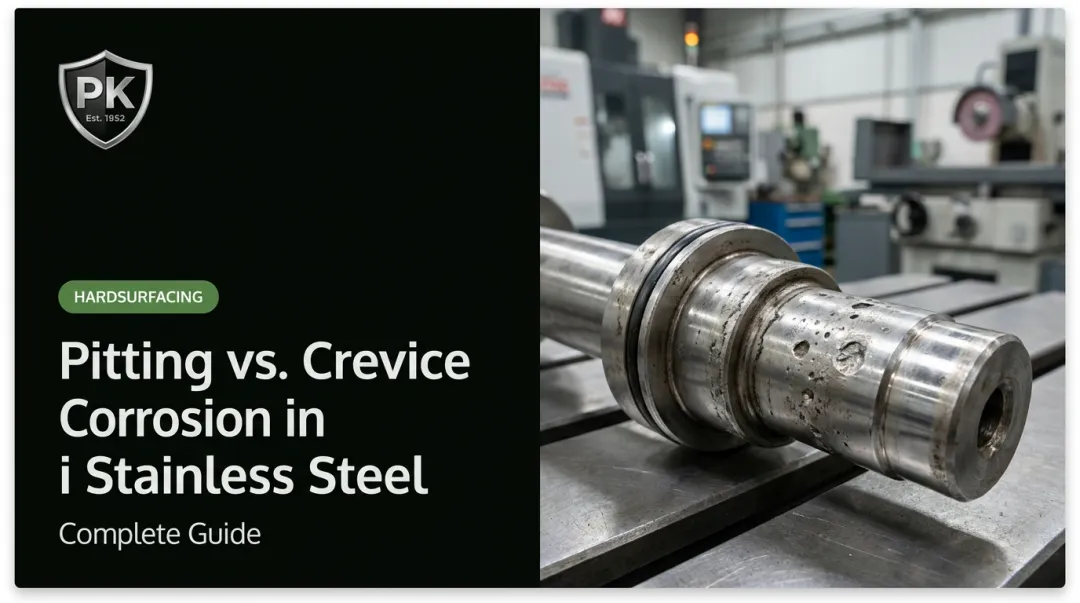
Chloride ions penetrate the oxide layer at localized weak points, creating small but sometimes deep pits.
A 34-month tropical marine exposure study on Aluminum 1060 documented serious pitting with a corrosion rate near 1.28 g/(m²·a) after just 13 months, with aluminum hydroxide and aluminum chloride showing up in the corrosion product layer.
Typical scenario: Coastal atmospheres, de-icing salt exposure, or industrial environments with airborne chlorides settling on equipment surfaces.
Filiform Corrosion
This one starts small, at a scratch or chip in paint or coating. Moisture and chlorides creep beneath the film in thread-like patterns, spreading outward from the damage point.
Typical scenario: Painted aluminum panels, siding, or equipment housings that picked up surface damage during handling or shipping.
Chemical & Environmental Exposure
Aluminum's oxide layer stays stable across roughly pH 4.0 to 9.0. Strong acids and alkalis, including uncured concrete, dissolve it outright, leaving bare metal exposed to attack.
Typical scenario: Construction sites where aluminum contacts wet concrete, or industrial floors with acidic or alkaline runoff.
What Happens If Aluminum Corrosion Is Ignored
Corrosion left unaddressed doesn't stay cosmetic. Progressive pitting concentrates stress at localized points, which can trigger fatigue cracking in load-bearing parts. That's a structural failure risk, not just an appearance problem.
Corrosion is expensive on a global scale, too. NACE's IMPACT study estimated the total global cost of corrosion at $2,505 billion, or 3.4% of 2013 global GDP, and found that existing corrosion-control practices could save 15-35% of that figure.
This figure spans all materials, not just aluminum, but it underscores the stakes for any facility running aluminum components without a maintenance plan.
Warning Signs You're About to Experience Aluminum Corrosion
Catching corrosion early prevents the kind of advanced damage that's expensive and slow to repair. Watch for:
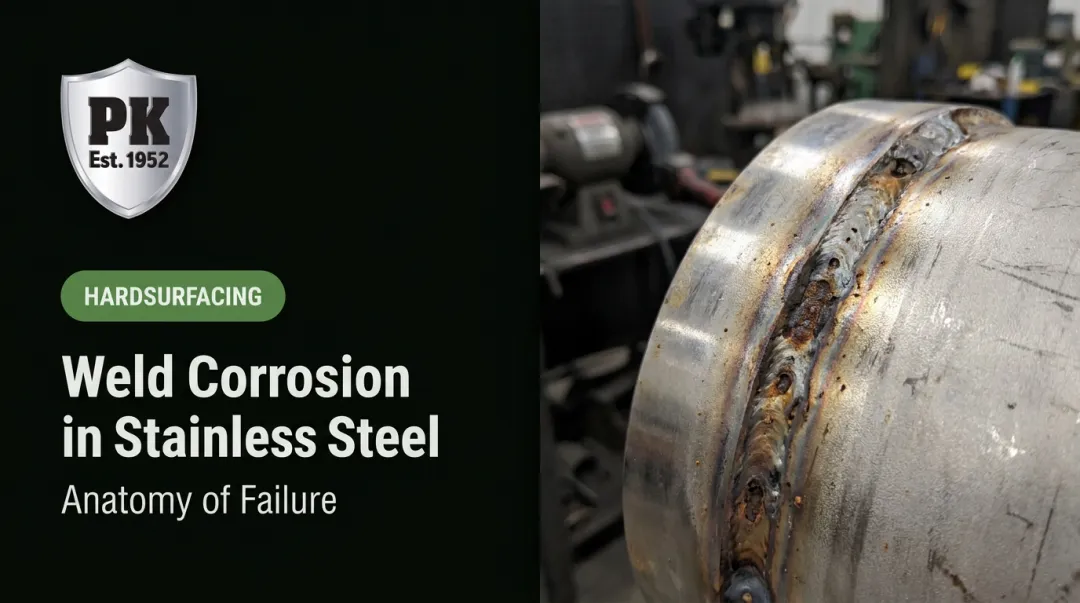
- White or gray powdery deposits: Aluminum hydroxide forming on the surface, often mistaken for dust
- Small pits, pinholes, or dulling: Surface changes that go beyond normal patina
- Bubbling, flaking, or lifting paint: Thread-like patterns signal filiform corrosion
None of these signs are subtle once you know what to look for. Regular visual checks on high-risk components catch them before they turn into structural problems.
How to Prevent Aluminum Corrosion
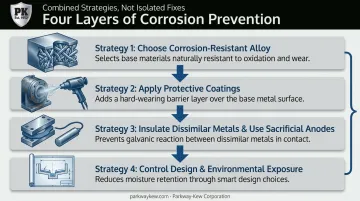
Preventing aluminum corrosion takes a layered approach: the right alloy, protective barriers, smart design, and consistent maintenance, applied from the earliest stages of a project through its full service life.
Choose a Corrosion-Resistant Alloy
What to do: Specify marine-grade alloys like the 5xxx or 6xxx series for high-exposure applications.
How it blocks corrosion: These series carry far less copper than 2xxx alloys. The Aluminum Association's composition standards put 2024 at 3.8-4.9% copper, versus no more than 0.10% in 5083 and 0.15-0.40% in 6061. Lower copper content means better inherent resistance to pitting and galvanic attack.
When to implement: At the design and material specification stage, before fabrication starts.
Apply Protective Coatings
What to do: Use anodizing, powder coating, paint, or advanced thermal spray coatings to seal the surface from moisture and chlorides.
How it blocks corrosion: A coating creates a physical barrier that blocks electrolyte contact and reinforces the natural oxide layer underneath. Industrial-grade processes like HVOF, plasma spray, and metallizing, similar to what Parkway-Kew Corporation applies to high-wear components, extend that protection for equipment running in harsh marine, oilfield, or wire mill environments. These aren't cosmetic coatings. HVOF applies material at speeds exceeding Mach 2, building a dense, virtually defect-free surface that resists both wear and corrosive attack.
When to implement: During initial fabrication, or as a retrofit on parts already in service. Retrofit work is actually where a lot of the value shows up, since it restores worn components without a full replacement.
Insulate Dissimilar Metals & Use Sacrificial Anodes
What to do: Physically separate aluminum from more noble metals using non-conductive barriers, or install a sacrificial zinc anode.
How it blocks corrosion: Isolation breaks the electrical circuit that galvanic corrosion needs to function. Sacrificial anodes work differently: they divert the corrosive attack to a cheaper, replaceable component instead of the aluminum part you actually care about.
When to implement: Anywhere aluminum meets dissimilar-metal fasteners or fittings, especially in marine or consistently wet environments.
Control Design & Environmental Exposure
What to do: Design for proper drainage, avoid water-trapping crevices, keep aluminum away from wet concrete or harsh chemicals, and clean surfaces on a schedule.
How it blocks corrosion: Less time spent wet or exposed means fewer opportunities for corrosion to initiate in the first place. Simple as that.
When to implement: At the design stage, and as an ongoing maintenance routine. Rinsing exposed surfaces once or twice a year makes a measurable difference in coastal or industrial settings.
Tips for Long-Term Prevention and Control
Beyond the immediate fixes, a few habits keep corrosion under control for the long haul:
- Schedule routine visual inspections on high-risk components like fasteners, joints, and marine equipment to catch early pitting or filiform corrosion signs
- Train operators and maintenance staff on proper handling, safe cleaning agents, and how to spot early corrosion warning signs
- Document corrosion incidents and repairs to identify recurring failure points and refine material or coating choices over time
- Invest in advanced coating technologies or corrosion-monitoring sensors for critical, hard-to-replace industrial components
Conclusion
Aluminum corrosion stems from identifiable, predictable electrochemical and environmental causes, whether that's a galvanic mismatch, chloride exposure, or a coating breach that let moisture underneath. Understanding the mechanism is the first step toward stopping it.
Pairing the right alloy with protective coatings or professional hardsurfacing solutions, along with routine maintenance, keeps components reliable and reduces long-term costs. Parkway-Kew Corporation has applied HVOF, plasma spray, and metallizing coatings to demanding industrial environments since 1952. That same layered approach to protection applies whether the concern is wear, corrosion, or both at once.
Frequently Asked Questions
How do you fix aluminum corrosion?
Clean the surface, mechanically remove pitting or oxide buildup, and reapply a protective coating (anodizing, painting, or professional thermal spray) based on severity. Deep pitting on structural parts may need engineering assessment first.
Does WD-40 corrode aluminum?
WD-40 is generally safe on aluminum and can help displace moisture from the surface. Still, it's worth testing on a hidden area first, since some finishes or coatings may react differently.
How bad is aluminum corrosion?
Most aluminum corrosion is superficial or cosmetic, light pitting or oxide film. It becomes structurally serious when pitting concentrates stress in load-bearing parts left unaddressed over time.
What does aluminum corrosion look like?
Look for white or gray powdery deposits, small surface pits, a dulling finish, or thread-like patterns spreading beneath damaged paint.
Is aluminum corrosion the same as rust?
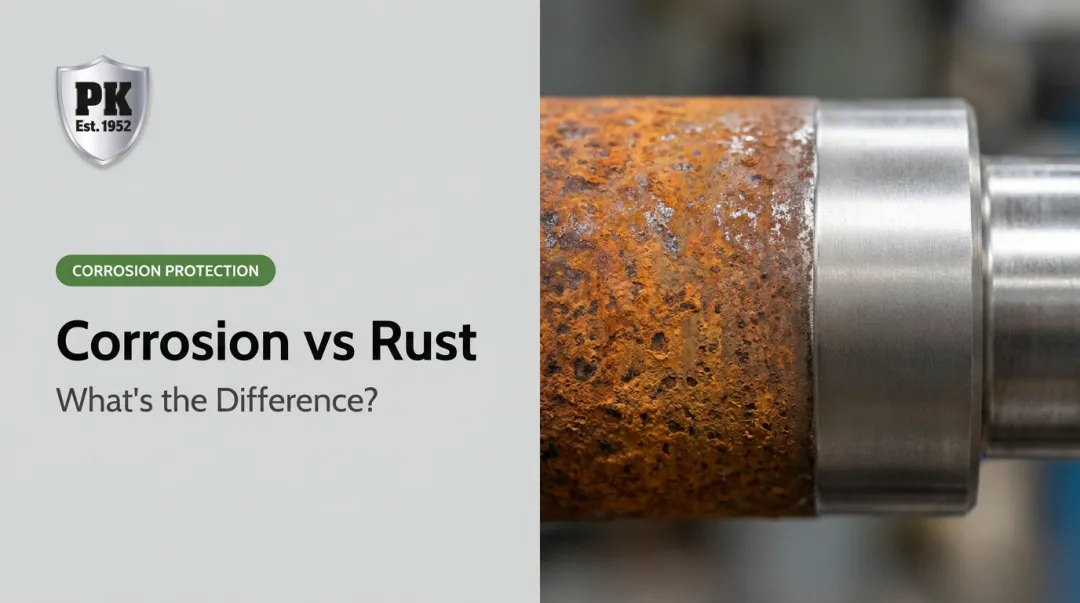
No. Rust is iron oxide, specific to ferrous metals. Aluminum forms a different compound, aluminum oxide, which is generally protective rather than destructive.
Can industrial coatings prevent aluminum corrosion long-term?
Specialized coatings like HVOF, plasma spray, and metallizing create a durable barrier that extends corrosion protection for industrial components in harsh environments. No coating lasts forever, but the right one buys years of reliable service.