Many engineers and procurement teams underestimate this. They focus on alloy selection and mold design, then treat machining as an afterthought. But machining quality determines whether a part holds tolerance, resists wear, and lasts as long as it's supposed to.
This guide breaks down what machined castings actually are, the four casting types you'll encounter, the tools and techniques used to finish them, and the best practices that separate a properly machined casting from a scrapped one.
Key Takeaways
- As-cast parts carry excess material from gates, risers, and parting lines that machining removes
- Sand and investment castings typically need far more finishing work than die-cast parts
- Machining allowance ranges from 0.5mm to 6mm depending on the casting process
- Tooling and speed selection must shift between abrasive cast iron and gummy cast aluminum
- Inspecting castings before machining prevents wasted labor on parts that were already defective
What Are Machined Castings?
A machined casting starts life as a part poured through sand, die, investment, or centrifugal casting. It's then finished with CNC milling, turning, drilling, or grinding to hit exact dimensional and surface finish requirements the raw casting can't achieve on its own.
Think of the casting process as rough shaping and machining as precision correction. One gets the geometry close; the other makes it exact.
Why As-Cast Parts Require Secondary Machining
Every casting arrives with material it doesn't need. Gating systems deliver molten metal into the cavity, risers feed extra metal to offset shrinkage during solidification, and parting lines leave flash where mold halves meet. All of it has to come off before the part functions.
The amount of finishing required varies by process. Die casting generally produces the smoothest as-cast surface, often needing only minor touch-up machining on critical features. Sand casting and investment casting, by contrast, usually require more extensive finishing due to rougher textures and looser dimensional control.
Common Casting Defects That Machining Must Correct
Porosity, shrinkage, warping, and rough surface texture are baked into the casting process itself. Foundries compensate by designing machining allowance, extra stock intentionally left on the part, directly into the mold.
Steel Founders' Society of America guidance puts typical machine-finish allowances at 6mm for green-sand castings, 2mm for shell castings, and 0.5mm for investment castings, according to SFSA Handbook Supplement 3. That stock gets machined away, taking surface defects and dimensional variance with it.
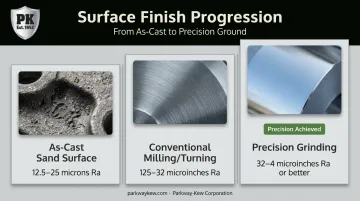
The finish-quality jump is measurable. As-cast sand surfaces typically fall in the 12.5-25 micron roughness range, while conventional milling or turning brings that down to 125-32 microinches Ra, per Norton Abrasives. Precision grinding can push finish quality even further, down to 32-4 microinches Ra or better.
Types of Castings Commonly Sent for Machining
Most machined castings originate from one of four processes. Each brings its own machining challenges to the table.
Sand Casting
Sand-cast parts need the most extensive machining of the group. Rougher surfaces and looser dimensional control mean more stock removal across more surfaces before the part meets spec.
Die Casting
Die-cast parts, common in aluminum, zinc, and magnesium, typically need less machining. NADCA's standard tolerance for die-cast features is plus/minus 0.25mm for the first 25.4mm, tightening to plus/minus 0.05mm under precision die-casting controls, according to NADCA's product specification standards. Tighter as-cast tolerances mean machining focuses on select critical features rather than the whole part.
Investment Casting
Investment casting produces near-net shapes, closer to the finished geometry than sand or die casting typically allows. Even so, threads, tight-tolerance bores, and mating surfaces almost always need machining since the wax-pattern process can't hold those features to spec on its own.
Centrifugal Casting
Centrifugal casting is the go-to method for large cylindrical components: wire drawing blocks, capstans, rollers, and similar rotating parts. These pieces typically demand precision turning and large-diameter grinding to finish properly.
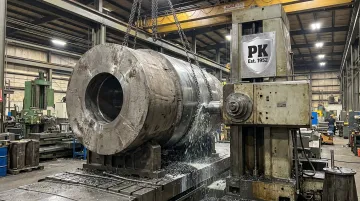
This is where equipment capacity becomes the limiting factor. Not every machine shop can handle a 60-inch cylindrical casting. Parkway-Kew runs in-house machining and grinding capability up to 65 inches in diameter and 12 feet in length. This scale was built specifically around large wire drawing blocks and capstans that smaller shops simply can't accommodate.
Machining Techniques & Tools for Castings
Most castings need a combination of techniques. Geometry, material, and the specific defects present all factor into which processes get applied and in what order.
CNC Milling & Turning
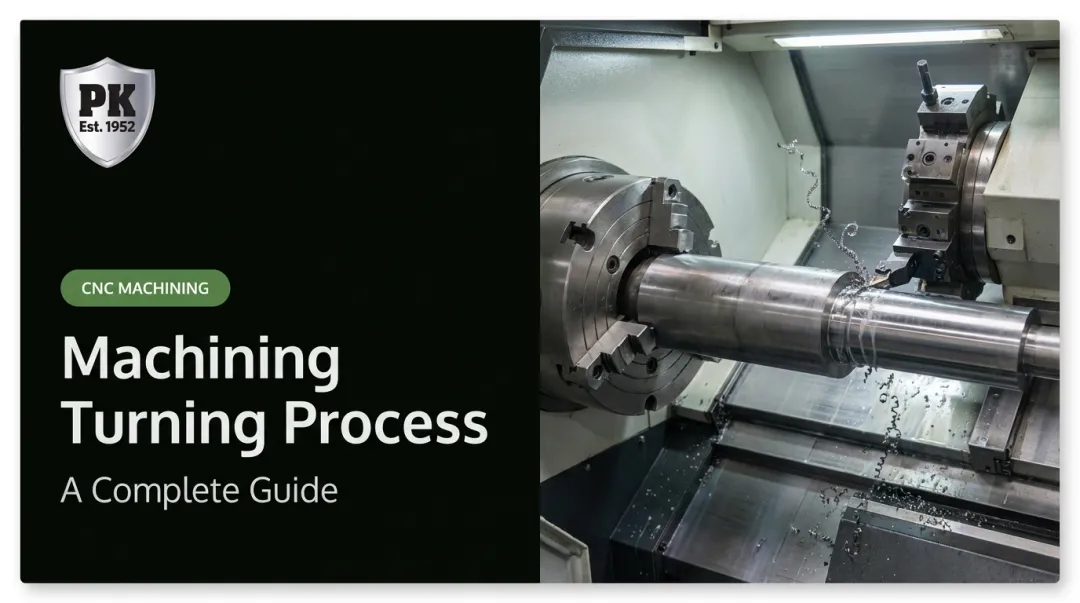
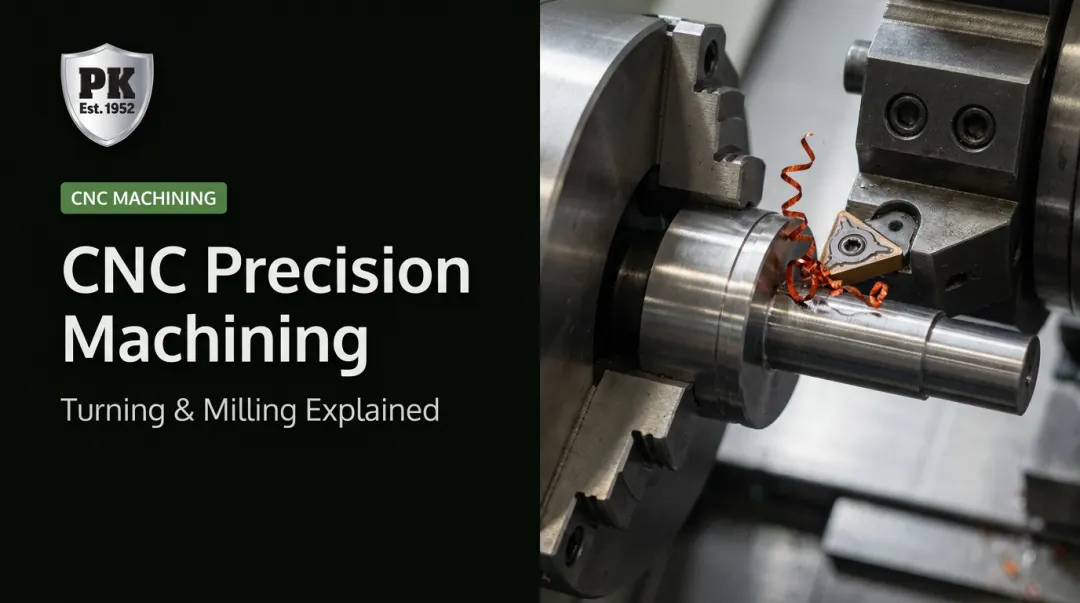
Milling shapes flat and contoured features. Turning creates precise cylindrical surfaces on a rotating workpiece. Both processes routinely hold tolerances measured in thousandths of an inch, a level of precision no casting process achieves on its own.
Parkway-Kew's in-house CNC milling, CNC turning, and manual turning departments all handle components up to 72 inches in diameter, supporting both coated and uncoated wear parts. Some parts, like solid tungsten carbide inserts, need no coating at all and go straight from stock to finished machined part. For wire drawing blocks and capstans, this final machining pass restores the precise bore and outer diameter that keeps wire tracking true through the die.
Drilling & Tapping
Holes and threaded connections are rarely castable to spec. Drilling and tapping handle those features after the casting cools.
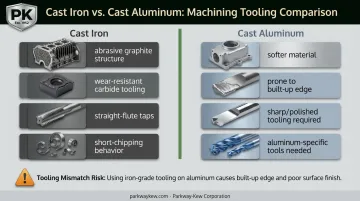
- Cast iron is short-chipping and abrasive, favoring wear-resistant carbide tooling and straight-flute taps
- Cast aluminum is softer but prone to built-up edge on cutting tools, requiring sharp or polished edges and aluminum-specific tooling
Tool and feed selection differs enough between the two materials that a setup optimized for cast iron will underperform, or damage tooling, if applied directly to aluminum. Getting it wrong isn't just cosmetic: a stripped thread or off-center hole can scrap a part that already absorbed hours of coating and finishing work.
Grinding & Surface Finishing
Grinding removes minimal stock to hit final tolerance and surface finish. It's especially critical on rotating or wear-exposed cylindrical parts, where roundness and finish quality directly affect service life.
Parkway-Kew's large-diameter grinding capability, up to 65 inches in diameter and 12 feet long, exists specifically to finish oversized cast components like wire drawing blocks. It's a niche most general machine shops don't stock equipment for. A wire drawing block that's even a few thousandths out-of-round can vibrate, wear unevenly, and fail well before its expected service life. That's why final grinding gets treated as a critical checkpoint, not just a finishing step.
Advanced & Non-Traditional Methods
EDM (electrical discharge machining) and laser cutting come into play for hardened alloys or intricate geometries where conventional cutting tools struggle. EDM works by spark erosion, cutting electrically conductive material without physical tool contact, which makes it useful for hardened features that would chew through a carbide end mill. These methods remain the exception rather than the rule for most castings, reserved for specific geometry or hardness challenges. For a fracking plunger with a tungsten carbide coating, EDM can cut precise features without regrinding the entire coated surface, preserving the wear resistance that took hours to apply in the first place.
Best Practices for Machining Castings
Getting machining right the first time comes down to a handful of disciplined habits.
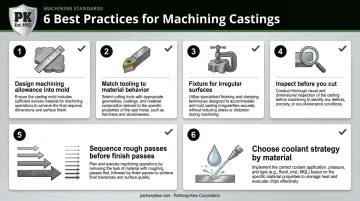
Design machining allowance into the mold. Leave enough stock on functional surfaces (typically 0.060 to 0.125 inch per side) to correct for shrinkage and porosity, but don't over-allow. Excess stock adds machining time and cost without added benefit.
Match tooling to material behavior. Cast iron's abrasive graphite structure wears tooling fast; cast aluminum's gummy, adhesive tendencies demand sharper edges and different speeds.
Fixture for irregular surfaces. As-cast parts rarely have a clean reference surface. Adjustable or equalizing supports stabilize the workpiece and prevent chatter or vibration during cutting, which matters most on large-diameter castings like Parkway-Kew's wire drawing blocks and festoon wheels, machined up to 72 inches in diameter.
Inspect before you cut. Dye penetrant testing catches surface-opening cracks and cold shuts; radiography catches internal porosity. Both are far cheaper than machining a part that was already destined for rejection.
Sequence rough passes before finish passes. Roughing relieves internal stress in the casting. Cutting straight to finish tolerance on a stressed part risks distortion after the fact.
Choose coolant strategy by material. The right coolant and lubrication combination extends tool life and improves surface finish. What works for cast iron often won't suit cast aluminum.
Benefits & Applications of Machining Castings
Machining castings delivers precision no casting process can match on its own: tight-tolerance bores, threads, and finish quality, at a lower cost than machining an equivalent part from solid bar stock.
Industries that rely on this combination include:
- Automotive
- Aerospace
- Oil & gas
- Heavy equipment
- Wire & cable manufacturing
Parkway-Kew has spent decades machining and hardsurfacing large cast wire drawing blocks and capstans for more than 500 companies worldwide. That work only holds up because the underlying machining meets tight roundness and finish specs before any coating goes on.
For large, heavy, or high-precision cast components, the machining provider matters as much as the casting itself. Tolerance and finish quality aren't negotiable on parts that run continuously under load, and a shop without the right equipment simply can't deliver.
Frequently Asked Questions
Can cast iron and cast aluminum castings be machined?
Yes, both are machinable. Cast iron needs wear-resistant carbide tooling due to its abrasive graphite content, while cast aluminum machines faster but requires sharp tools to avoid built-up edge.
What are machined castings?
A machined casting is a part that's undergone secondary machining after the initial casting process. This includes milling, turning, drilling, or grinding, done to meet precise dimensional and surface finish requirements.
What are the four types of casting?
Sand casting, die casting, investment casting, and centrifugal casting are the four primary methods that typically require downstream machining before the part is usable.
What is the best machining process for cast iron?
CNC milling and turning with carbide tooling are the preferred choice for cast iron, given its hardness and abrasive graphite structure.
Do all castings need machining?
No. Some die-cast parts need only minor touch-up on critical features, while sand and investment castings almost always require more extensive machining for functional surfaces.
How much material should be left for machining allowance on a casting?
Allowance varies by casting method and part size, ranging roughly from 0.5mm (0.02") for investment casting to 6mm (0.24") for green-sand casting. Consult your casting and machining partner to confirm adequate stock for your specific part.