Choosing the wrong protective coating, or skipping it altogether, is expensive. Rework, downtime, and shortened product life all trace back to a coating decision made too quickly.
This guide breaks down what conformal coating is, the five major material types, how to pick the right one, and the application practices that keep it working. We'll also look at how the same "conforming protection" principle shows up outside of circuit boards, in heavy industrial wear parts.
Key Takeaways
- Conformal coating is a thin polymeric film, roughly 25-250 microns thick, that follows a surface's exact contours
- Five main PCB coating types exist: acrylic, silicone, epoxy, urethane, and parylene
- Most coatings are semi-permeable, not waterproof; parylene comes closest to true moisture resistance
- The right coating depends on temperature range, chemical exposure, and rework frequency
- Industrial wear parts, like wire drawing blocks, apply the same contour-following protection principle
What Is Conformal Coating (and Why It Matters)
Conformal coating is a thin polymeric film applied directly onto a printed circuit board or component. Unlike a rigid enclosure, it conforms to the exact shape of what it covers, filling crevices, wrapping around solder joints, and following irregular component geometry.
Its job is straightforward: shield the surface from moisture, humidity, dust, chemical contaminants, temperature extremes, and vibration. Research hosted by IPC, the electronics industry association, confirms that moisture accelerates ionic corrosion, interfacial degradation, and conductive filament formation on unprotected boards — mechanisms that conformal coating is specifically designed to interrupt.
Why Manufacturers Rely on It
Beyond basic protection, coating unlocks design and reliability benefits:
- Denser layouts. Electrolube notes that coating protection allows for higher voltage gradients and closer track spacing, supporting more compact board designs
- Longer operational life in harsh environments, since the coating reduces exposure to the corrosion and contamination that shorten component lifespan
- Fewer field failures, which translates into lower replacement and warranty costs over a product's service life
A common misconception is that conformal coating equals waterproofing. It doesn't. Most traditional coatings are semi-permeable, meaning they slow moisture ingress rather than block it entirely (more on this in the FAQ below).
This protective role explains why conformal coating shows up across such a wide range of industries, including:
- Aerospace and defense electronics
- Automotive and EV power systems
- Medical devices
- Consumer electronics
- Industrial controls
Types of Conformal Coating Materials
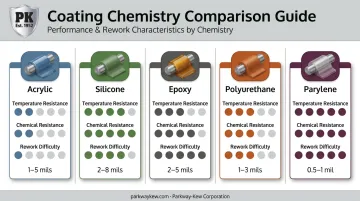
No single coating chemistry wins every category. The right choice balances protection level, how it's applied, and how easily it can be reworked later. IPC-CC-830B identifies five standard chemistries: AR, SR, ER, UR, and XY.
| Chemistry | Rework Difficulty | Best For |
|---|---|---|
| Acrylic (AR) | Easy — mild solvents | Consumer electronics, general-purpose boards |
| Silicone (SR) | Hard — specialized solvents, long soak | Automotive, aerospace assemblies |
| Epoxy (ER) | Hardest — rarely reworked | High-durability, near-hermetic sealing |
| Polyurethane (UR) | Moderate to hard, varies by formulation | Medical device electronics |
| Parylene (XY) | Hardest — needs specialized removal | Ultra-thin, pinhole-free protection |
Acrylic Resin (AR)
Acrylic is the workhorse of the industry. It's affordable, applies easily, and strips off with mild solvents when rework is needed. The tradeoff: limited resistance to aggressive chemicals and high heat. It's a strong fit for consumer electronics and general-purpose boards that don't face extreme conditions.
Silicone Resin (SR)
Silicone flexes well across a wide temperature range and holds up under vibration, making it a favorite for automotive and aerospace assemblies. Rework is a different story. Removing it usually requires specialized solvents and extended soak times, and it doesn't resist abrasion particularly well.
Epoxy Resin (ER)
Epoxy is tough. It resists chemicals and abrasion better than most alternatives and offers near-hermetic protection once cured. That same toughness makes it one of the hardest coatings to rework, and curing shrinkage can stress sensitive components if not managed carefully.
Polyurethane (UR)
Polyurethane brings strong chemical and solvent resistance, which is why it's a frequent choice for medical device electronics. Rework difficulty varies by formulation, but it's generally harder to remove than acrylic.
Worth clarifying: the FDA evaluates biocompatibility at the level of the finished device, not the coating material in isolation, so "FDA-approved polyurethane" as a blanket label doesn't quite hold up.
Parylene (XY)
Parylene stands apart because it's vapor-deposited rather than sprayed or brushed, producing an ultra-thin, pinhole-free film that wraps evenly around every edge and joint. It delivers superior solvent and temperature resistance across its subtypes. The catch is equipment: parylene deposition requires a specialized vacuum chamber, and once cured, it's among the hardest coatings to remove.
How to Choose the Best Conformal Coating for Your Application
Material selection should start with how the product will actually be used, not with whichever coating is easiest to source.
Start with the environment. A device facing constant condensation or humidity often points toward parylene or silicone. A board destined for a chemically aggressive plant floor leans toward epoxy or polyurethane instead.
Factor in temperature swings. Aerospace electronics can swing from extreme cold at altitude to high heat near engine components. This wide thermal range is part of why silicone shows up so often in that industry: its flexibility holds up better than more rigid chemistries.
Weigh environmental exposure narrowly. Salt spray, corrosive gases, and immersion each demand different resistance profiles:
- Acrylics handle general humidity and salt-mist exposure reasonably well
- Silicones perform across broad temperatures with decent salt-spray resistance
- Polyurethanes hold up best where chemical resistance is the priority
- For continuous immersion, a thin conformal film alone often isn't enough; full encapsulation may be the better call
Consider rework frequency. Field-serviceable equipment favors acrylic, since technicians can strip and reapply it with mild solvents. Mission-critical, one-time-protection applications are better suited to epoxy or parylene, even though rework becomes far more difficult.
Check certifications. Standards like IPC-CC-830B (which tests flexibility, dielectric withstand voltage, and thermal-humidity aging) and UL 746E (which evaluates polymeric materials for electrical equipment) help validate coating performance before it reaches a mission-critical application.
Application Methods and Best Practices
How a coating gets applied matters almost as much as which chemistry you pick. Four techniques dominate the industry:
- Manual spray — flexible and low-cost, best for low-volume runs or prototyping
- Automated/selective spray — precise, repeatable, ideal for high-volume production with masked areas
- Dipping — fast, full coverage for simple board geometries
- Brushing — targeted touch-ups or small-batch work
Production volume and board complexity typically decide which method makes sense.
Getting Thickness Right
Thickness tolerances aren't one-size-fits-all across chemistries. NASA-STD-8739.1B specifies roughly 25-127 microns (1-5 mils) for acrylic, epoxy, and urethane coatings, while silicone typically runs thicker, up to around 200 microns, and parylene stays far thinner, often just 13-51 microns.
Getting these numbers wrong carries real risk: too thick a coat traps heat and invites cracking, while too thin a layer leaves gaps in protection.
Avoiding Common Defects
Three defects account for most coating failures:
- Dewetting — the liquid coating beads up or pulls away instead of forming a continuous film, usually from surface contamination
- Delamination — the cured coating lifts from the substrate, often due to inadequate cleaning or cure time
- Bubbling — trapped air or solvent vapor ruptures the film, frequently from applying one heavy coat instead of thin successive layers
Proper surface cleaning before application prevents most of these defects.
Beyond PCBs: Industrial-Grade Conformal Coatings for Heavy Equipment
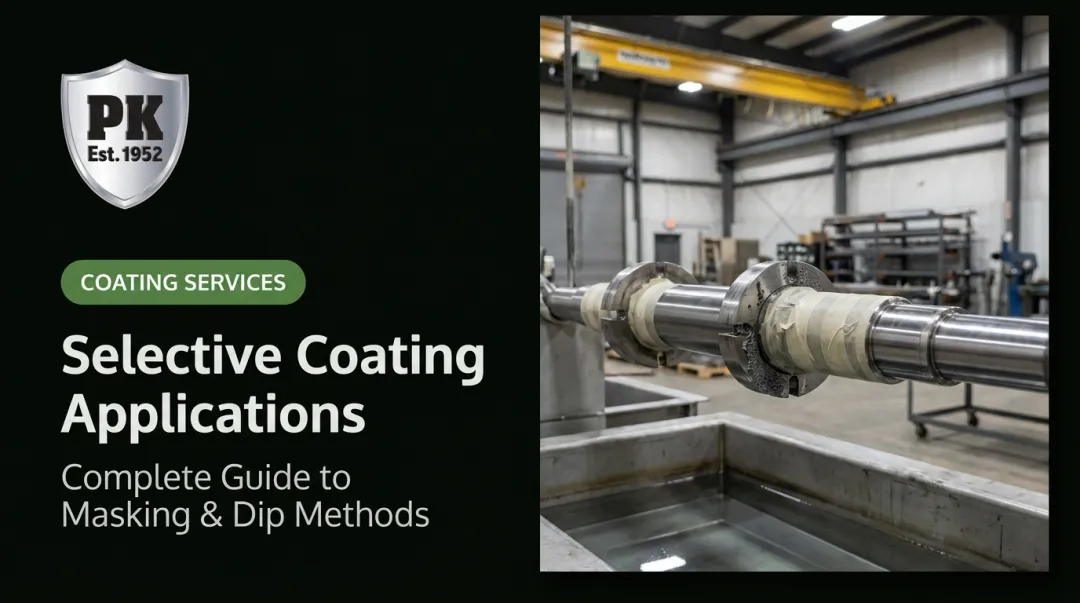
The idea of a coating that "conforms" to a surface isn't exclusive to circuit boards. Industrial components with complex geometries (gears, grooves, drawlines, and curved wear surfaces) need coatings that follow their exact contours just as precisely, protecting against abrasion and corrosion instead of moisture and electrical faults.
Parkway-Kew Corporation has worked in this space since 1952, when founder Eugene Walter Klein began rebuilding worn wire drawing blocks with hardfacing weld alloy.
The company's capabilities expanded over the following decades: metallizing in the early 1980s, HVOF (High Velocity Oxygen Fuel) coating pioneered for wire drawing blocks in 1989, and plasma spray added in the late 1990s.
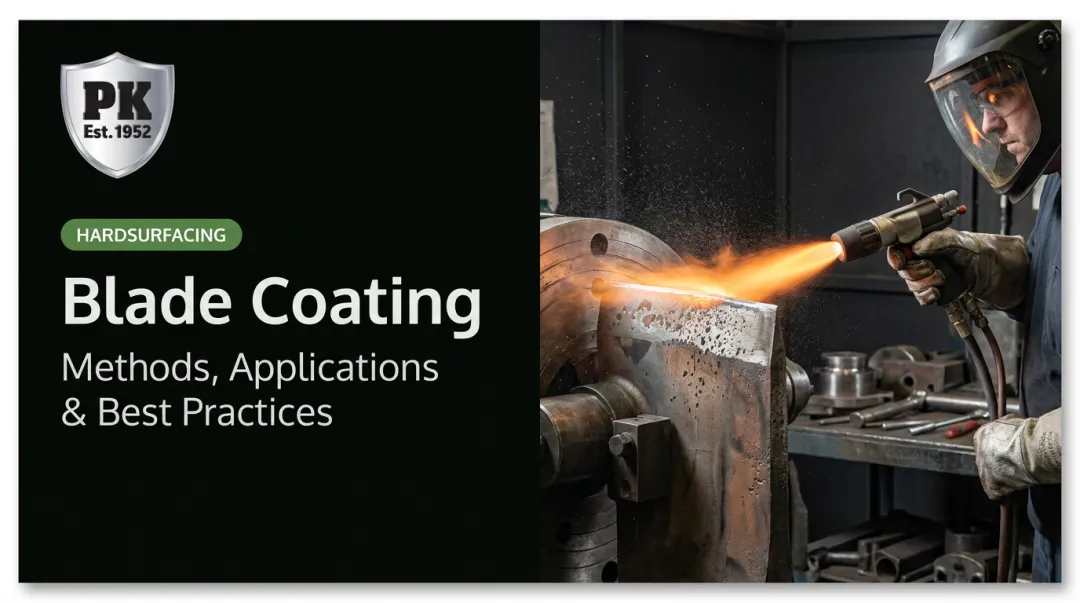
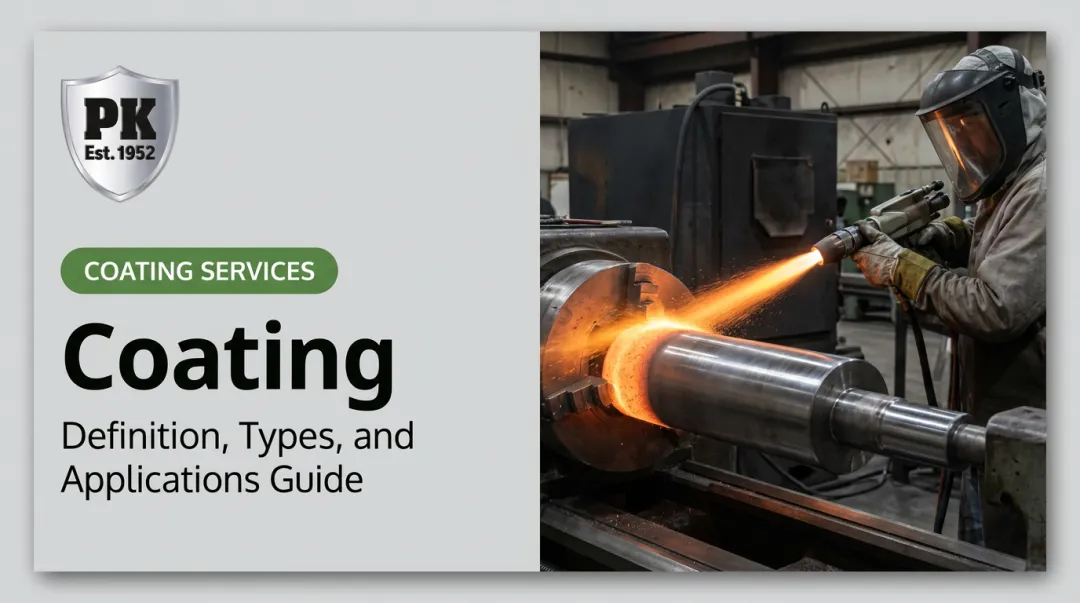
From its North Brunswick, NJ facility, Parkway-Kew now applies precision metal coatings, including HVOF, plasma spray, and metallizing, to industrial wear parts such as:
- Wire drawing blocks and capstans for wire mills
- Fracking plungers for oil & gas operations, including the proprietary PK-730 tungsten carbide coating built for the harshest operating conditions
- Festoon wheels, crane wheels, and wire rope pulleys for shipping terminals
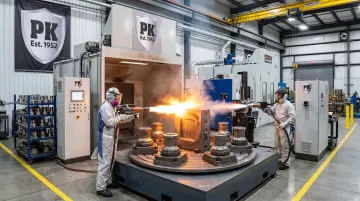
Among these services, one standout innovation is the Restore & Grind process, which fills and blends only the worn drawline area of a wire drawing block instead of grinding the entire surface down.
Because Parkway-Kew applies its PK coatings at enhanced thickness, this targeted repair can typically be performed 5 to 7 times before a full recoating is needed. This approach cuts both cost and downtime compared to conventional regrinding.
These coating solutions also serve as cost-effective alternatives to solid ceramics, avoiding the breakage and slippage issues that solid ceramic components can develop over time. Companies in oil & gas, wire drawing, or heavy equipment manufacturing can discuss specific wear challenges directly with Parkway-Kew's engineering team to find the right coating solution.
Frequently Asked Questions
What is conformal coating?
Conformal coating is a thin protective polymeric film applied to circuit boards or components that conforms to their shape. It guards against moisture, dust, and chemical damage.
Is conformal coating waterproof?
Not entirely. Chemtronics notes that conventional coatings are typically semi-permeable, not waterproof, reducing moisture exposure rather than fully blocking it. Parylene comes closest to true water resistance among the five types.
What are the main types of conformal coating materials?
The five primary types are acrylic, silicone, epoxy, urethane, and parylene. Each suits different environments, from general-purpose electronics to extreme chemical or thermal exposure.
How thick should conformal coating be applied?
Acrylic, epoxy, and urethane typically run 25-127 microns (1-5 mils), while silicone is applied thicker and parylene much thinner. Going beyond the recommended range risks heat entrapment or cracking.
Which conformal coating is easiest to remove or rework?
Acrylic is the easiest, since it strips off with mild solvents. Epoxy and parylene are far more difficult to remove once cured.
Can the concept of conformal coating apply to industrial or non-electronic equipment?
Yes. Industrial wear parts use similar protective coatings, such as HVOF and plasma spray, to extend component life. Parkway-Kew has protected wire drawing blocks, capstans, and similar equipment since 1952, evolving from early hardfacing methods to today's HVOF and plasma spray technologies.