Search "ceramic coating" and you'll find two very different worlds colliding. One is industrial: plasma-sprayed ceramics baked onto metal at extreme heat to survive decades of mechanical stress. The other is your local detail shop, applying a liquid resin by hand at room temperature. Both borrow the word "ceramic." Only one involves a torch.
This article breaks down how automotive ceramic coating actually works, what it can and can't do, how it stacks up against wax and sealant, and whether it's worth the money for your specific vehicle.
Key Takeaways
- Ceramic coating bonds directly to clear coat, outlasting wax and sealant but never permanent
- Surface prep and application quality determine performance more than the product itself
- Consumer coatings run 1-3 years; professional-grade systems can hit 2-5+ years
- Blocks UV damage, oxidation, and chemical etching, but not rock chips or scratches
- Skipping paint correction before application locks in swirl marks permanently
What Is Ceramic Coating and How Does It Actually Work?
Automotive ceramic coating is a liquid polymer built around silicon dioxide (SiO2). Once applied, it reacts with your clear coat and forms a thin, glass-like layer at the nanoscale, sitting far closer to your paint than any wax ever gets.
That's the core distinction from wax or sealant: those products sit on top of the paint. Ceramic coating becomes part of the surface.
The Science of the Bond
SiO2 molecules cross-link with the existing structure of your clear coat, creating a surface that's harder and more hydrophobic than anything wax can produce. According to Gtechniq's ceramic coating guide, this chemical reaction covalently bonds the coating to the paint at a molecular level, rather than simply resting on top of it.
Curing happens in stages, and rushing it ruins the result:
- Initial flash/dry: Roughly 12 hours before the vehicle can get wet
- Safe to drive: Typically within 24-48 hours
- Full hardness: Can take up to two weeks, depending on the product
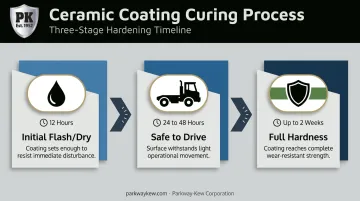
Wash your car too early and you risk streaking or weakening the bond before it fully sets.
True Industrial Ceramic Coatings vs Automotive "Ceramic" Products
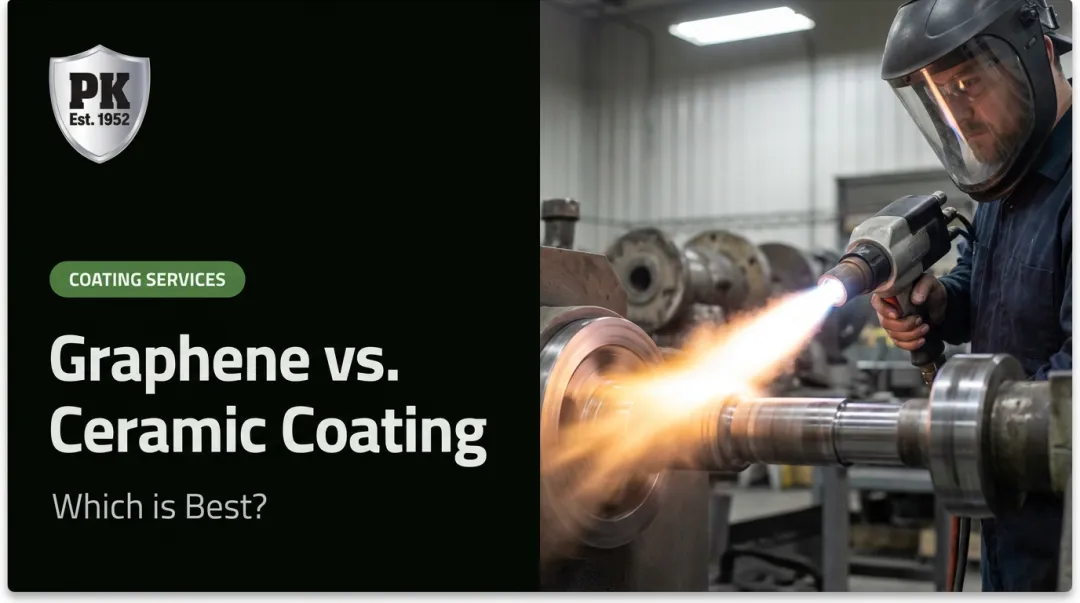
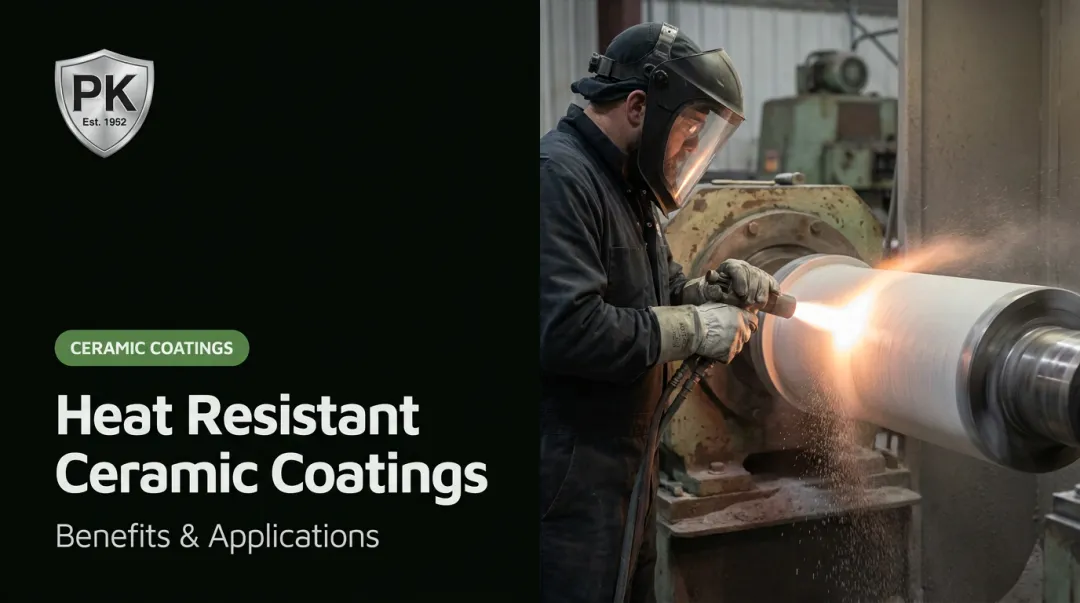
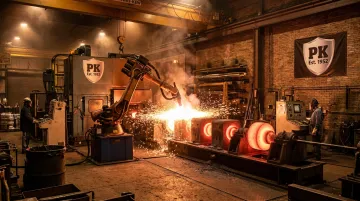
Here's where a lot of marketing gets loose with terminology. True industrial ceramic coatings aren't brushed on at room temperature. They're applied via thermal or plasma spray, at extreme heat, directly onto metal substrates for maximum hardness and wear resistance.
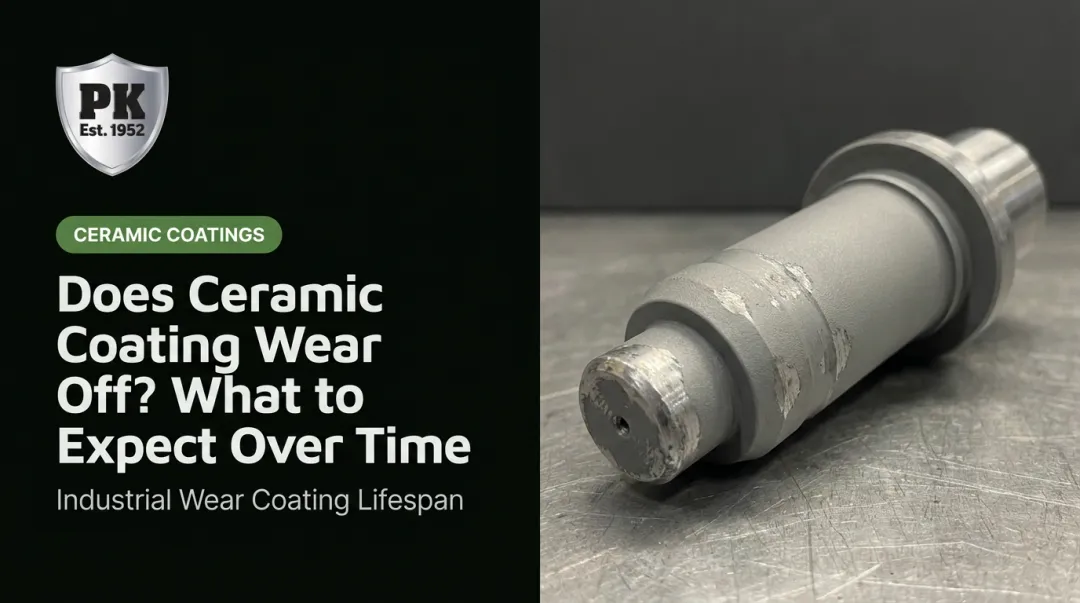
Parkway-Kew Corporation has done exactly this since the late 1990s, applying plasma-sprayed chrome oxide ceramic coating (PK-1500) to wire drawing blocks and capstans used in high-speed wire manufacturing. It's the most wear-resistant ceramic in its lineup, built to survive constant friction in industrial wire mills, not a Sunday drive.
The application methods couldn't be more different. Plasma spray fuses ceramic particles to steel at temperatures that would melt automotive paint instantly. Automotive coatings cure at room temperature onto a delicate clear coat that can't handle that kind of heat.
But the underlying engineering goal is identical: create a harder, more chemically resistant barrier that extends the life of whatever sits beneath it. Whether it's a wire drawing block or a car door, the principle of bonding a protective layer to a substrate hasn't changed. Only the substrate and the process have.
Does Ceramic Coating Actually Work? Benefits Backed by Science
Yes, but with real boundaries. Here's what's actually verified versus what's just brochure language.
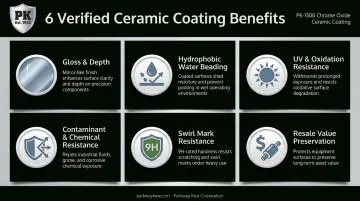
Gloss and depth. Ceramic coating's refractive properties do deepen color and add a mirror-like finish. The gloss industry measures this using a 60-degree geometry gloss meter, per Ceramic Pro's testing results.
No independent lab has published a specific before-and-after gloss number for coated versus bare paint, though. The visual difference is real; the marketing percentages you see online often aren't backed by public data.
Hydrophobic water beading. Water and dirt slide off more easily because the coating raises the surface's contact angle. Ceramic Pro's own testing reports a contact angle above 110 degrees for one of its products. That means less time scrubbing bugs and grime before they bond to the paint.
UV and oxidation resistance. The coating blocks the UV exposure that fades and chalks unprotected clear coat over years of sun exposure, keeping color richer for longer.
Contaminant and chemical resistance. Bird droppings, tree sap, and road salt struggle to bond to the smoother, denser surface, cutting the risk of chemical etching. Manufacturer-hosted testing found no visible damage after 24 hours in acidic and alkaline solutions, and no damage after 350 hours of salt spray exposure under ASTM B117 conditions.
Swirl mark and light scratch resistance. This is where the "9H" rating comes from, a pencil hardness test where 9H is the hardest grade on the scale. It measures resistance to fine marring from improper wash mitts and towels, not impact resistance.
Resale value preservation. Appraisal guides like Edmunds factor exterior gloss and paint condition directly into used-car valuation tiers. A glossy, defect-free finish supports a higher condition grade, which supports a stronger offer.
What Ceramic Coating Can't Do: Limitations and Common Myths
Marketing loves the word "permanent." Physics disagrees.
Myth: It's scratch-proof. Ceramic coating resists fine swirl marks and light marring from washing. It does nothing to stop a rock chip, a deep key scratch, or a dent. Car and Driver's testing coverage confirms coatings offer some defense against minor scratching and etching, not full protection from road debris.
Myth: Zero maintenance required. You still need to wash your car regularly, since the coating only slows environmental breakdown from sun, salt, and dirt without stopping it completely. Most professional installers recommend washing every two weeks to keep the coating performing.
Limitation: It can't fix existing paint problems. The new layer permanently seals in any swirl marks, oxidation, or scratches that exist before application. This is why reputable installers insist on paint correction first.
Limitation: Some cleaning methods degrade it faster. Automatic brush car washes and abrasive polishing compounds are the two fastest ways to shorten a coating's life. Factors that speed up degradation include:
- Automatic brush washes (physical abrasion)
- Dry wiping with dirty towels
- Harsh or incompatible chemical cleaners
- Prolonged bird dropping or tree sap exposure left untreated
Ceramic Coating vs Wax vs Paint Sealant: Which Actually Performs Best?
Each product occupies a different spot on the cost-versus-durability curve.
| Protection Type | Typical Durability | Upfront Cost | Best For |
|---|---|---|---|
| Carnauba wax | 4-8 weeks | Low | Budget-conscious owners who enjoy frequent detailing |
| Paint sealant | 4-12 months | Moderate | Owners who want a crisper look with semi-annual upkeep |
| Ceramic coating | 1-5+ years | Higher | Owners seeking long-term protection at the lowest cost per year |
Wax gives you that classic warm depth but demands reapplication every few weeks. Sealant splits the difference: a synthetic polymer with a sharper finish and moderate durability, usually 4 to 12 months before it needs a refresh.
Ceramic coating wins on total cost of ownership. A $700-$1,500 professional application spread across three to five years costs less annually than repeated wax or sealant applications, even though the sticker price looks steeper upfront.
Is Ceramic Coating Worth It? Cost, Longevity, and ROI
Cost scales with vehicle size, coating grade, and whether you DIY or hire a professional.
DIY kits: Bottle-based consumer products run roughly $76 to $130, lasting 1-3 years with proper application.
Professional installation: One installer's published pricing shows the range clearly:
| Coating Tier | Sedan | Mid-Size | Full-Size | Warranty |
|---|---|---|---|---|
| Entry-level ceramic sealant | $600 | $700 | $800 | 2 years |
| Mid-grade coating | $850 | $1,000 | $1,150 | 5 years |
| Top-tier coating | $1,150 | $1,300 | $1,500 | 9 years |
Car and Driver pegs the average professional job closer to $2,000 once paint correction, coating, and curing time are all factored in.
ROI depends on three factors:
- How long you plan to own the car
- Your climate exposure and driving conditions
- Whether resale value matters to you
New or well-maintained vehicles benefit most because there's no existing paint damage to lock in.
The same economics apply to industrial wear-resistant coatings. Manufacturers invest in them for the same reason drivers invest in ceramic coating: reduced downtime and extended service life pay for themselves over time.
Parkway-Kew has applied that logic for over 70 years, refining processes like its Restore & Grind method to extend wire drawing block life through 5 to 7 repair cycles before a full recoat. The principle holds whether you're protecting a $40,000 sedan or industrial equipment: coatings only deliver value when the surface underneath is properly prepared.
One rule holds regardless of product quality: skipping prep, or hiring an unqualified installer, undermines the entire investment. No coating, industrial or automotive, bonds properly to a poorly prepared surface.
Frequently Asked Questions
Is it worth getting a ceramic coating on a car?
Yes, especially for new or well-maintained vehicles seeking long-term shine and easier upkeep. It's a weaker investment on older vehicles with existing paint damage the coating would simply lock in.
How long does ceramic coating actually last on a car?
Consumer-grade DIY coatings typically last 1-3 years. Professional-grade systems, properly maintained, can reach 2-5+ years or longer.
Can ceramic coating prevent scratches or rock chips?
No. It reduces fine swirl marks and minor marring from washing, but it offers no meaningful protection against rock chips, keying, or deep scratches.
Does ceramic coating mean I never have to wash my car?
No. It reduces how often you need to wash and makes each wash easier, but it doesn't eliminate the need for regular cleaning.
Is ceramic coating better than wax or sealant?
For long-term value, yes. It costs more upfront but lasts years instead of weeks or months, making it cheaper per year of protection.
How much does professional ceramic coating cost?
Expect roughly $600 to $1,500 depending on vehicle size and coating grade, with some premium multi-year systems and full corrections reaching around $2,000.