](https://file-host.link/website/parkwaykew-cdurlb/assets/blog-images/df3c14b2-a85f-48ca-9da5-d6686b4bc9b8/1782371290617308_7c701c7dd50741d8bcba3ad72f25ae64/360.webp)
The scale of the problem is significant. According to the NACE IMPACT study, global corrosion costs reached US$2.5 trillion — roughly 3.4% of global GDP — with an estimated 15% to 35% of those costs preventable through available corrosion-control practices.
What many industrial buyers get wrong is treating corrosion protection as a single category. Epoxy coatings, zinc-rich primers, polyurethane topcoats, thermal spray systems, and weld overlay hardfacing are not interchangeable — each works through a different protection mechanism and performs well in specific environments while failing in others. Choosing the wrong one leads to premature failure even when applied correctly.
This guide covers the most important types of industrial coatings for corrosion protection, how each one works, and what should drive your selection decision.
Key Takeaways
- Industrial coatings protect metal through three mechanisms: barrier, sacrificial (galvanic), or mechanically bonded metallic layers
- Main types include epoxy, zinc-rich primers, polyurethane, thermal spray (HVOF, plasma spray, metallizing), and weld overlay hardfacing
- No single coating type works everywhere — environment, substrate, and mechanical demands all drive the selection
- Components facing combined corrosion and wear — plungers, blocks, capstans — require thermal spray or hardfacing, not paint systems
- Surface preparation matters as much as coating selection; poor prep is the leading cause of field failures
What Are Industrial Coatings for Corrosion Protection?
Industrial coatings are materials applied to metal substrates to create a protective layer between the base metal and its environment. They work by interrupting the electrochemical reactions that drive oxidation, rust, and material degradation.
Three fundamental mechanisms explain how they do this:
- Barrier coatings physically seal the surface, blocking water and oxygen from reaching the metal
- Inhibitive coatings use chemical pigments that suppress corrosion reactions at the metal surface
- Sacrificial coatings use a more reactive metal (typically zinc) that corrodes preferentially, protecting the substrate beneath
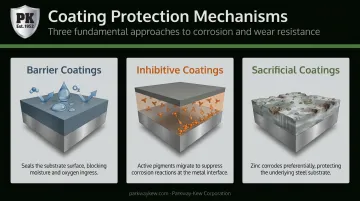
Real-world industrial applications rarely rely on a single mechanism. Multi-layer coating systems (a zinc primer beneath an epoxy intermediate coat beneath a polyurethane topcoat, for example) are common because each layer addresses a different threat.
For components facing simultaneous corrosion and mechanical wear, the requirements go further. Those applications call for metallic coatings or hardfacing capable of holding up under continuous abrasion and impact — not just chemical attack.
Types of Industrial Coatings for Corrosion Protection
Industrial coatings for corrosion protection are engineered for specific conditions. The following types range from chemical-polymer systems to advanced thermally applied metallic coatings ; heavy industrial environments often require the latter.
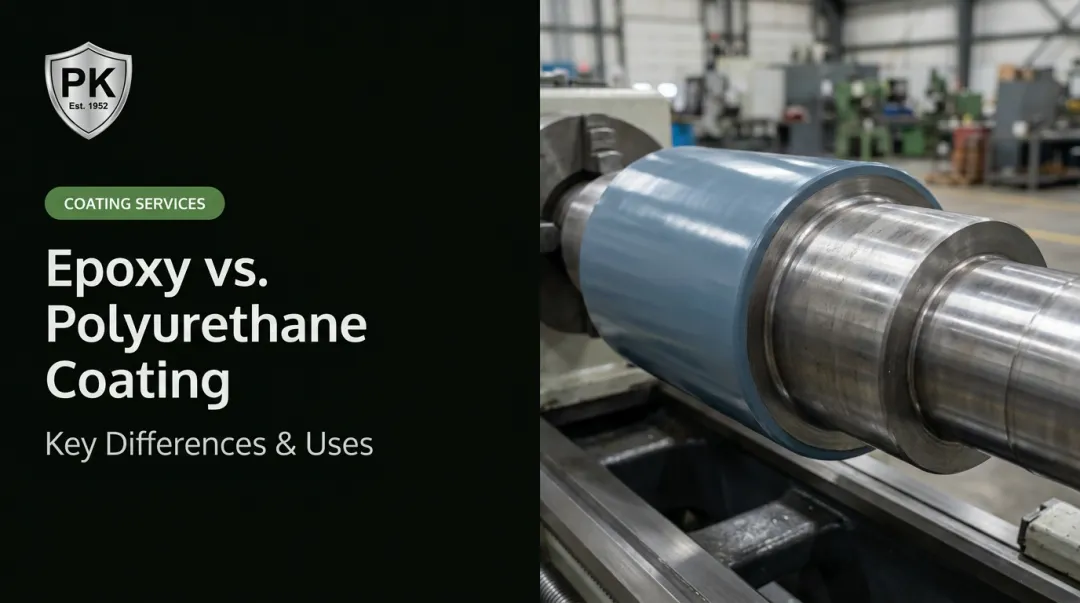
Epoxy Coatings
Epoxy coatings are two-component systems (an epoxy resin combined with a curing agent) that cure into a hard, chemically resistant barrier film. They bond strongly to steel and concrete, resist moisture and most chemicals, and can be applied across a wide range of film thicknesses. A product like Jotun's Jotamastic 80, for example, functions as a primer, intermediate coat, finish coat, or single-coat system depending on the service environment.
Best use cases:
- Interior or submerged environments: water and wastewater tanks, chemical processing equipment, subsurface steel structures
- Primer or intermediate coat in multi-layer systems over structural steel
Key trade-offs:
- Excellent chemical resistance and strong adhesion to prepared steel
- Chalks and degrades under UV light — unsuitable as a standalone outdoor topcoat
- Becomes brittle in thermal cycling environments over time
- In aggressive immersion service, typically paired with a zinc-rich primer below and polyurethane or polysiloxane topcoat above
Zinc-Rich Coatings
Zinc-rich coatings are high-zinc-content primers that protect steel through galvanic action. The zinc corrodes preferentially in place of the substrate, acting as a sacrificial anode. As the zinc oxidizes, corrosion byproducts accumulate and create a secondary physical barrier.
Two main types exist:
| Type | Binder | Galvanic Protection | Surface Prep Tolerance |
|---|---|---|---|
| Inorganic zinc-rich | Silicate | Stronger | Low — requires near-white blast |
| Organic zinc-rich | Epoxy or urethane | Moderate | Somewhat more tolerant |
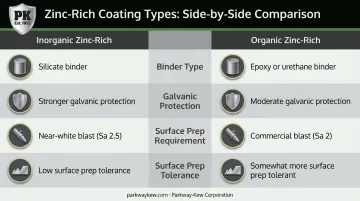
SSPC-Paint 20 classifies zinc-rich coatings by zinc dust content in dry film: Level 1 requires at least 85%, Level 2 covers 77–85%, and Level 3 covers 65–77%. Specifying by standard level — not just "zinc-rich primer" — matters when designing a coating system.
Best use cases: First coat in multi-coat systems for structural steel, bridges, marine topsides, and heavy equipment
Limitations: Both types perform poorly in acidic or alkaline immersion environments and typically require topcoating to achieve their intended service life.
Polyurethane Coatings
Polyurethane coatings are polymer-based topcoats that provide abrasion resistance, gloss retention, and strong weathering durability. Two categories serve different environments:
- Aliphatic polyurethanes — excellent UV resistance, ideal for exterior and exposed surfaces; specified under SSPC-Paint 36 as a two-component weatherable topcoat
- Aromatic polyurethanes — better chemical and water resistance for submerged or interior service, but will chalk in sunlight
Polyurethanes are most often used as the final topcoat in multi-layer systems — over a zinc primer and epoxy intermediate — providing the environmental durability and aesthetic finish that other coating layers cannot. Common applications include highway bridges, ship topsides, exterior storage tanks, and industrial equipment exposed to weather.
Worker protection note: Polyurethane spray application involves isocyanate compounds. OSHA identifies isocyanate exposure as a cause of occupational asthma, lung damage, and eye, nose, and throat irritation — and NIOSH warns that sensitized workers can experience severe asthma attacks upon re-exposure. Proper respiratory protection and industrial hygiene controls are mandatory, not optional.
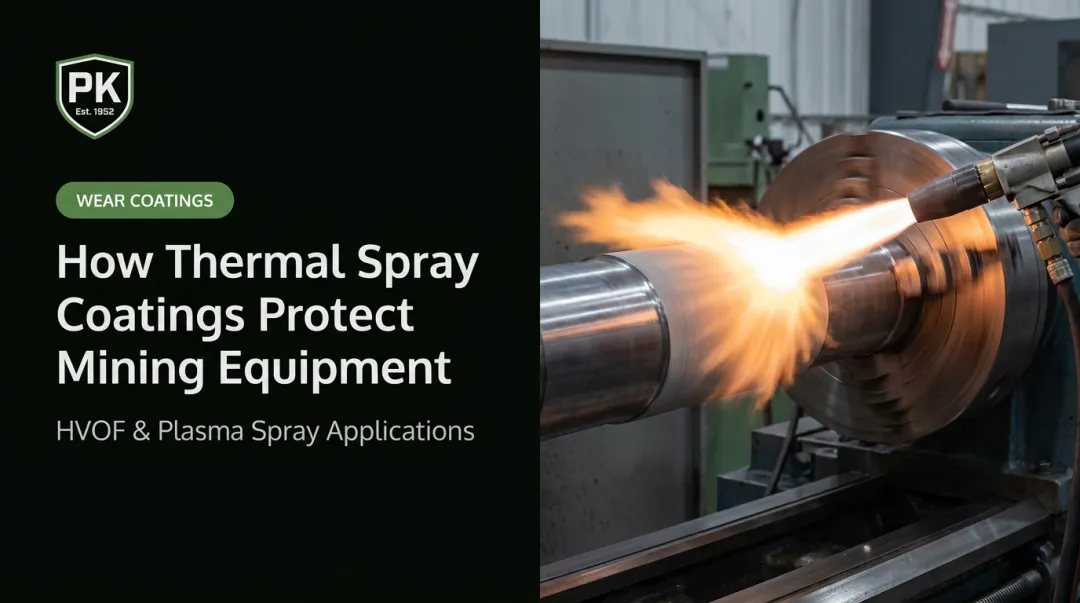
Thermal Spray Coatings (HVOF, Plasma Spray, and Metallizing)
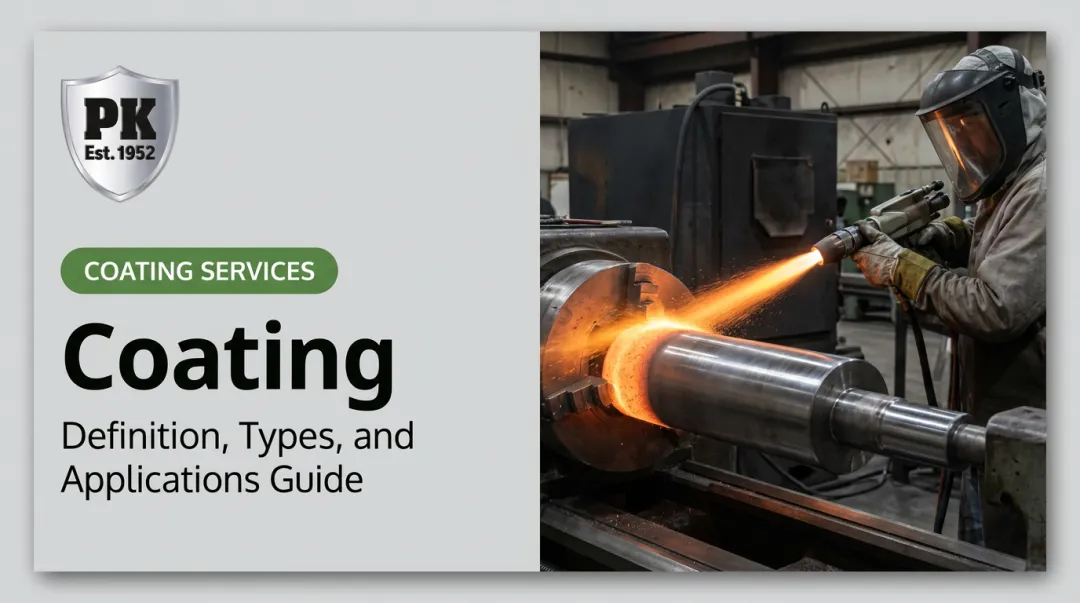
Thermal spray is a category of advanced coating processes in which metallic or ceramic materials are heated to a molten or semi-molten state and propelled at high velocity onto the substrate surface. The coating builds up through mechanical interlocking, creating a dense, well-bonded layer without altering the base metal's properties through heat.
Three key variants serve different applications:
- HVOF (High Velocity Oxygen Fuel): Fuel combustion drives powder materials at extreme velocity, yielding very dense, low-porosity coatings with high bond strength. Best where corrosion resistance and mechanical durability are required simultaneously.
- Plasma spray: Uses a plasma heat source to melt feedstock, particularly suited for ceramics and specialty alloys outside HVOF's effective range.
- Arc/flame metallizing: Melts wire feedstock via electric arc or combustible gas flame to deposit zinc, aluminum, or alloy coatings on larger structural components. Governed by ISO 2063 and AWS C2.23M/NACE No. 12/SSPC CS-23.
Parkway-Kew Corporation introduced HVOF coating for wire drawing blocks in 1989, applying alloy powder at speeds exceeding Mach 2 to produce a hard, dense, low-porosity coating. Their thermal spray work covers HVOF, plasma spray, and metallizing across oil and gas, wire manufacturing, and shipping terminals.
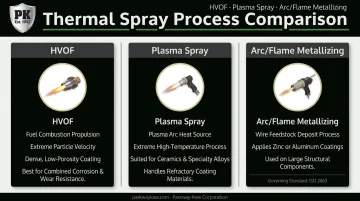
Best use cases: Rotating components, plungers, impellers, pump housings, wire drawing blocks and capstans — anything facing simultaneous corrosion and mechanical wear where paint or epoxy would wear through quickly.
Surface preparation is critical: Proper grit blasting to achieve the correct anchor profile is essential before thermal spray application. Coating adhesion depends entirely on substrate cleanliness and profile.
Weld Overlay and Hardfacing
Weld overlay (hardfacing) is fundamentally different from thermal spray. Where thermal spray creates a mechanically interlocked coating, weld overlay deposits wear- and corrosion-resistant alloy material directly onto the substrate through welding processes such as submerged arc welding, creating a metallurgical bond that makes the deposit part of the base component.
Hardfacing is the right choice when surfaces must withstand extreme impact, abrasion, and aggressive corrosion simultaneously — conditions that would cause surface coatings to delaminate or wear through. It is also the most reliable method for rebuilding worn components and restoring them to original or improved dimensions.
Parkway-Kew pioneered submerged arc welding for wire drawing block hardsurfacing in the 1950s, starting with the company's first order: rebuilding 100 twenty-six-inch Vaughn wire drawing blocks for CF&I in Roebling, NJ. Their sub-arc alloys include PK-503 (a super-hard alloy for maximum wear resistance) and PK-200 (engineered to the same hardness but depositing virtually crack-free, used where surface integrity affects wire quality or for rebuilding wire rope pulleys).
Best use cases: Wire drawing blocks, wire rope pulleys, heavy-load industrial components where conventional coating wear life is insufficient
Limitation: Requires skilled welding expertise and specialized equipment — better suited to specialist service providers than field maintenance crews.
How to Choose the Right Industrial Coating
Selecting the right coating starts with a clear-eyed assessment of what the component actually faces in service.
Start With the Operating Environment
The primary corrosive threat determines the first filter:
- Immersion or chemical exposure → Epoxy-based systems, potentially with polyurethane topcoat
- Outdoor UV and weather exposure → Aliphatic polyurethane topcoat over zinc primer and epoxy
- Marine or structural steel → Zinc-rich primer in a multi-coat system with appropriate topcoat
- Elevated temperatures combined with corrosion → Thermal spray with an alloy matched to the temperature range and chemical exposure
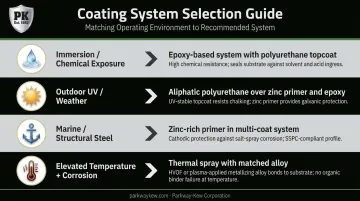
A coating optimized for exterior weathering will fail in a submerged chemical tank. Nailing the environment first prevents costly product mismatches downstream.
Factor In Mechanical Demands
For components facing continuous friction, impact, or abrasion alongside corrosion — wire drawing blocks, fracking plungers, capstans, impellers — paint and epoxy systems are generally not sufficient. The wear strips the coating faster than corrosion would have.
Evaluate thermal spray or hardfacing for any component where mechanical degradation and corrosion occur together. For fracking plungers, for example, Parkway-Kew's PK-730 proprietary fused tungsten carbide coating addresses both the abrasion from proppant slurry and the chemical corrosion from fracturing fluids. Nickel chrome alloys hold up in moderate environments, but the most demanding downhole conditions require a harder, more chemically resistant solution.
Match Coating Requirements to Application Feasibility
Some coatings demand conditions that aren't always achievable:
- Inorganic zinc-rich coatings and HVOF require near-white blast-cleaned surfaces and specialized equipment
- Epoxy and polyurethane systems can be applied with conventional spray equipment in field conditions
- Weld overlay requires skilled welding and is best done at a specialist facility
Mismatching a coating's preparation requirements to field conditions guarantees premature failure, no matter how good the coating itself is.
Think in Total Cost, Not Material Cost
A less expensive paint system reapplied every two to three years often costs more over a component's lifetime than a single thermal spray or hardfacing application that lasts two to three times as long. The calculation needs to include application cost, surface preparation, production downtime for recoating, and the consequence cost of a component failure.
Common Mistakes to Avoid
Three errors account for the majority of premature coating failures in industrial environments:
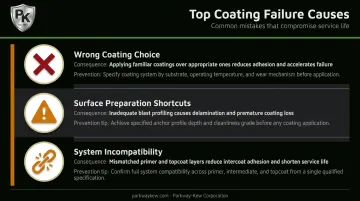
Applying familiar coatings instead of appropriate ones. Many buyers default to epoxy or standard paint systems because they're well understood — even when the service environment clearly demands more. The result is repeated failures and the mistaken belief that nothing will work in that application.
Skipping or shortcutting surface preparation. Even the most advanced coating fails prematurely without proper surface cleaning and blast profiling. Insufficient surface profile combined with inadequate coating thickness leads to pinpoint rusting and delamination. In documented industrial cases, coating system incompatibilities have added several hundred thousand dollars in remediation costs and delayed plant openings by months.
Evaluating coatings as individual products rather than systems. A low-cost alkyd primer paired with an incompatible topcoat, or a zinc-rich primer applied without the correct intermediate and topcoat layers, delivers far shorter service life than a properly engineered multi-layer system. Every layer must be compatible, and the full system must be specified together — not assembled piecemeal.
Frequently Asked Questions
What are the different types of industrial coatings for corrosion protection?
The main categories are barrier coatings (epoxy, polyurethane), sacrificial/galvanic coatings (zinc-rich primers), and metallic coatings (thermal spray, HVOF, plasma spray, weld overlay hardfacing). Selection depends on the operating environment, substrate material, and the combined corrosion and mechanical demands of the application.
What is the most corrosion-resistant coating option?
There is no single answer — the best choice depends on the environment. For structural steel in aggressive atmospheric or marine conditions, zinc or aluminum metallizing is highly effective. For components facing both corrosion and severe mechanical wear, HVOF or plasma spray coatings with carbide or ceramic materials offer superior combined performance.
What is the difference between barrier and sacrificial coatings?
Barrier coatings like epoxy physically seal the surface to block water and oxygen from reaching the metal. Sacrificial coatings like zinc-rich primers use a more reactive metal that corrodes in place of the protected substrate. Many effective systems combine both mechanisms across multiple layers.
How long do industrial corrosion protection coatings typically last?
Service life varies widely by coating type, environment, and application quality. Properly applied epoxy/polyurethane systems on steel structures can last 10–20 years. Thermal spray or hardfaced industrial components can outlast multiple cycles of conventional coating before requiring service — particularly when components face simultaneous wear and corrosion.
What is HVOF coating and how does it protect against corrosion?
HVOF (High Velocity Oxygen Fuel) is a thermal spray process that propels metallic or carbide materials at high velocity onto a substrate, forming a dense, low-porosity barrier that resists both corrosion and wear. It is well-suited for demanding industrial components where conventional paint systems would quickly wear away.
How important is surface preparation before applying an industrial coating?
Surface preparation is the most critical factor in coating performance. Inadequate cleaning or insufficient blast profile leads to poor adhesion, early delamination, and accelerated corrosion. Most coating failures in the field trace back to surface preparation shortcuts rather than deficiencies in the coating material itself.