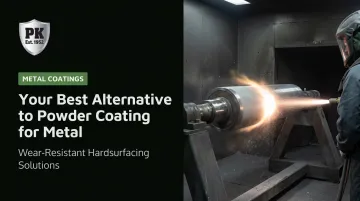
Oversized parts, heat-sensitive assemblies, and equipment exposed to extreme wear routinely push past what powder coating can handle. Wire mill blocks, fracking plungers, and heavy machinery components often need something tougher.
This guide breaks down the top alternatives, from DIY liquid coatings to industrial-grade thermal spray and hardfacing, and how to pick the right one for your equipment.
Key Takeaways
- Powder coating hits real limits on size, heat tolerance, and abrasion resistance for heavy industrial parts
- Alternatives range from DIY liquid enamel coatings to industrial HVOF, plasma spray, and hardfacing weld overlays
- Selection depends on operating environment, part size, lead time, and required durability
- HVOF and submerged arc hardfacing typically outlast powder coating on heavy-wear equipment
Overview of Powder Coating and Its Limitations for Metal Components
Powder coating applies an electrostatically charged dry powder that's then cured in an oven. It's common on patio furniture, automotive wheels, and appliances—anything that fits comfortably inside standard equipment.
Industrial-scale parts run into problems fast.
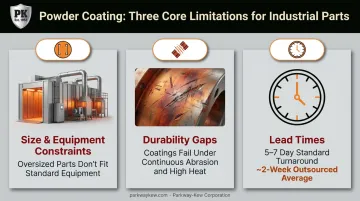
Size and equipment constraints:
- Curing ovens are often smaller than the blast and spray booths ahead of them in the process chain
- Electrostatic spraying needs grounded parts with resistance no greater than 1 megohm, plus a controlled booth
- Oversized components like wire drawing blocks or capstans simply don't fit the equipment
Durability gaps: Standard powder coating isn't built for continuous abrasion, high-impact wear, or sustained high heat. Oilfield equipment and wire mill components can chew through a powder finish well before its expected service life ends.
Lead times: One shop reports a standard 5-7 day turnaround. Others found bigger gaps: a SurfacePrep case study found outsourced powder coating took roughly two weeks before the company brought the process in-house and cut it to 24 hours.
None of this matters much for light-duty parts. For heavy-wear industrial equipment, it changes the math entirely. Below are the alternatives worth considering, from quick DIY fixes to industrial thermal spray and hardfacing systems.
Top Alternatives to Powder Coating for Metal
The right choice comes down to four factors: durability needs, operating environment, part size, and cost-effectiveness over the part's working life.
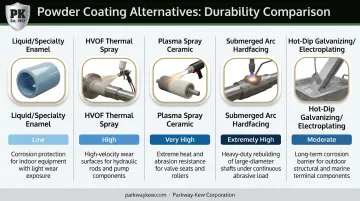
Liquid/Specialty Enamel Coatings (DIY & Light-Duty Use)
Stainless-steel-flake polyurethane coatings and similar liquid enamels give small parts a weldable, corrosion-resistant finish with no oven or booth required. Brush it, roll it, or spray it, then let it air-cure.
These coatings are fast: no waiting on a coating shop's backlog. The tradeoff is durability. Coating manufacturers generally rate powder finishes higher than liquid coatings for scratch, impact, and abrasion resistance, so enamels suit light wear and touch-ups rather than heavy industrial duty.
| Best For | Small parts, DIY projects, quick repairs/touch-ups |
|---|---|
| Durability | Moderate; suitable for light wear and general corrosion protection |
| Application Method | Spray-on (aerosol or gun), air-cured, no oven required |
HVOF (High-Velocity Oxygen Fuel) Thermal Spray Coating
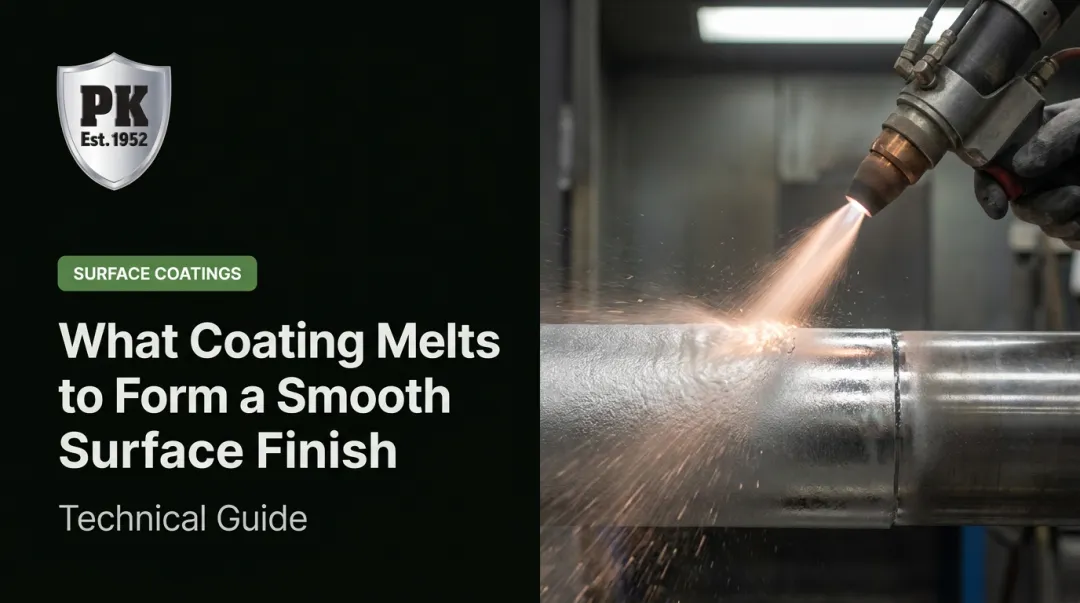
HVOF fires molten or semi-molten particles, often tungsten carbide, at a prepared metal surface. According to Oerlikon Metco, the process reaches flame temperatures near 2,800°C with particle velocities between 400 and 800 m/s. This speed packs the coating densely and bonds it tightly to the substrate.
The result handles friction and abrasion far better than powder coating. That's why it's standard for wire drawing blocks, capstans, and fracking plungers, parts that see constant metal-on-metal contact. Parkway-Kew has applied HVOF coatings such as PK-750 (a nickel chrome boron matrix loaded with tungsten carbide) to wire drawing blocks and capstans since introducing the process in 1989.
| Best For | Heavy-wear industrial parts exposed to friction, abrasion, or erosion |
|---|---|
| Durability | Very high; significantly outlasts powder coating in continuous-wear applications |
| Application Method | Thermal spray gun applying molten carbide/metal particles at high velocity onto a prepared metal surface |
Plasma Spray Ceramic Coating
Plasma spray melts ceramic powder inside an ionized gas jet, then deposits it onto the part. Ceramic materials such as alumina carry service temperatures up to 1,650°C, well beyond what most powder coatings tolerate.
Unlike solid ceramic parts, sprayed ceramic coatings won't crack or slip under load. That makes them a fit for high-heat, corrosive, or abrasive-slurry environments. Parkway-Kew's PK-1500 chrome oxide, introduced in the late 1990s, is used on wire drawing blocks in high-speed, high-slip ferrous wire drawing and on small, high-quality or plated wire applications.
| Best For | Components exposed to high heat, corrosive chemicals, or abrasive slurry |
|---|---|
| Durability | High; resists chalking, thermal degradation, and chemical corrosion |
| Application Method | Ceramic powder melted via plasma torch and sprayed onto the substrate |
Submerged Arc Hardfacing (Weld Overlay)
Hardfacing deposits a wear-resistant alloy directly onto a worn or new metal surface through submerged arc welding, typically at 8 to 25 lb/hr. Unlike a sprayed coating, this is weld metal: a structural buildup, not a surface film.
This structural quality lets hardfacing rebuild worn equipment rather than just protect it. Parkway-Kew's founding order in 1952 (rebuilding 100 Vaughn wire drawing blocks for CF&I in Roebling, NJ) used exactly this method. The company has since developed PK-503, a super-hard alloy for maximum wear resistance, and PK-200, a crack-free alternative for applications where a cracked surface would compromise wire quality.
| Best For | Large, heavy equipment parts needing rebuilding or extreme abrasion resistance |
|---|---|
| Durability | Extremely high; adds a structural wear layer rather than a surface finish |
| Application Method | Submerged arc welding process depositing hardfacing alloy onto the base metal |
Hot-Dip Galvanizing / Electroplating
Galvanizing dips steel into molten zinc. Electroplating deposits zinc electrochemically. Both protect against corrosion rather than wear. The American Galvanizers Association reports that galvanized structural steel thicker than 1/4 inch can run 72 to 73 years before its first maintenance in an industrial atmosphere.
That's a strong case for structural steel and outdoor infrastructure. But galvanizing isn't built for sliding abrasion; it protects against rust, not friction or impact wear. Marine environments also consume zinc faster, at roughly 13 to 25 micrometers per year in seawater.
| Best For | Structural steel, outdoor infrastructure, marine or shipping equipment |
|---|---|
| Durability | High corrosion resistance; less effective against surface abrasion |
| Application Method | Dipping in molten zinc (galvanizing) or electrochemical deposition (electroplating) |
How to Choose the Right Powder Coating Alternative
Start with the operating environment, not the price tag.
- Temperature: Continuous heat exposure demands different coatings than ambient conditions
- Chemical exposure: Drilling fluids, acids, or saltwater narrow the field fast
- Abrasion type: Sliding wear, impact, and erosion each favor different coatings
Part size and lead time come next:
- Small parts, like brackets that fit inside a curing oven, suit the DIY liquid route for a quick fix
- Large components, like 60-inch wire drawing blocks, need equipment built for large-diameter thermal spray or hardfacing work
Finally, weigh DIY against professional industrial coating services. DIY enamel wins on speed and low cost for small, light-duty parts. For equipment running continuously in harsh conditions, though, the math shifts. Professional thermal spray or hardfacing costs more upfront, but the extended service life and reduced downtime usually deliver better long-term ROI.
Why Industrial Operations Choose Parkway-Kew for Advanced Metal Coatings
Parkway-Kew has rebuilt and hardsurfaced worn metal parts since 1952, when founder Eugene Walter Klein welded a test piece in his own garage and landed the order that started it all: rebuilding 100 wire drawing blocks for CF&I in Roebling, NJ. Since then, the company has:
- Pioneered submerged arc hardfacing for wire drawing blocks in the 1950s
- Introduced the first HVOF coating for wire drawing blocks in 1989
- Added plasma-sprayed ceramic coated blocks in the late 1990s
Proprietary solutions built for extreme wear:
- PK-730 is a fused tungsten carbide coating for fracking plungers. A proprietary grinding process corrects concentricity issues up to 0.015 inches that cause vibration and scoring
- Restore & Grind repairs only the worn drawline area instead of the entire block, delivering 5 to 7 lower-cost repairs before a full recoat is needed
- Urethane-coated festoon wheels extend service life 2 to 3 years beyond OEM equivalents, cutting replacement frequency for shipping terminal operations
Parkway-Kew now serves more than 500 companies worldwide across oil and gas, wire drawing, and shipping terminal industries.
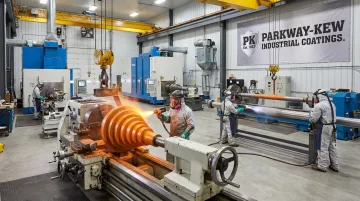
In-house CNC machining handles parts up to 72 inches in diameter, while grinding capacity covers parts up to 65 inches in diameter and 12 feet in length. This gives heavy-wear operations a one-stop alternative to standard powder coating shops that simply can't accommodate parts this size.
Conclusion
Choosing the right powder coating alternative comes down to matching the coating technology to your part's real operating conditions, not just the upfront quote. A wire drawing block under constant friction needs different protection than a beam sitting outdoors.
Once you've pinpointed those operating conditions, weigh long-term durability, downtime reduction, and total cost of ownership before deciding. For equipment running in oilfield, wire mill, or shipping terminal environments, Parkway-Kew's team can help match a coating solution to the wear and environmental demands your parts actually face.
Frequently Asked Questions
What can I use instead of powder coating?
Liquid or specialty enamel coatings, HVOF thermal spray, plasma spray ceramics, submerged arc hardfacing, and hot-dip galvanizing all work as alternatives. The right pick depends on part size, wear type, and required heat or corrosion resistance.
Is powder coating necessary?
Not always. Oversized parts, extreme-wear equipment, and jobs needing fast turnaround often perform better with thermal spray, hardfacing, or liquid coatings instead.
What is the most durable alternative to powder coating for heavy machinery parts?
HVOF and submerged arc hardfacing typically outperform powder coating on heavy equipment. HVOF resists friction and abrasion, while hardfacing rebuilds structural wear layers on large, heavily used components.
How does thermal spray coating compare in cost to powder coating?
Thermal spray processes like HVOF usually cost more upfront. The extended service life and reduced downtime often make total cost of ownership lower for heavy-wear industrial parts.
Can worn or coated metal parts be repaired without removing the original coating?
Yes. Processes like Parkway-Kew's Restore & Grind fill and blend only the worn drawline area, extending part life without stripping the entire original coating.
Which coating alternative works best for high-temperature or high-abrasion environments?
Plasma spray ceramic coatings handle high heat and corrosive environments best. HVOF and hardfacing outperform other options for high-abrasion, high-friction wear.