Yet adhesion failure rarely gets blamed for what it is. Peeling, blistering, and flaking get written off as "bad paint" when the real cause is almost always upstream: contaminated steel, the wrong surface profile, or a coating applied outside its process window. Industry estimates attributed to Materials Analytical Group suggest that up to 75% of coating failures trace back to inadequate surface preparation rather than the coating itself, according to an AMPP CoatingsPro analysis.
This guide breaks down the science behind why coatings bond, the failure modes that show up when they don't, and the ASTM-standardized test methods used to verify adhesion before it becomes a costly field failure.
Key Takeaways
- Adhesion bonds the coating to the substrate; cohesion holds the film together internally
- Of five theories explaining coating adhesion, mechanical interlocking and adsorption apply most broadly
- Surface preparation and correct profile remain the top controllable factors against failure
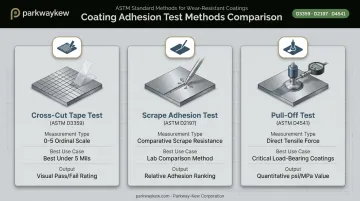
- ASTM D3359, D2197, and D4541 are the three primary adhesion test standards
What Is Adhesion in Paints and Coatings?
Adhesion is the bond strength between a coating and the substrate beneath it. Cohesion, by contrast, is the bond strength within the coating film itself, between the resin, pigment, and additive particles that make up the dried paint.
A coating can fail at either point, and diagnosing which one broke is the first step in fixing the problem.
The binder, or resin, does most of the work here. It's the non-volatile film-forming component responsible for both wetting the substrate during application and holding the cured film together afterward. Everything else in the formulation rides on the binder's ability to perform both jobs at once.
Three Elements That Govern Adhesion Quality
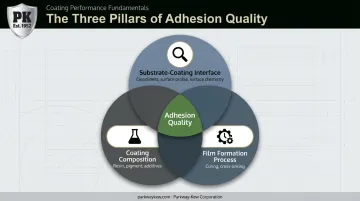
Coating adhesion isn't a single variable. It's the product of three interacting factors:
- The substrate-coating interface - cleanliness, profile, and surface chemistry at the point of contact
- The composition of the coating - resin chemistry, pigment loading, and any adhesion-promoting additives
- The film formation process - how the coating cures, cross-links, or solidifies after application
Get any one of these wrong, and adhesion suffers regardless of how well the other two are executed.
Why Adhesion Determines Coating Lifespan
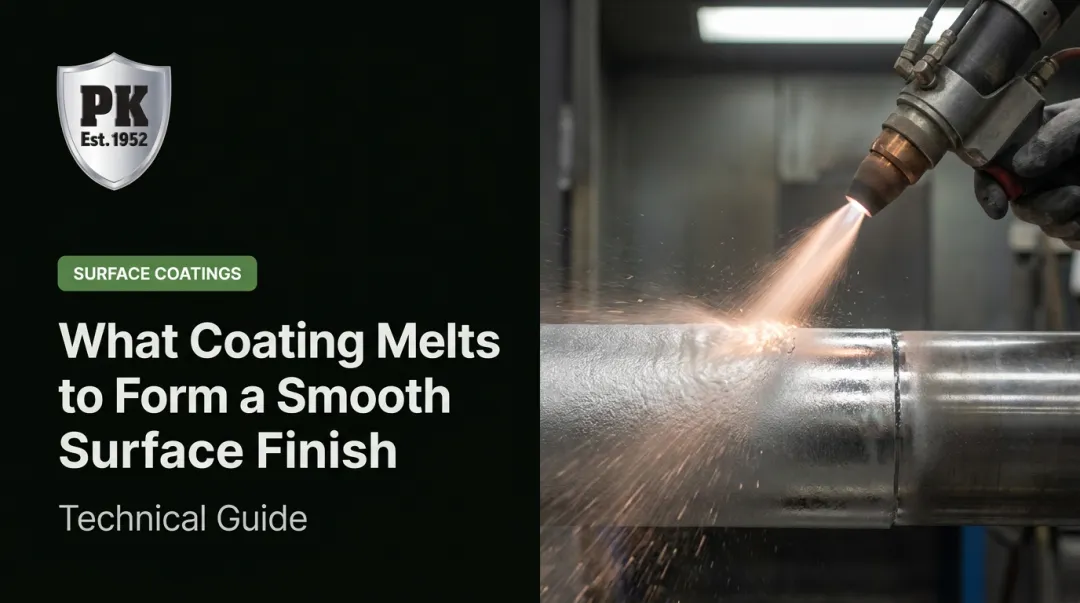
Adhesion directly governs how long a coating survives in service, particularly in corrosive or high-wear environments where moisture, chemicals, or mechanical stress are constantly probing for weak points. In thermal spray coatings like HVOF, for instance, a poor blast profile before spraying is a common culprit — the coating itself may resist chemicals and wear perfectly well, but it fails prematurely once moisture works underneath it.
That's why surface prep carries so much weight in field performance. Estimates for failures linked to inadequate surface preparation range from 60% to 90% depending on the source, with 75%-85% commonly cited as an industry benchmark. Whatever the exact figure, the pattern holds: adhesion problems are usually preparation problems, not product defects.
Theories of Adhesion Explained
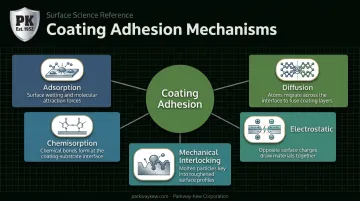
Five recognized theories explain why coatings bond to substrates. No single theory applies universally. Most real-world coating systems rely on two or three mechanisms working together.
Adsorption Theory: Wetting and Molecular Forces
Adsorption is the most broadly applicable of the five. It holds that adhesion develops through intermolecular forces, mainly Van der Waals forces, along with acid-base interactions and hydrogen bonding, once the coating achieves intimate molecular contact with the substrate.
That contact depends entirely on wetting. A 0° contact angle signals complete, spontaneous wetting: the liquid spreads freely rather than beading up. Wetting is favored when the substrate's surface tension is higher than the coating's own. Low-energy surfaces, like some plastics or oily steel, resist wetting no matter how well-formulated the coating is.
Chemisorption Theory: Adhesion Through Chemical Bonding
Chemisorption extends adsorption a step further. Instead of relying only on secondary intermolecular forces, primary chemical bonds form directly across the interface. It's a stronger, more specific form of bonding, but it depends on compatible reactive chemistry on both sides.
Adhesion promoters exploit this mechanism directly, bonding chemically to the substrate on one end and to the coating resin on the other, building a molecular bridge where none existed naturally.
Mechanical Interlocking Theory
Mechanical interlocking is the most intuitive of the five. Liquid coating flows into the peaks and valleys of a roughened surface, displaces trapped air, and physically locks into place once cured. This is the dominant mechanism behind grit blasting and surface profiling in industrial coating work.
One caveat matters: roughening a surface only improves adhesion if the coating properly wets that roughened surface first. Increase roughness without adequate wetting, and you've just created more surface area for a weak bond to fail across.
Electrostatic Theory
Electrostatic theory attributes adhesion to electron transfer at the interface, which creates dissimilar charges on each side and a resulting attractive force. A 2025 PNAS study measured electric fields on the order of 10^9 V/m near the peel front of pressure-sensitive tape, confirming this charge-separation effect.
That same charge separation explains the crackle sometimes heard when peeling a failed coating. Still, this mechanism dominates particle and biological adhesion far more than painted industrial substrates.
Diffusion Theory
Diffusion theory applies specifically when both coating and substrate are polymeric, with compatible, mobile long-chain molecules capable of inter-diffusing across the interface. Solvent cementing of plastics and thermoplastic heat welding are the clearest examples. It has limited relevance to metal substrates, but matters considerably for coatings applied over other polymers.
Why Adhesion Fails: Types and Causes
Every adhesion failure falls into one of two categories. Adhesive failure happens at the coating-substrate interface, the bond simply never held. Cohesive failure happens within the coating film or substrate, meaning the bond to the surface was fine, but something inside the material gave way instead.
Failures are further sub-classified as interfacial, near-interface, substrate, or dissipative. Still, the adhesive-versus-cohesive distinction is what drives root-cause diagnosis in practice.
The Weak Boundary Layer Problem
A large share of "adhesion" failures aren't adhesion failures at all. They're weak boundary layer failures, where a thin, mechanically weak layer sits between the visible coating and the true substrate surface:
- Corrosion or oxide layers on metal that weren't fully removed before coating
- Low-molecular-weight contaminants, such as release agents or migrating plasticizers
- Surface impurities like dust, oil films, or invisible salt residue
The coating can bond perfectly well to this hidden layer, and still fail, because the layer itself has no strength.
Primary Controllable Causes
Most adhesion failures trace back to a short list of preventable mistakes:
- Inadequate substrate cleaning before coating application
- Incorrect surface profile, too smooth or improperly shaped for the coating type
- Poor wetting, often from contamination or mismatched surface tension
- Improper cure, whether under-cured or over-cured
- Prolonged exposure to water, humidity, or UV that degrades the bond over time
Common Visible Defects and Their Root Causes
| Defect | Typical Root Cause |
|---|---|
| Blistering | Osmotic pressure from trapped soluble salts pulling in moisture |
| Peeling | Weak boundary layer or poor initial wetting |
| Flaking | Brittle film combined with mechanical stress or under-cure |
| Undercutting | Corrosion migrating beneath the coating from an edge or defect |
Blistering demonstrates the weak boundary layer mechanism in action. Moisture permeates a semi-permeable coating, dissolves hygroscopic salts trapped underneath, and the resulting osmotic pressure pulls in more water until the bond gives way locally.
Field guidance reported by AMPP suggests residual soluble salt levels should stay below roughly 3 micrograms per square centimeter for immersion service, with levels above 50 micrograms per square centimeter likely to cause rapid failure regardless of which coating goes over it.
Factors That Strengthen Coating Adhesion
Three factors consistently separate coatings that bond for decades from ones that fail within months:
- Proper wetting - the coating must spread fully across the surface, not bead or crawl
- Surface treatment - cleaning, profiling, and roughening to expose a sound, contaminant-free surface
- Material compatibility - matching resin chemistry and surface energy to the specific substrate
Additives That Support Adhesion
Formulators lean on several additive classes to reinforce these factors:
- Adhesion promoters bridge coating and substrate chemically, as covered under chemisorption theory
- Plasticizers improve film flexibility, reducing stress-driven cohesive cracking
- Solvents control flow and open time, giving the coating enough working time to wet the surface fully
- Wetting agents lower surface tension so the coating can spread into fine surface texture
Engineering Adhesion in Extreme Wear Environments
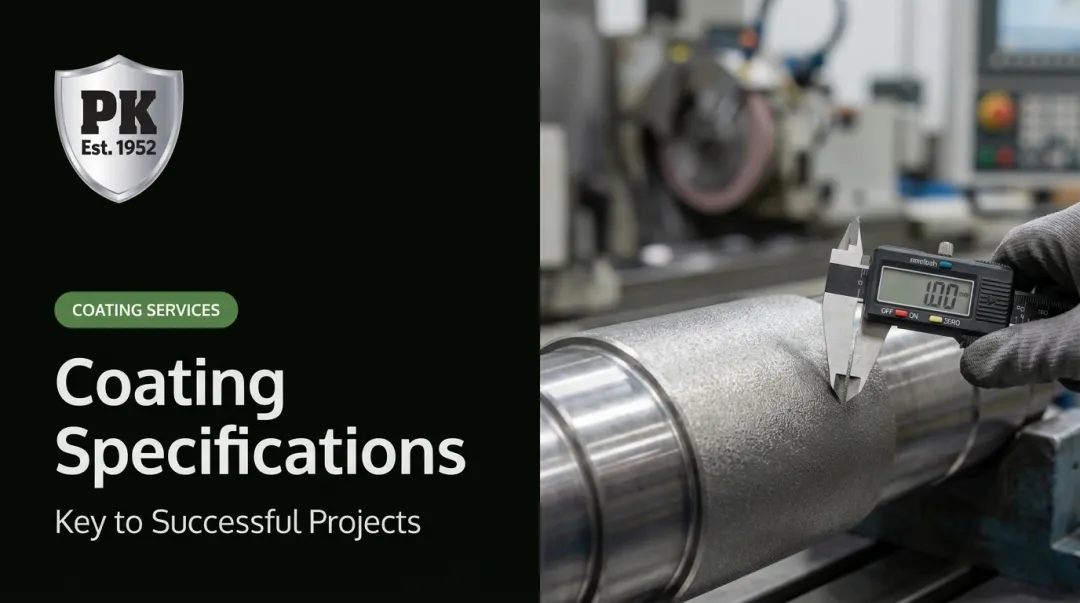
Beyond additive chemistry, some environments call for mechanical interlocking as the primary defense. In demanding industrial settings like thermal spray, HVOF, and plasma spray, manufacturers engineer this interlocking deliberately through controlled surface roughening before any coating touches the part. The goal is a profile aggressive enough to anchor the coating mechanically, without so much roughness that the coating can't wet into it properly.
This is the same principle Parkway-Kew applies when hardsurfacing wire drawing blocks and capstans for wire mills. The coating selection depends on wear conditions and the wire being drawn:
- HVOF tungsten carbide coatings (PK-675, PK-700, PK-750) for general wear resistance
- Plasma-sprayed chrome oxide ceramic (PK-1500) for high-speed, high-slip ferrous wire
- Submerged arc welding alloys for steel blocks and sleeves
Each option pairs with a surface treatment suited to that specific coating chemistry and substrate.
Test Methods for Evaluating Coating Adhesion
Record every adhesion test result as either adhesive failure (at the interface) or cohesive failure (within the coating or substrate). Without that distinction, a passing or failing number doesn't tell you what actually needs to change.
Cross-Cut Tape Test (ASTM D3359)
The tape test is the fastest, most common field and lab screening method. Technicians cut a grid of X-cuts or cross-hatch lines through the coating down to the substrate, apply pressure-sensitive tape over the cuts, then remove it in one sharp pull.
- Best suited for coatings under 5 mils (125 microns) thick
- Rated on a 0-5 ordinal scale, not an absolute strength value
- Comparable to, but not interchangeable with, ISO 2409
Scrape Adhesion Test (ASTM D2197)
This method drags a stylus or loop tip, mounted on a balanced-beam apparatus, across a smooth, flat coated panel under progressively increasing load until the coating comes off down to the substrate. It's primarily a lab comparison method, useful for ranking formulations rather than generating field pass/fail data. Formulators lean on it during development, ranking candidate coatings side by side before committing one to full-scale testing.
Pull-Off Test (ASTM D4541)
The pull-off test is the closest thing the industry has to a true quantitative adhesion measurement. Technicians bond a metal dolly to the coating, then use a portable tester, mechanical, hydraulic, or pneumatic, to apply increasing tensile stress perpendicular to the surface until the dolly detaches.
- Produces a quantitative psi or MPa value, unlike ordinal tape or scrape ratings
- Equivalent in concept to ISO 4624, though apparatus and reporting details differ
- Record the failure location alongside the number, since a low reading can simply mean the fixture adhesive or the coating itself was the weak point, not the substrate bond
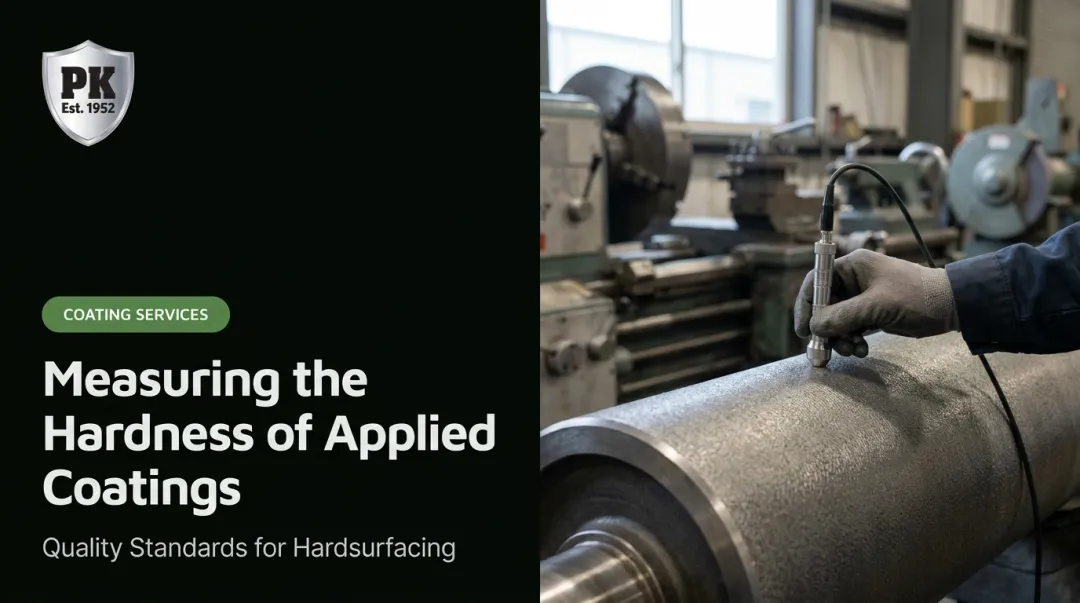
Parkway-Kew uses this same pull-off method to qualify HVOF and tungsten carbide coatings on fracking plungers and wire drawing blocks, where a weak bond under load isn't an option.
Other Specialized Test Methods
A few additional methods fill specific gaps:
- Knife test (ASTM D6677) - fast, subjective field screening using a utility knife; useful for quick go/no-go checks, not quantitative
- Bend test (ASTM D4145) - evaluates coating flexibility and adhesion after deformation, mainly for prepainted sheet metal
- Stud pull test (ASTM D5179) - a direct tensile method specifically for organic coatings on plastic substrates
Frequently Asked Questions
What is coating adhesion?
Coating adhesion is the bond strength between a coating film and the substrate it's applied to. It's distinct from cohesion, the bond strength within the coating film itself.
What are the types of adhesion?
The five recognized mechanisms are adsorption, chemisorption, mechanical interlocking, electrostatic attraction, and diffusion. Most coatings rely on a combination rather than a single mechanism.
Is adhesion the same as adhesive?
No. Adhesion is a measurable property, the strength of a bond, while an adhesive is a physical material used to create that bond. A coating can have strong or weak adhesion without being an adhesive.
What type of paint has the best adhesion?
There's no single best-adhering paint type. Adhesion depends more on substrate compatibility, surface preparation, and binder chemistry. Epoxies and urethanes often perform well on metal, but selection should match the specific service conditions.
How do you test the adhesion of a coating?
The three standardized methods are the tape test (ASTM D3359) for quick field checks, the scrape test (ASTM D2197) for lab comparisons, and the pull-off test (ASTM D4541) for quantitative strength values.
What causes poor adhesion in coatings?
The most common causes are inadequate surface preparation, contamination, improper cure, incompatible coating-substrate combinations, and prolonged exposure to water, humidity, or UV.