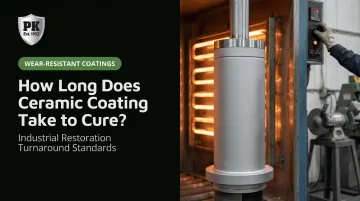
This happens more often than most people expect. The confusion usually comes down to one thing: mistaking "dry to the touch" for "fully cured." A coating can feel set within hours while the actual chemical bonding underneath is still weeks away from finishing.
This guide breaks down the real science of curing, the timelines you should actually plan around, the factors that speed up or slow down the process, and exactly what to avoid while your coating hardens.
Key Takeaways
- Initial cure takes 24-48 hours; full hardness follows in 2-4 weeks
- Curing happens in two chemical stages: solvent evaporation, then cross-linking with the paint surface
- Temperature, humidity, coating type, and layer thickness all change how fast a coating cures
- Water, harsh chemicals, and rough handling during the cure window can cause permanent defects
What Is Ceramic Coating Cure Time?
Cure time is the period a ceramic coating needs to chemically harden and permanently bond to your paint. It's a completely different process from simply air-drying, even though the two get confused constantly.
There are two distinct chemical stages happening under the surface:
- Solvent evaporation - The volatile carriers that keep the coating liquid and spreadable evaporate off, causing the applied layer to thicken and set.
- Cross-linking - Silica or siloxane molecules bond to each other and to the clear coat, forming the hard, protective layer that resists chemicals, abrasion, and UV exposure.
According to FEYNLAB, most solvent evaporation happens within the first 24-48 hours, which is why manufacturers call this the initial cure. But cross-linking, the part that actually determines how tough and glossy the coating will be, keeps developing for weeks after that.
Here's the misconception that trips people up: a coating that feels dry to the touch within an hour or two is not offering full protection yet. The molecular bonding is barely underway.
Touching it, driving it, or exposing it to water at this stage doesn't ruin the coating outright. But it does interrupt a chemical process that needs time to finish properly.
Interrupting the cure with rain, dust, or an early wash can cause:
- Water spots that etch into the still-forming surface
- Streaking or hazy patches where the coating cured unevenly
- Reduced long-term durability and gloss retention
Reputable installers and manufacturers publish product-specific cure guidelines for a reason. Deviating from them doesn't just risk cosmetic damage. It can void the warranty entirely.
How Long Does Ceramic Coating Take to Cure?
Cure time follows a progression through several distinct stages, each with different rules for what you can and can't do with the vehicle.
The Three Stages of Curing
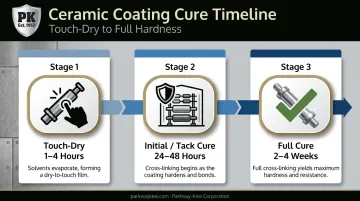
Touch-dry stage (roughly 1-4 hours): The coating feels set to the touch, but this is just the surface solvents flashing off. Chemical bonding has barely started. Don't mistake this for progress toward protection.
Initial or tack cure (24-48 hours): This is the most sensitive window. The vehicle should stay in a controlled, dry environment, ideally an indoor garage, away from moisture, dust, and temperature swings. Car and Driver's testing found that driving is generally acceptable during this 24-48 hour window, as long as water and washing are still avoided.
Full cure (2-4 weeks): The coating reaches maximum hardness, gloss, and chemical resistance. Car and Driver's reporting places full cure between one and three weeks, depending on the product, while some professional-grade formulations take a month or longer to hit peak performance.
DIY vs. Professional-Grade Cure Times
| Coating Type | Initial Cure | Full Cure | Notes |
|---|---|---|---|
| Consumer/DIY (single layer) | 12-24 hours | 5-7 days to 2 weeks | Faster to apply, generally shorter cure window |
| Professional multi-layer | 24-48 hours | 2-4 weeks | Longer cure, but typically more durable long-term |
Professional-grade coatings often take longer to fully cure simply because they're applied in thicker, multiple layers. More material means more solvent has to work its way out before cross-linking can finish. The trade-off is worth it for most owners: longer cure equals longer-lasting protection.
Speeding Up the Curing Process Safely
Professional detailers sometimes use infrared lamps to accelerate the process in controlled settings. This isn't guesswork. GYEON notes that professionals rely on IR lamps specifically to shorten cure time and reduce the risk of early weather exposure, applying controlled heat panel by panel rather than blasting the whole vehicle.
If you don't have access to professional IR equipment, you can still help things along:
- Keep the vehicle in a clean, temperature-stable garage rather than outdoors
- Use a dehumidifier if your garage tends to run damp
- Avoid parking near HVAC vents that create temperature swings
None of these replace manufacturer-specified cure times, but a stable environment genuinely helps the chemistry finish on schedule.
Factors That Influence Ceramic Coating Cure Time
No two garages, climates, or coating jobs are identical, which is why cure time ranges are always given as windows rather than exact hours. Several variables push that window longer or shorter.
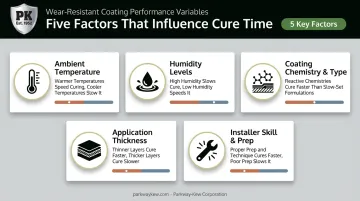
These factors matter most:
- Ambient temperature: Warmer conditions, within the manufacturer's recommended range, speed up the chemical reaction, while cold weather slows cross-linking and can stall it below a certain threshold. GYEON reports full cure times ranging from as little as 2 days in hot, dry conditions to 3 weeks in cold, rainy weather.
- Humidity levels: High humidity introduces excess moisture that can interfere with cross-linking and extend cure time. This isn't universal, though: some graphene-based formulations cure faster in hot, humid climates. Always check the specific product's guidance rather than assuming lower humidity is always better.
- Coating chemistry and type: SiO2-based coatings and graphene-infused formulations don't behave identically, and professional-grade products cure differently than consumer-grade sprays.
- Application thickness and layers: Thicker applications or multiple coats need more time for solvents to fully evaporate; a single thin layer clears faster than three stacked coats.
- Installer skill and prep quality: Proper paint correction beforehand and even, controlled application directly affect how uniformly the coating cures. Rushed DIY jobs with inconsistent thickness often cure unevenly, leaving soft spots that stay vulnerable longer.
Do's and Don'ts During the Curing Period
A short list of rules stands between a flawless cure and a costly mistake. Ignore them, and you risk permanent marks or a voided warranty.
Do:
- Keep the vehicle garaged or covered, away from direct sun, rain, dust, and tree sap
- Park indoors whenever possible for at least the first 24-48 hours
- Follow the specific product's documented cure schedule exactly
Don't:
- Wash the vehicle or drive through rain, puddles, or sprinklers during the initial cure window
- Use any chemical cleaners, waxes, or detail sprays until the manufacturer's cure period has fully passed
- Assume all coatings follow the same timeline. A 7-day wash restriction for one product could be 14 days for another.
Manufacturer instructions aren't a suggestion here. Deviating from them can void warranty coverage entirely and compromise the coating's protective performance long-term.
Despite these precautions, weather doesn't always cooperate. If rain catches your freshly coated car off guard, dry it off promptly with a clean microfiber towel and get it back under cover. It's not a disaster, but the sooner it's dry, the less chance there is of lasting spots.
Beyond the Driveway: How Ceramic Coating Curing Applies to Industrial Equipment
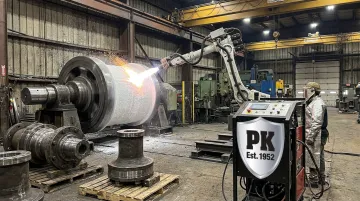
Ceramic coating science didn't start in a detail shop. Parkway-Kew Corporation has applied plasma-sprayed ceramic coatings to heavy industrial components since the late 1990s, using PK-1500 chrome oxide, one of the most wear-resistant ceramics used in wire drawing operations.
The applications look nothing like a car's clear coat. Parkway-Kew coats wire drawing blocks, capstans, tuner rolls, and sheaves that endure constant friction, high-speed slip, and mechanical stress that a passenger vehicle will never come close to experiencing.
In that environment, curing and bonding aren't about protecting a shine. They determine whether a part survives months of continuous production or fails early.
That's why precision matters so much more at industrial scale:
- Plasma-sprayed ceramic coatings must bond flawlessly to withstand high-speed, high-slip ferrous wire drawing
- HVOF coatings, which Parkway-Kew introduced for wire drawing blocks back in 1989, are applied at speeds exceeding Mach 2 to form a dense, virtually defect-free surface
- In-house CNC machining and grinding, up to 65 inches in diameter, ensure coated parts meet exact tolerances after curing
Parkway-Kew's proprietary Restore & Grind process takes this a step further, allowing 5 to 7 targeted repairs to a worn drawline before a full recoat is even necessary. Consumer detailing and industrial hardsurfacing serve different worlds, but they run on the same physics: cure time dictates bond strength, whether the surface is a car hood or a wire drawing block running around the clock.
Frequently Asked Questions
How long after ceramic coating can I drive?
It's generally safe to drive after about 24-48 hours. Still, avoid rain, car washes, and harsh conditions until the full cure period specified by your product's manufacturer has passed.
How long does ceramic coating take to fully cure?
Initial cure takes roughly 24-72 hours, while full hardness typically develops over 2-4 weeks. The exact timeline depends on the product and your local climate conditions.
Can I wash my car during the curing period?
No, avoid washing for at least 7-14 days, or longer per manufacturer instructions. Early washing can disrupt the cross-linking process before the coating fully bonds.
What happens if ceramic coating gets wet before it cures?
Premature moisture exposure can cause water spots, uneven bonding, or streaking. Dry the vehicle immediately and move it under cover to limit further damage.
Does temperature affect ceramic coating cure time?
Yes. Warmer, controlled temperatures speed up curing considerably, while cold or highly humid conditions slow the chemical reaction and can extend the timeline by weeks.
Can you speed up the ceramic coating curing process?
Professional tools like infrared lamps can accelerate curing safely. These should only be used by trained installers following the exact product's heat and distance specifications.