Many car owners search "ceramic coating disadvantages" before they hand over anywhere from $500 to $2,000+, and for good reason. A coating is a real chemical bond, not a magic shield, and some of the marketing language stretches the truth.
This guide breaks down all 7 major cons, whether the investment still makes sense for your vehicle, and how to minimize the drawbacks if you decide to move forward.
Key Takeaways
- Ceramic coating protects paint chemically, but it's not scratch-proof, impact-proof, or maintenance-free
- Professional installation costs several hundred to a few thousand dollars and takes 4-8+ hours, sometimes multiple days
- Coatings typically degrade over 2-7 years depending on product tier, climate, and care
- Removing a cured coating requires machine polishing, not a simple wash or wipe-down
- Knowing these cons upfront leads to realistic expectations and fewer regrets after payment
What Is Ceramic Coating (And Why the Hype)?
Ceramic coating is a liquid polymer, typically silica-based, that bonds to your car's clear coat at a molecular level once cured. It forms a hard, glossy layer on top of the factory paint rather than replacing or repairing it.
The marketing hooks are consistent across brands. Common selling points include:
- Hydrophobic water beading that makes rain and mud slide off
- UV resistance that slows paint fading over time
- A gloss boost that makes the finish look wet even when dry
These benefits are real. The problem is what gets left out of the pitch.
Why the Downsides Matter Before You Commit
Going in with realistic expectations prevents buyer's remorse. It also helps you tell the difference between a shop making honest claims and one overselling a product to close a sale. If an installer promises "lifetime protection" with zero maintenance, that's a red flag worth questioning before you sign anything.
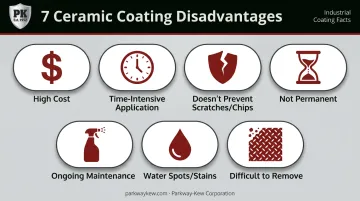
The 7 Key Disadvantages of Ceramic Coating
These are the cons that come up again and again across professional installers, independent detailers, and manufacturer documentation. None of them mean ceramic coating is a bad product. They just mean it has limits.
1. High Upfront Cost
Professional installation isn't cheap. JD Power notes that a professional may charge $1,000 or more for a full vehicle application, and Car and Driver puts the average professional-level job closer to $2,000 once correction, coating, and curing are factored in.
- DIY kits: generally under $100, though tested premium spray products run $47-$133
- Professional packages: roughly $1,000-$2,000+ depending on paint condition and tier
- Cost drivers: labor hours, paint correction needs, coating brand, and vehicle size
This price gap is often the top reason buyers start comparing sealants or paint protection film (PPF) instead.
2. Time-Intensive, Skill-Dependent Application
A proper install isn't a quick spray-and-go job. The typical process includes:
- Decontamination: washing and claying to strip embedded contaminants
- Paint correction: machine polishing to remove swirls before sealing them under the coating
- Coating application: careful panel-by-panel application in controlled conditions
- Curing: often 24 hours of initial dry time, with 2-3 weeks to reach full strength
Ceramic Pro estimates the full process can take 1 to 5 days depending on the paint's starting condition. That's a long window for something to go wrong in untrained hands.
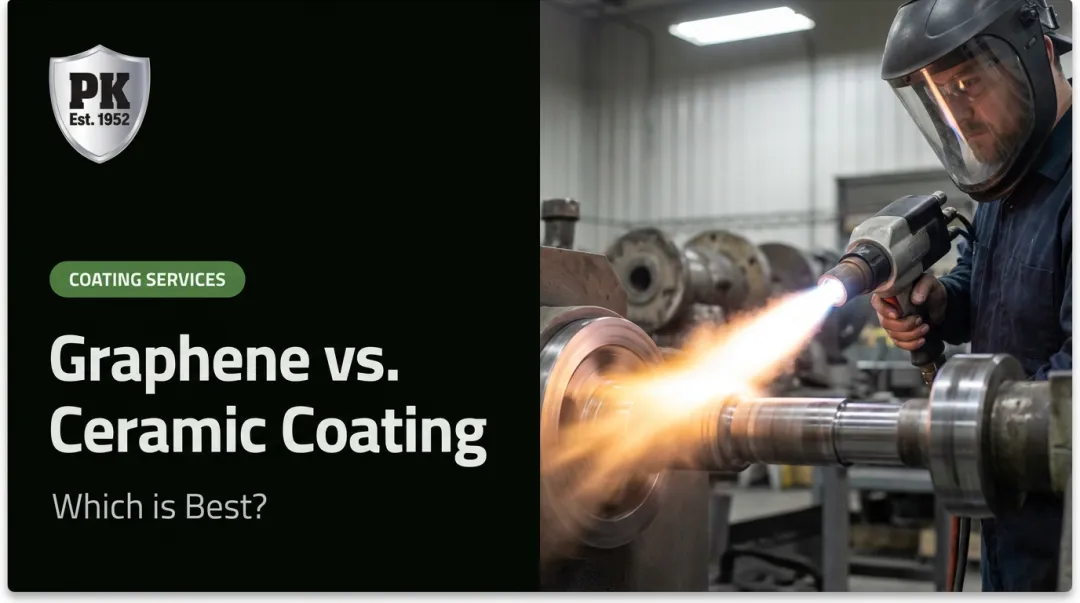
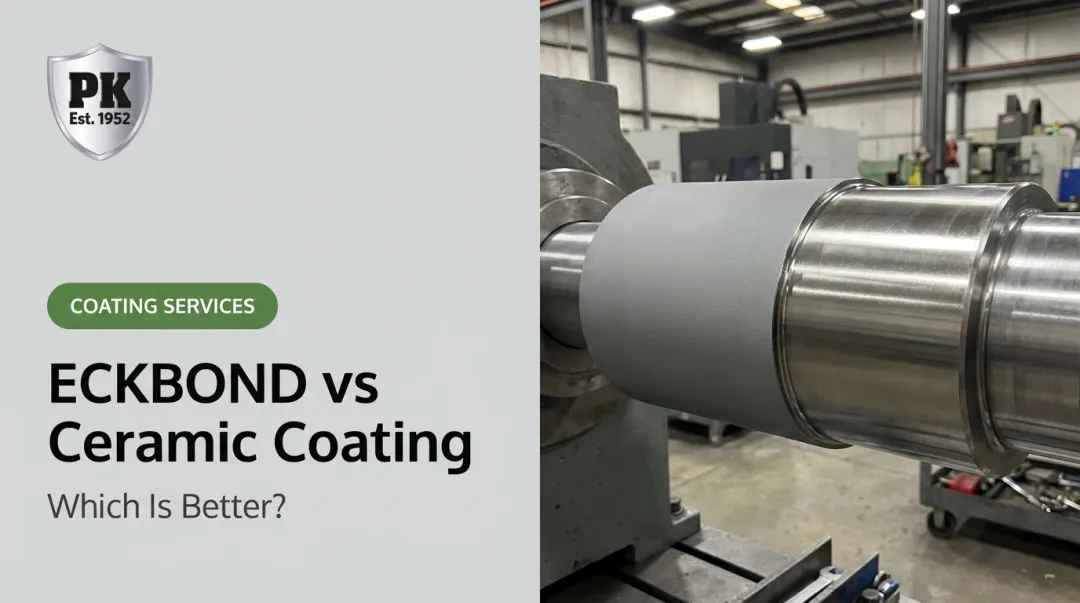
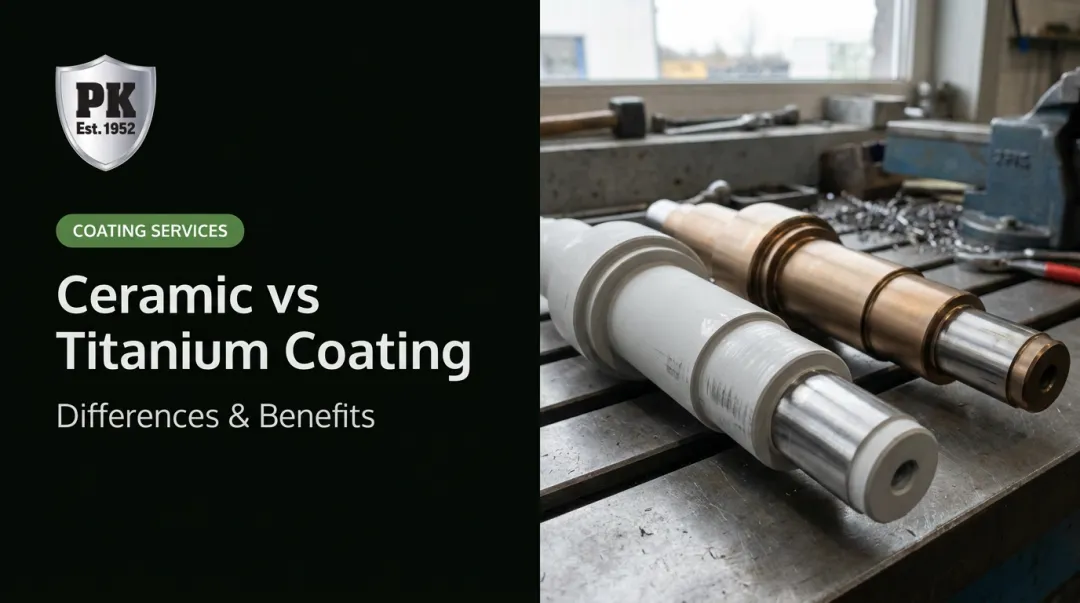
This isn't unique to automotive coatings, either. Industrial-grade ceramic coating follows the same logic at a larger scale: Parkway-Kew Corporation has applied plasma-sprayed ceramic coatings to heavy machinery components since the late 1990s, a process that depends entirely on skilled technicians and tightly controlled conditions. Skip either step, and the coating won't perform as intended.
3. Doesn't Prevent Scratches, Rock Chips, or Dents
The 9H hardness rating gets thrown around constantly, but it comes from the ASTM D3363 pencil test, a lab measurement of film hardness, not a road-debris impact test. Ceramic Pro itself states that a 9H coating resists minor scratches but doesn't provide adequate rock-chip protection.
- Light swirl marks: reduced
- Deep scratches: not prevented
- Rock chips from highway debris: not prevented
- Dents from impacts: not prevented
XPEL notes that PPF is generally the better choice against scratches and chips because it's a thicker, physically impact-resistant layer, while ceramic coating is built for chemical resistance and easier cleaning. If your front bumper or hood takes a beating on the highway, PPF is the more appropriate fix.
4. Not a Permanent Solution
"Lifetime" and "10-year" claims rarely hold up outside ideal, garage-kept conditions. Real-world durability varies by product tier:
- Entry-level consumer coatings: roughly 18-24 months
- Premium DIY coatings: up to 5 years with proper care
- Professional-tier coatings: 5-7 years on a daily driver, per FEYNLAB
Lifespan depends on product quality, UV exposure, road salt, temperature swings, and how well you maintain it. Treat warranty terms as marketing figures, not guarantees of real-world performance.
5. Requires Ongoing Maintenance
The idea that coated cars "never need washing" is one of the most common misconceptions in the industry. Coating manufacturers actually recommend fairly strict care routines:
- Hand wash with pH-neutral soap every 1-2 weeks
- Avoid automatic brush or mitt washes, which can introduce swirls
- Dry with clean microfiber towels
- Reapply a ceramic booster or topper every 8-12 weeks depending on the product
Skip this routine and the hydrophobic performance fades faster than the coating itself.
6. Vulnerable to Water Spots and Certain Stains
Hydrophobic surfaces still trap hard-water minerals when droplets evaporate on the paint. Left long enough, those deposits can etch into the coating. Bird droppings, tree sap, and bug residue cause similar problems if they sit too long.
Quick tip: dry your car immediately after washing and use filtered or deionized rinse water when possible. Both steps significantly cut down on mineral spotting.
7. Difficult and Costly to Remove
Removing a fully cured coating isn't a simple wipe-off. Ceramic Pro's own removal procedure requires sanding with 1,000-grit or stronger abrasive, working through the coating and into the clear coat itself until it reaches an even, milky appearance.
That means:
- Removal requires professional machine polishing, not a chemical stripper
- Switching installers or upgrading products adds a real labor cost
- Vehicles with thin or previously polished clear coats carry added risk during removal
If you're not confident you'll want the coating in 5 years, that's worth factoring into the decision now.
Is Ceramic Coating Still Worth It Despite These Cons?
Despite everything above, most owners who get ceramic coating stick with it. The appeal is straightforward: time saved on washing and paint that stays resale-ready longer.
That resale-ready value matters even more as vehicle prices climb, raising the stakes on protecting the investment. Kelley Blue Book reported a record $50,080 average new-vehicle transaction price in September 2025, the first time that monthly figure crossed $50,000. That doesn't prove coating pays for itself financially, but it does explain why more owners are willing to spend on protection.
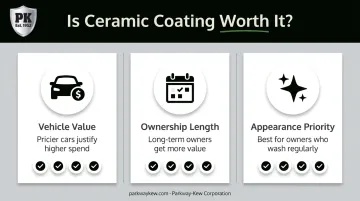
Whether it's "worth it" really comes down to:
- Vehicle value: pricier cars justify higher protection spend
- Ownership length: long-term owners get more value from multi-year durability
- How much you care about appearance: coating shines brightest for owners who wash regularly and want that gloss maintained
High-mileage daily drivers or older cars with imperfect paint often see better ROI from a cheaper sealant instead. Owners who understand the cons going in tend to report higher satisfaction, mainly because they aren't expecting something the product was never designed to do.
How to Minimize These Drawbacks
A few decisions upfront reduce most of the pain points above:
- Choose the installer, not just the badge. Manufacturer "certification" isn't regulated industry-wide, so look at reviews and completed work, not just a certificate on the wall.
- Pair coating with PPF on high-impact zones. Front bumper, hood, and mirrors take the most rock-chip exposure, and PPF underneath a coating covers the gap ceramic alone can't.
- Set a maintenance calendar. Wash every 1-2 weeks, reapply booster on schedule, and you'll get closer to the coating's advertised lifespan instead of falling short of it.
Ceramic Coating vs. Alternatives: Wax, Sealant & PPF
Here's how the main paint protection options stack up:
| Protection | Typical Durability | Cost Benchmark | Best For |
|---|---|---|---|
| Car wax | 4-8 weeks (carnauba), up to 3-6 months (paste) | $15-$30 products, $50-$100 professional | Budget-conscious owners, occasional touch-ups |
| Paint sealant | 6-12 months | $22-$67 | Middle ground between wax and coating |
| Ceramic coating | 18 months to 7 years, depending on tier | $100 DIY to ~$2,000 professional | Long-term gloss and easier cleaning |
| PPF | Up to 10 years | $1,000-$8,000+ | Physical impact protection |
Wax is the cheapest entry point but needs frequent reapplication and offers minimal protection beyond a temporary shine. Sealants last longer than wax without the price tag of a full ceramic job, making them a reasonable middle-ground choice.
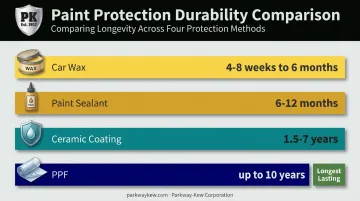
PPF remains the only option here offering genuine physical impact protection. Most detailers treat it as a complement to ceramic coating on vulnerable panels, not a replacement for the whole car.
Frequently Asked Questions
How long will a ceramic coating last?
Entry-level coatings typically last 1-2 years, while premium professional coatings can reach 3-5+ years or more. Actual lifespan depends on product quality, climate exposure, and how consistently you maintain it.
Which is better, car wax or ceramic coating?
Wax is cheaper and easier to apply but only lasts weeks to a few months. Ceramic coating costs more upfront but delivers years of protection with stronger gloss and hydrophobic performance.
Is ceramic coating worth it despite the disadvantages?
It depends on your vehicle's value and how long you plan to keep it. Most owners find the time saved on washing and the preserved appearance worth the cost and upkeep.
Can ceramic coating be removed once applied?
Yes, but removal requires machine polishing or abrasive correction, not a simple wash. It's a labor-intensive job best left to a professional, especially on vehicles with thinner clear coats.
Does ceramic coating actually prevent scratches?
It resists light swirl marks and minor scuffs but does not prevent deep scratches, rock chips, or dents. For real impact protection, paint protection film is the better option.
How much does professional ceramic coating typically cost?
Professional installation generally starts around $1,000 and averages closer to $2,000 for a full job. Cost varies based on vehicle size, paint condition, and the coating tier you choose.